| | In today’s edition: Hopes fray for US-Iran negotiations, a citizenship crackdown widens in Bahrain, ͏ ͏ ͏ ͏ ͏ ͏ |
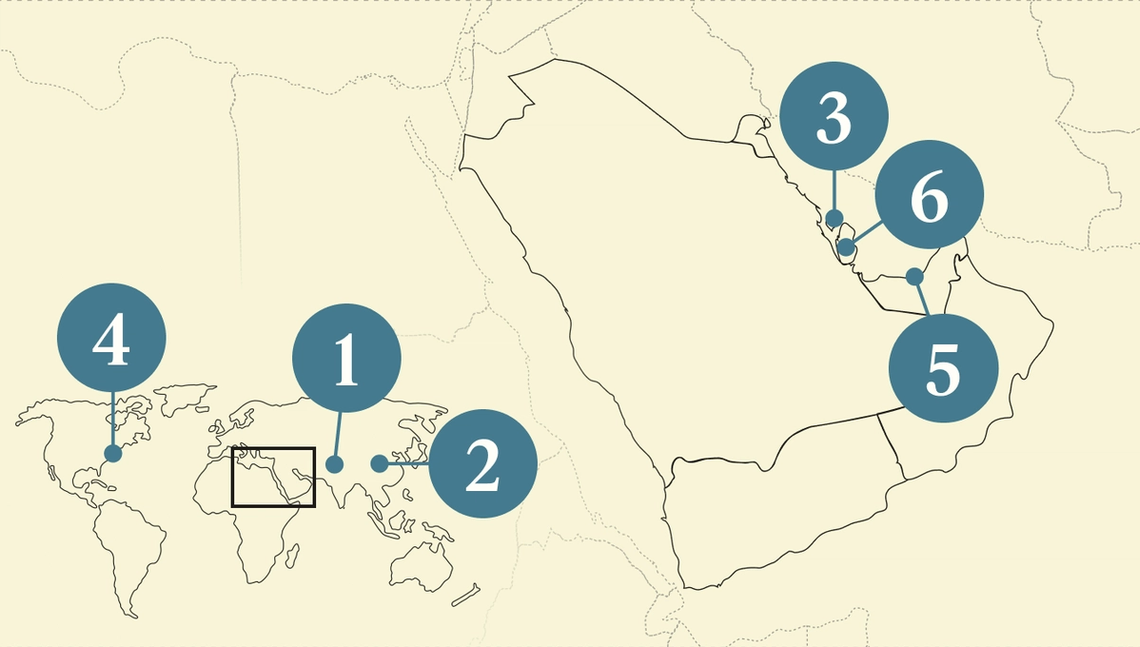
| |  Washington, DC Washington, DC |  Riyadh Riyadh | Islamabad |
 | Gulf |  |
| |
|
 - Ceasefire talks in question
- Abu Dhabi eyes China deals
- Bahrain citizenship purge
- ALTÉRRA stays steady
- Nervous normal on campus
- ‘Colder’ relations with Iran
 Abu Dhabi opens its airport to non-traveling duty-free shoppers. |
|
 We wrapped up Semafor World Economy in Washington on Friday, but after more than 500 CEOs, policymakers, and investors went on the record, it is impossible to draw a single conclusion. Instead, here are a few Gulf-related takeaways from interviews and closed-door conversations across a packed week. First, when it comes to the region’s economic prospects, foreign investors unsurprisingly err on the side of caution, even as they remain committed to the region. The fundamentals are still strong. The same factors that drew capital and talent before the war — money, quality of life, and effective governance — remain in place, Permira Executive Chairman Kurt Björklund told me. But there may now be a risk premium before confidence and a sense of long-term stability return. Sovereign wealth funds, meanwhile, could turn inward for a period to support local industries, according to John Toomey, chief executive of HarbourVest Partners, which has an office in Abu Dhabi. With the outcome of the war still anyone’s guess, the Gulf’s priorities are becoming clearer. The region is not united on every issue — Oman remains an outlier in its willingness to countenance ties to Iran, and the Saudi-UAE rivalry is unlikely to disappear — but there is broad agreement on the need to reduce dependence on the Strait of Hormuz. Governments are discussing more pipelines, rail links, and trucking routes across Saudi Arabia and the wider Gulf, as well as expanding connections from the UAE to the Arabian Sea. Fortifying critical infrastructure, including hardening and even bunkering AI data centers, is also under consideration. On whether the shaky ceasefire will hold or the war will flare again, current and former US officials were divided. Most see the negotiations moving in the right direction — this was before Tehran said they wouldn’t be attending talks this week despite an announcement from the US. But several warned that the US military buildup leaves Washington room to escalate if Tehran rejects a deal and uses the Strait of Hormuz as leverage. As Gulf officials return home, attention is shifting to Islamabad, where another round of negotiations could take place. At Semafor World Economy, it was clear that Gulf countries still have a voice in Washington — even if they didn’t choose this war — and many investors are eager to get back to business in the region. |
|
US-Iran ceasefire nears expiry date |
 US Navy/File photo/Handout via Reuters US Navy/File photo/Handout via ReutersA two-week ceasefire between Iran and the US expires this week, and its extension is in doubt. Over the weekend, Iran reportedly fired on at least two ships that were attempting to sail through the Strait of Hormuz, while the US seized a cargo vessel it said was heading to an Iranian port. President Donald Trump said US negotiators would return to Islamabad on Monday for another round of negotiations. They may not have anyone to talk to: An Iranian government spokesman said it has “no plans” to attend further talks, though Pakistan has insisted Tehran will take part. Even if discussions do resume, the two sides look far apart on key issues such as Iran’s nuclear program and control of Hormuz. In Tehran, hardline Islamic Revolutionary Guards Corps Commander Major General Ahmad Vahidi appears increasingly in control, pushing others to the sidelines. Some US allies are worried Washington’s inexperienced negotiating team could prioritize signing a deal quickly, at the cost of deferring problems for the future. Trump again threatened to hit Iranian power plants and bridges if Tehran doesn’t agree to a deal, but some analysts argue his bombastic pronouncements could be making it harder to reach a deal. — Dominic Dudley |
|
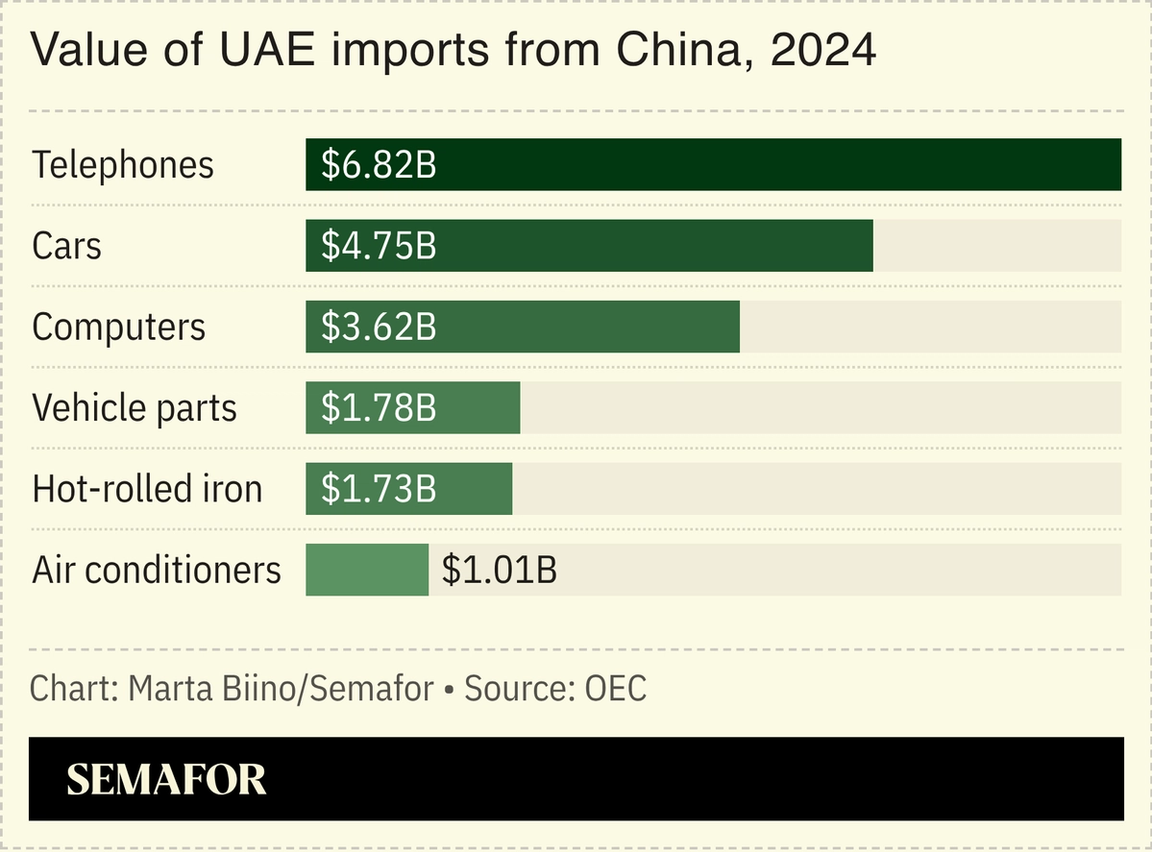 Abu Dhabi may consolidate some of its Chinese investments into a new entity as it looks to increase its exposure to the world’s second-largest economy. The plan would involve merging the China assets of two of its sovereign wealth funds: L’IMAD Holding, the fund chaired by Crown Prince Sheikh Khaled Bin Mohamed, and Mubadala, Bloomberg reported. A jointly controlled vehicle would put Sheikh Khalid, whose profile is rapidly rising, alongside Mubadala boss and UAE special envoy to China Khaldoon Al Mubarak. The latter is a long-time confidant of Sheikh Khaled’s father, UAE President Sheikh Mohamed Bin Zayed, and accompanied Sheikh Khaled on meetings with Chinese leader Xi Jinping in Beijing last week. That visit coincided with the UAE asking the US Federal Reserve for a financial backstop, according to The Wall Street Journal. Emirati officials had told the US they could use China’s currency for oil sales or other transactions if they run short of dollars. But that’s unlikely anytime soon: The UAE has nearly $300 billion in foreign currency reserves and around $1.8 trillion in sovereign wealth fund assets. The request is more likely a confidence-building measure than a cry for help, Bloomberg economist Ziad Daoud said. — Matthew Martin |
|
Bahrain takes aim at disloyal citizens |
 Bahrain’s King Hamad bin Isa al-Khalifa receives Kuwait’s Foreign Minister last week. Bahrain News Agency/Handout via Reuters. Bahrain’s King Hamad bin Isa al-Khalifa receives Kuwait’s Foreign Minister last week. Bahrain News Agency/Handout via Reuters.Bahrain’s King Hamad bin Isa Al Khalifa ordered officials to act against those who “betrayed the nation” — an edict that could lead to citizenship being stripped from some locals. The move comes amid a broader crackdown on speech since the start of the Iran war, targeting those expressing support for Tehran or criticism of Gulf governments, and the publication of images of war damage, which are seen as undermining public confidence and stability. Gulf governments have also arrested alleged pro-Iran militant cells. Kuwait has revoked nationality from more than 70,000 people since 2024, with officials saying its program aims to address fraud. Bahrain faces growing economic strain due to the war, with ratings agency Moody’s changing its outlook on the kingdom from stable to negative. |
|
ALTÉRRA looks to the long-term |
  ALTÉRRA CEO Majid Al-Suwaidi with Semafor’s Mohammed Sergie. Tasos Katopodis/Getty Images for Semafor. ALTÉRRA CEO Majid Al-Suwaidi with Semafor’s Mohammed Sergie. Tasos Katopodis/Getty Images for Semafor.Abu Dhabi’s climate finance fund ALTÉRRA is investing to meet long-term energy demand and has a robust pipeline of potential deals, CEO Majid Al-Suwaidi said at Semafor World Economy in Washington, DC. The $30 billion fund has announced one investment since the Iran war began and the conflict’s energy shock backs up ALTÉRRA’s core argument. “The trends are clear,” Al-Suwaidi said, with electricity needed for AI, population growth, and economic development all driving massive demand for energy. Renewables are today “the cheapest and fastest form of energy you can deploy,” he said. Al-Suwaidi would like ALTÉRRA to be known for going after opportunities beyond wind and solar, adding that its investment committee approves deals based on not just commercial potential but their impact on emissions reduction too. As an example, he cited the fund’s investment last month in Wireless Logic, a UK-based Internet of Things firm that helps to optimize EV charging infrastructure, agriculture, and industrial machinery. |
|
Life on campus returns to normal |
 MBZUAI President Eric Xing and Semafor’s Mohammed Sergie. Tasos Katopodis/Getty Images for Semafor. MBZUAI President Eric Xing and Semafor’s Mohammed Sergie. Tasos Katopodis/Getty Images for Semafor.Life is returning to normal at the campus of Mohamed bin Zayed University of Artificial Intelligence in Abu Dhabi, the university’s President Eric Xing said at Semafor World Economy in Washington, DC. “Psychologically, there is an impact because people are anxious about the uncertainty when the war is going to be over, and [whether] the economy is going to be hurt,” Xing said. “But in terms of daily life, your work, you don’t actually need to change too much.” The college, which offers degrees in AI fields such as computer vision and machine learning, also runs an internship program that has been a magnet for US students. Xing said that, prior to the war, four-fifths of MBZUAI’s students chose to remain in the UAE after graduating, reflecting the country’s investments in quality of life and in retaining global talent. “Not only are they paid very well, a job over there is more predictable, sustainable, and also reliable,” said Xing, who also collaborates with UAE-based AI firm G24. |
|
View: A colder approach to Iran |
 Mohammed Salem/Reuters Mohammed Salem/ReutersWhatever becomes of the ceasefire, one fact is already fixed: Relations between the Gulf and Iran will not return to what they were before this war, writes Nawaf M. Al-Thani, a former senior Qatari defense official and founder and president of the Washington-based Council on International Mediation, in his debut column for Semafor. “The Gulf states, including Qatar, advised against the American-Israeli attack on Iran. They understood exactly what such an escalation could unleash, because the region knows something distant powers repeatedly forget: When war comes to the Middle East, it is the Middle East that pays first,” he writes. “The old relationship with Iran was difficult, but familiar. The next one, if it emerges at all, will be colder, stricter, and built on far less faith.” |
|
 Checking In- Dubai’s hospitality scene is undergoing some changes amid wartime challenges: Minor Hotels has closed Anantara World Islands, on the South American cluster of the manmade archipelago. Meanwhile, the iconic sail-shaped hotel Jumeirah Burj Al Arab has shut for an 18-month renovation, a plan in the works before debris from an Iranian drone damaged its facade at the start of the war.
Crime- Dubai authorities arrested Daniel Kinahan, the alleged leader of the US-sanctioned Kinahan international crime group; he faces extradition to Ireland on charges related to organized crime offences. — The National
Real Estate- Property developer Aldar will build 9,000 affordable homes in Abu Dhabi — a sign that the UAE real estate market does not just revolve around high-end properties. Prices in the capital are generally lower than in Dubai and the war has dampened demand, but some such as Egyptian billionaire Naguib Sawiris are betting on a swift rebound.
Sports- Saudi Arabia’s Public Investment Fund sold most of its stake in local soccer team Al Hilal to billionaire Prince Alwaleed Bin Talal in a deal valuing the club at about
|
|
|


