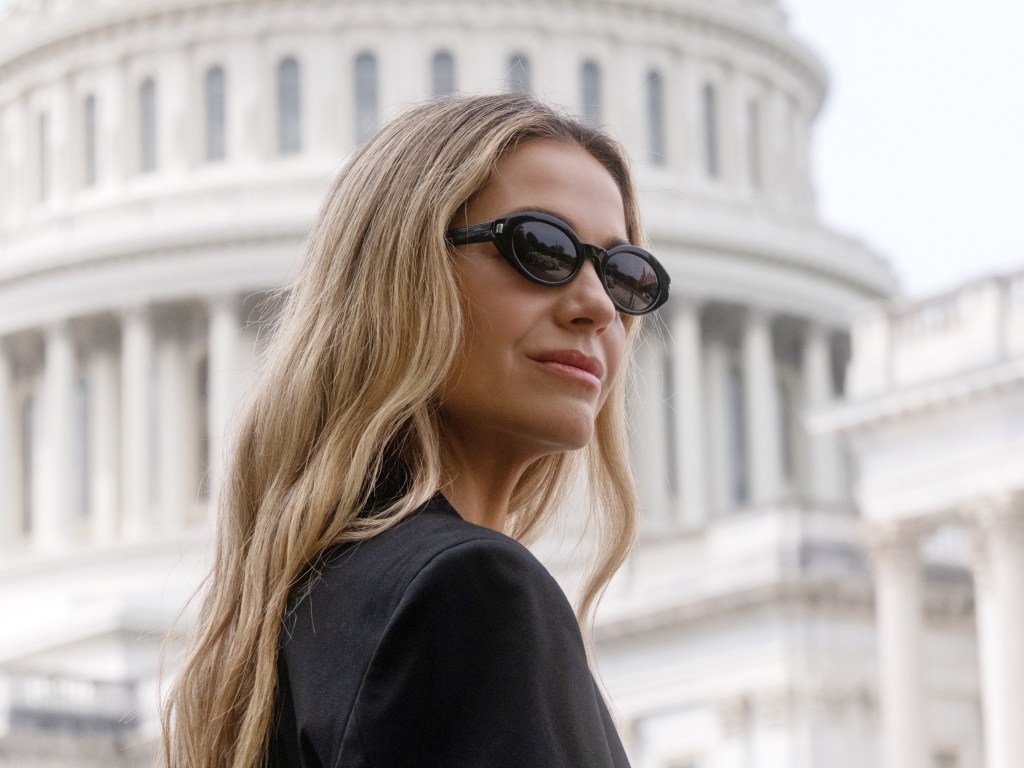
Alex Taylor is neither a lobbyist nor a politico by trade, but she already has the ear of several heavy hitters on the Hill. Taylor, the cofounder of Perelel, is one of several women’s health founders, from startups like
Bobbie and
Halle Berry’s Respin, who have made lobbying U.S. lawmakers to better fund and support women’s health a cornerstone of their brands. Last week, I joined Taylor for a day of meetings in Washington D.C.—showing how startups can push for meaningful change in an often polarized, politically-stuck category.
On Wednesday, Taylor took to the Capitol, armed with data about the women’s health research gap, to tackle a small—and, crucially, winnable—battle in the colossal fight over women’s health: making
postnatal vitamins HSA- and FSA-eligible, the same way prenatal vitamins already are.
The ask requires minimal lift on Congress’ part (approval either through the Appropriations process or the committee process), and even fewer taxpayer dollars. The implications, however, are significant. Around one-third of Americans
utilize HSA/FSA benefits to subsidize their spending on approved goods (which includes things like the Oura Ring and infrared sauna blankets). Yet, the tax code largely covers a woman’s health only before giving birth, a contradiction that reflects the underlying disconnect between government regulation and women’s health standards.
In fact, the
majority of maternal deaths occur in the postpartum period. Many of the
leading causes of maternal death in the U.S. (including mental health crises and iron deficiency-related complications) could be
partially addressed by proper postnatal nutrient support. This rift is the same reason the U.S. ranks around 55th in the world for maternal mortality and the NIH directs
less than 10% of its research funding to women’s health. Closing the women’s health gap could add
at least $1 trillion to the global economy by 2040, according to
McKinsey. And untreated postpartum depression
costs employers an estimated $6,223 per mother in lost productivity.
Making postnatal vitamins HSA/FSA-eligible wouldn’t solve these complex problems. But it’s an example of a targeted change that can be made now, through existing mechanisms, without a budget (or political) fight.
I tagged along with Taylor as she met with Rep. Stacey Plaskett (D-Virgin Islands), Rep. Lauren Underwood (D-Ill.), Sen. Angela Alsobrooks (D-Md.), Rep. Rob Menendez Jr. (D-N.J.), and Sen. Ruben Gallego (D-Ariz.), whose wife, Sydney Gallego, joined him. The couple has spoken publicly about years of fertility struggles. Taylor’s goal is to link arms with this growing group of lawmakers, including those who understand these issues on a personal level.
Gallego introduced the
Strong Start Act in February. The bill would provide a one-time, direct payment of $3,000 to parents to pay for upfront costs like a crib, stroller, and car seat. He is also a supporter of the
End Diaper Need Act of 2025, which would allow families to use HSAs or Health Reimbursement Arrangements (HRAs) to purchase diapers. Underwood is the lead sponsor of the Momnibus—a package of 14 bills,
reintroduced in March, that represents the most comprehensive federal attempt to address America’s maternal health crisis. The Momnibus would extend WIC eligibility into the postpartum period, grow the perinatal workforce, fund maternal mental health, and invest in community-based care. Taylor’s HSA/FSA ask fits inside this architecture.
Perelel’s approach to advocacy helps convince these lawmakers to take the meeting. Perelel, which is profitable and led by cofounder and CEO Victoria Thain Gioia, has raised more than $37 million with the support of Prelude Growth Partners,
Unilever Ventures, Willow Growth Partners, and Selva Ventures.The company has
committed $10 million to women’s health research and has already deployed $5.5 million of that, including funding to the Magee-Womens Research Institute. It’s donated $2.5 million worth of prenatal vitamins to underserved communities.
The question is whether Washington is finally ready to act like the numbers matter.
Lily Mae Lazaruslily.lazarus@fortune.comThe Most Powerful Women Daily newsletter is Fortune’
s daily briefing for and about the women leading the business world. Today’s edition was curated by Emma Hinchliffe. Subscribe here.