|
|
|
|
Good morning. A renaissance in romance is revving up the book business, especially in Canada. In focus today, we look at what’s behind the surge in sexy lit – and the Canadians who’ve figured out how to give audiences exactly what they need. |
|
|
|
|
|
|
|
|
|
|
|
|
|
|
|
|
Artificial intelligence: Companies are bracing for an onslaught of software fixes from tech giants trying out Anthropic’s powerful new AI model. |
|
|
|
|
Defence: Canada was selected to host a new multinational defence bank as negotiations among the founding countries ended in Montreal, sources say. |
|
|
|
|
|
|
|
|
|
|
|
|
|
|
|
|
|
|
|
|
|
There's a global romance novel renaissance going on, and it's being led by Canadians who've figured out how to give audiences exactly what they need. Joanne Klimaszewski/The Globe and Mail
|
|
|
|
|
|
|
|
|
|
|
A romance novel renaissance spawned in Canada |
|
|
|
|
The cover of this month’s Report on Business Magazine is, to say the least, a departure from our typical fare. But once you’ve read “The swoon boom,” by Deborah Aarts, you’ll see we had no other option. |
|
|
|
|
The Great Hot North has spawned some of the world’s biggest names in love lit, including Carley Fortune and Rachel Reid, whose spicy gay hockey series has swept tens of millions of fans right off their skates. |
|
|
|
|
|
|
|
|
The knock-on effects are bolstering publishers, booksellers and, of course, the writers themselves (not to mention making readers hungry for happily-ever-afters weak at the knees). |
|
|
|
|
A key player in Romancelandia is Harlequin, based in Toronto. Harlequin built its empire of swoon on distinctive art that encouraged readers – left them no other choice but, really – to judge a book by its cover. |
|
|
|
|
I was nine or so when I picked up my first Harlequin. It was summertime. We were up north and TV-less, and age-appropriate books simply weren’t available. So I delved into our cottage’s small collection of musty paperbacks, with titles like A Silken Barbarian and Devil in Disguise, their covers featuring gauzy oil paintings or almost comically retouched photographs of dark-haired beauties and ripple-abbed rakes. |
|
|
|
|
I instantly fell in love with their comforting predictability. On page one, you knew exactly who would end up together on page 192, and you knew exactly how the story would end: happily. |
|
|
|
|
As I got older, I set aside romance in favour of Capital-L Literature, which is meant to make you weep not with hope but with despair. The self-imposed joy hiatus lasted decades. |
|
|
|
|
Then COVID-19 hit and I, like millions of other locked-down readers the world over, started hankering for an escape from the terrors of real life. At Indigo, net sales in the genre have grown by nearly 400 per cent since 2020. |
|
|
|
|
And so we come to this month’s Report on Business cover story. We knew we wanted to capture the same ravishment vibes as the Harlequins that provided a gateway into the genre for so many readers, and there was no one better suited to doing so than Joanne Klimaszewski. |
|
|
|
|
Since 2013, she’s been shooting eight windblown covers a month for Harlequin Presents, a line that promises to sweep readers “into a world of luxury, wealth and exotic locations.” |
|
|
|
|
Many of Klimaszewski’s covers feature Jesse Dunphy, who has posed for 1,100 Harlequins since 2010. Cowboys, firefighters, pirates, chief execs – you name it, he’s donned the costume. Dunphy came out of Harlequin semi-retirement to pose with relative newcomer Jessica Bleta for this month’s cheeky cover (which even features a loon – iykyk). |
|
|
|
|
The cover game is changing, though. Illustration is sweeping the genre, in part owing to lower costs. And even Harlequin has started to use stock imagery for certain lines. So far, though, the company has stood steadfastly against using artificial intelligence to create its hunk-and-belle covers. Diehard readers, says Klimaszewski, want to know that even if their fantasy stories are made up, the people on the cover are somewhere out there in real life. |
|
|
|
|
|
|
|
|
|
|
|
|
|
|
|
|
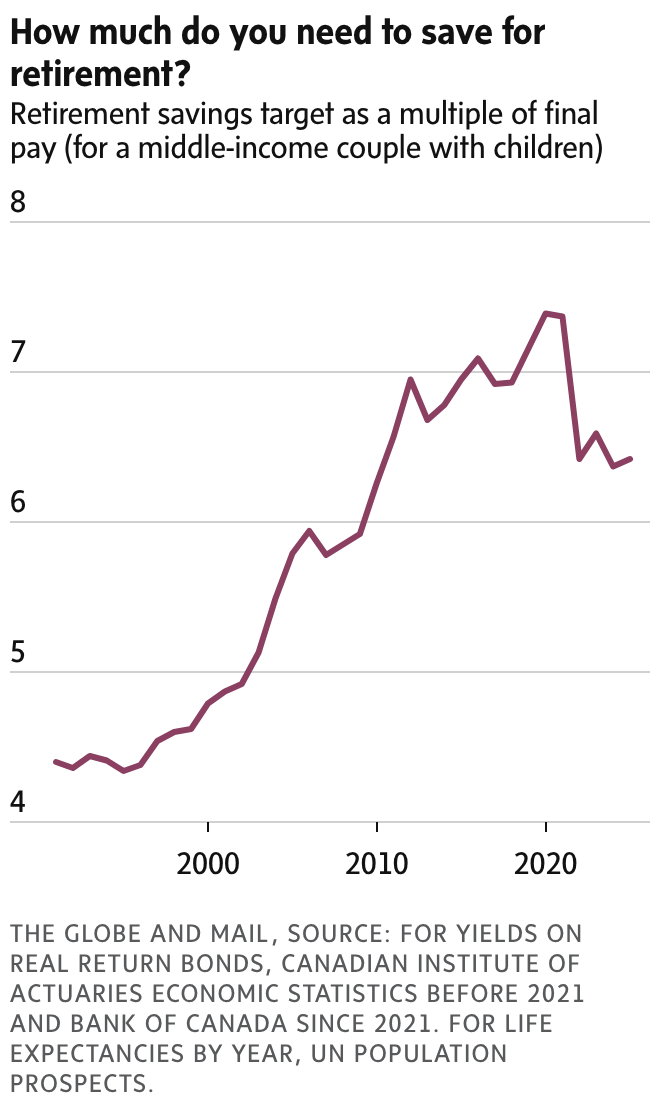
A positive downward trend |
|
|
|
|
|
|
Some good news: Your retirement savings target is lower than it was five years ago. To illustrate, here’s a look at a middle-income couple whose combined year’s earnings just before retirement are $135,000 – in today’s dollars, and correspondingly less in previous years. |
|
|
|
|
|
|
|
|
|
|
|
|
|
|
|
|
 |
If you live in a big city, you’re going to have big events come through, but it’s also important that when you have those big events come through, that they don’t overly and disproportionately impact what’s there already. — Dominic Lai, Dragon Boat BC |
|
|
|
|
|
FIFA agreements with host cities are forcing changes to other summer events in Toronto and Vancouver. |
|
|
|