| Welcome, Weekenders! In this newsletter: |
| • The Big Read: Inside ZaiNar, the secretive startup hoping to power the physical AI era |
| • Policy: Meet the Trump official who wants to deliver a win to prediction markets |
| • Plus, Recommendations—our weekly pop culture picks: “Expanse: The Nannup Four,” “The Infinity Machine” and “Beef” |
| |
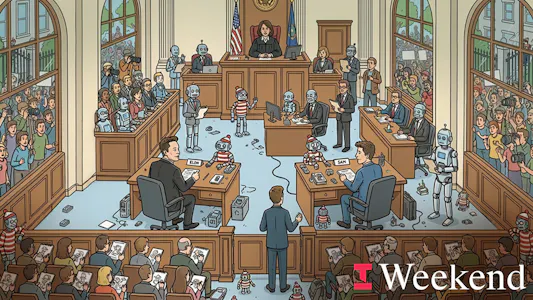
| Watching the Elon Musk versus OpenAI trial from inside the courtroom gave me a front-row seat to the AI boom’s greatest grudge match. The first week didn’t disappoint. |
| Musk’s testimony delivered memorable moments, many during a withering cross-examination by OpenAI’s attorney. Judge Yvonne Gonzalez Rogers alternated playing den mother to the jury and disciplinarian with the lawyers. Sam Altman and Greg Brockman studied the proceedings from the gallery (Brockman is set to testify Monday). Lawyers argued whether testimony about a possible AI apocalypse was admissible. Outside, AI doomers mingled with morning crowds of journalists and Stanford University undergraduates who began queuing up as early as 5 a.m. to secure a spot inside. In the end, so many observers squeezed into an overflow room that some had to sit on the floor. |
| It made for a curious mix, a billionaire business battle with a TMZ tinge. As Nina Reyes, a director for comms firm VSC, quipped, it’s “the tech version of the Diddy trial.” |
| Here are some highlights. |
| OpenAI Lawyer Gets Under Musk’s Skin |
| “Your questions are not simple—they are designed to trick me, essentially,” Musk said in one of many complaints to OpenAI’s attorney, Bill Savitt, a veteran litigator. Musk likened the queries to “Have you stopped beating your wife?” Judge Yvonne Gonzalez Rogers intervened. |
| “No,” she said, “we’re not going to go there.” |
| On Thursday, Savitt suggested that Musk hadn’t offered a complete answer to one question. “Few answers are going to be complete, especially when you cut me off all the time,” Musk retorted. |
| A Jury of One’s Peers? |
| The nine jurors who will decide the future of OpenAI are decidedly not tech insiders. They include a caretaker, a nurse, a painter and a retired program manager for Lockheed Martin. In a reminder of how far AI has to go in penetrating the lives of average people, two said they don’t use AI, two said it is helpful for their jobs and two others said AI makes their work take longer than ever because they have to double-check its output for mistakes. |
| Team Musk Embraces Legacy Media |
| As the owner of X, Musk frequently flames professional journalists and fires insults at big names in tech reporting, including us. So it was notable that articles from prominent media outlets featured significantly in his testimony. In Musk’s telling, it was a 2022 scoop from The Information about Microsoft planning an investment of $10 billion in ChatGPT that really got him concerned he had been the victim of a “bait and switch”—the phrase he used in his subsequent message to Altman referencing the article. |
| Judge Gonzalez Rogers Has a Nice Side… |
| Even before testimony began, the judge made clear her affection for the jury. She repeatedly sympathized with their long days in court, and offered comradery about the slog: “If you get cranky with your family, just know it’s because you’re tired,” she told the jury. |
| …But Don’t Make Her Mad |
| The judge is also ferociously strict in dealing with lawyers and observers. For instance, before the jury entered on Wednesday, she told a woman walking through the audience to halt. The woman froze, cellphone in hand. The court was silent. |
| The judge ordered the woman to identify herself and demanded to know if she understood English. “It is inconceivable to me that you could be so blind” as to not see the signs prohibiting photography in the courthouse. The woman said she was dyslexic. The judge said she didn’t care. |
| A Social Media Blackout |
| At Gonzalez Rogers’ insistence, Musk, Altman and Brockman agreed to refrain from posting about the case during the trial—no easy ask for the frequent tweeters. “How can we get this done without you making things worse outside the courtroom?” the judge asked Musk, who said his posts were responding to OpenAI’s statements on social media. |
| “All of you try to control your propensity to use social media,” she said. “Perhaps you’ve never done that before.” |
| Courtroom Sketches Became Meme Coins |
| While cameras aren’t allowed, Vicki Behringer’s pencils and watercolor brushes are. Sitting in the second row, the local artist captured Musk’s appearance on the stand. The sketches went viral, and one depiction of Musk was transformed into a cryptocurrency meme coin called Chad Elon, which attracted over $25,000 in trading volume. |
| Elizabeth Holmes, of Theranos infamy, even weighed in, posting “We had the same courtroom artist. Vicki Behringer was very kind.” |
| No AI Doom Talk |
| Musk, who has accused OpenAI of neglecting AI safety research, said during testimony that “the biggest risk is that AI kills us all.” |
| Judge Gonzalez Rogers was displeased. “Issues of extinction are excluded,” she told the lawyers the following morning. “This is a real risk,” a Musk lawyer responded. “We all could die as a result of artificial intelligence.” |
| “I suspect that there are plenty of people that don’t want to put the future of humanity in Mr. Musk’s hands—but it doesn’t matter,” the judge countered. “We aren’t going to get into those issues.” |
| Protesters Root Against Both Sides |
| Dozens of protesters gathered outside the courthouse on day one of the trial. They represented multiple anti-tech groups, including Stop AI, QuitGPT, Tesla Takedown and Purge Palantir. |
| Both sides have drawn public animus, but Musk has gained some sympathizers by asking the court to transfer money from OpenAI’s business to its charitable arm and seeking to remove Altman and Brockman as officers of its nonprofit. |
| “I hope Musk gets everything he’s asking for, even though he’s a son of a bitch,” one diehard said Thursday afternoon, when the number of protesters had dwindled. The woman, who said she is a Bay Area teacher, brought along her 93-year-old friend, who grew up in Nazi Germany. “So she knows about fascism,” the first woman said. They handed me a brat-green flyer with protest details. “Everyone Sucks Here,” it read. “Whoever wins, we lose. Stop the Nerd Reich nonviolently before it stops us all.” Yikes!—Rocket Drew (rocket@theinformation.com) |
| |
|
| The Big Read |
 |
|
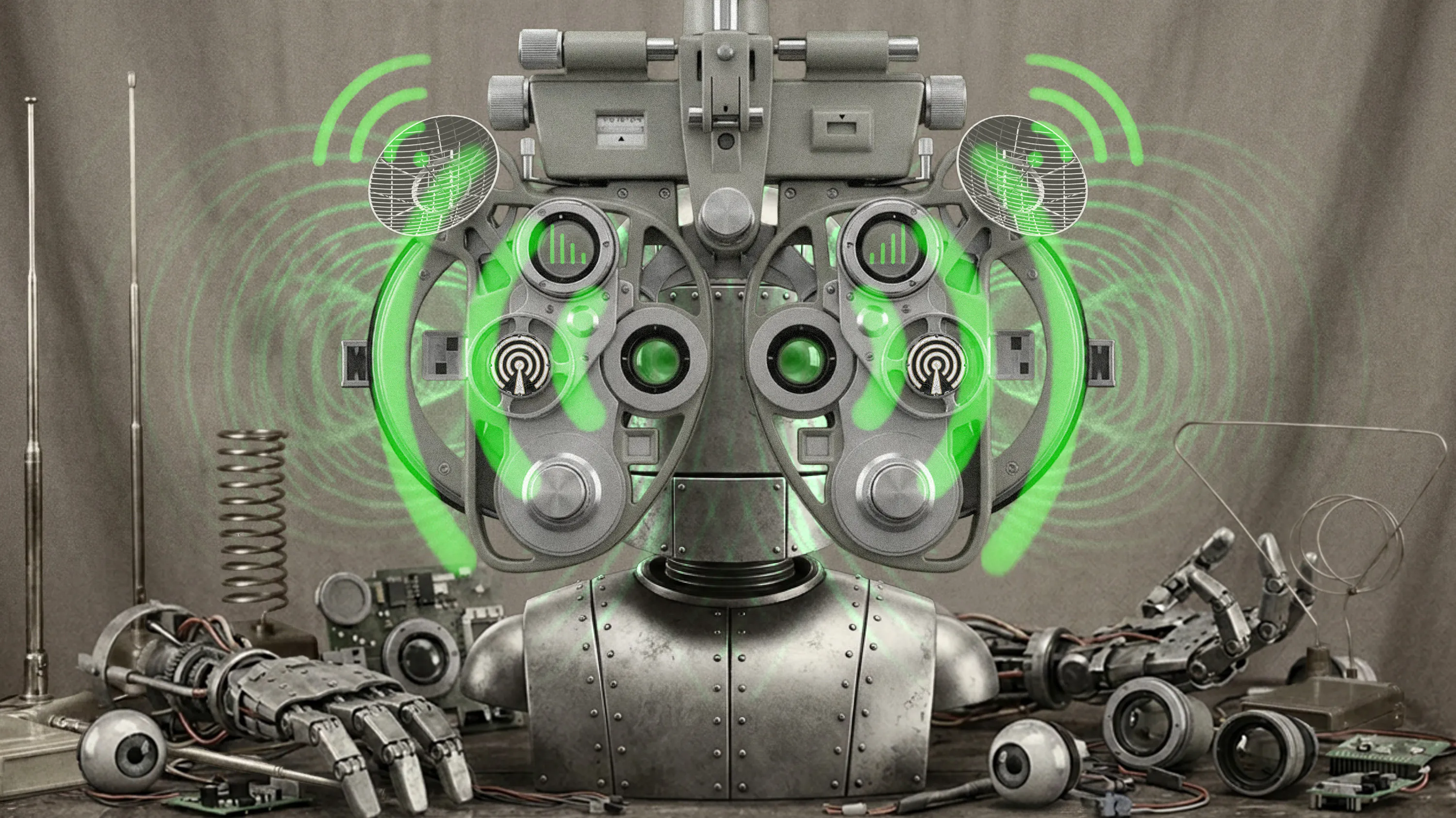
| ZaiNar says it has developed innovative, ultraprecise tracking tech that will teach robots to see and help power the physical AI era. It will also freak out everyone who worries about digital privacy. |
| Policy |
 |
|
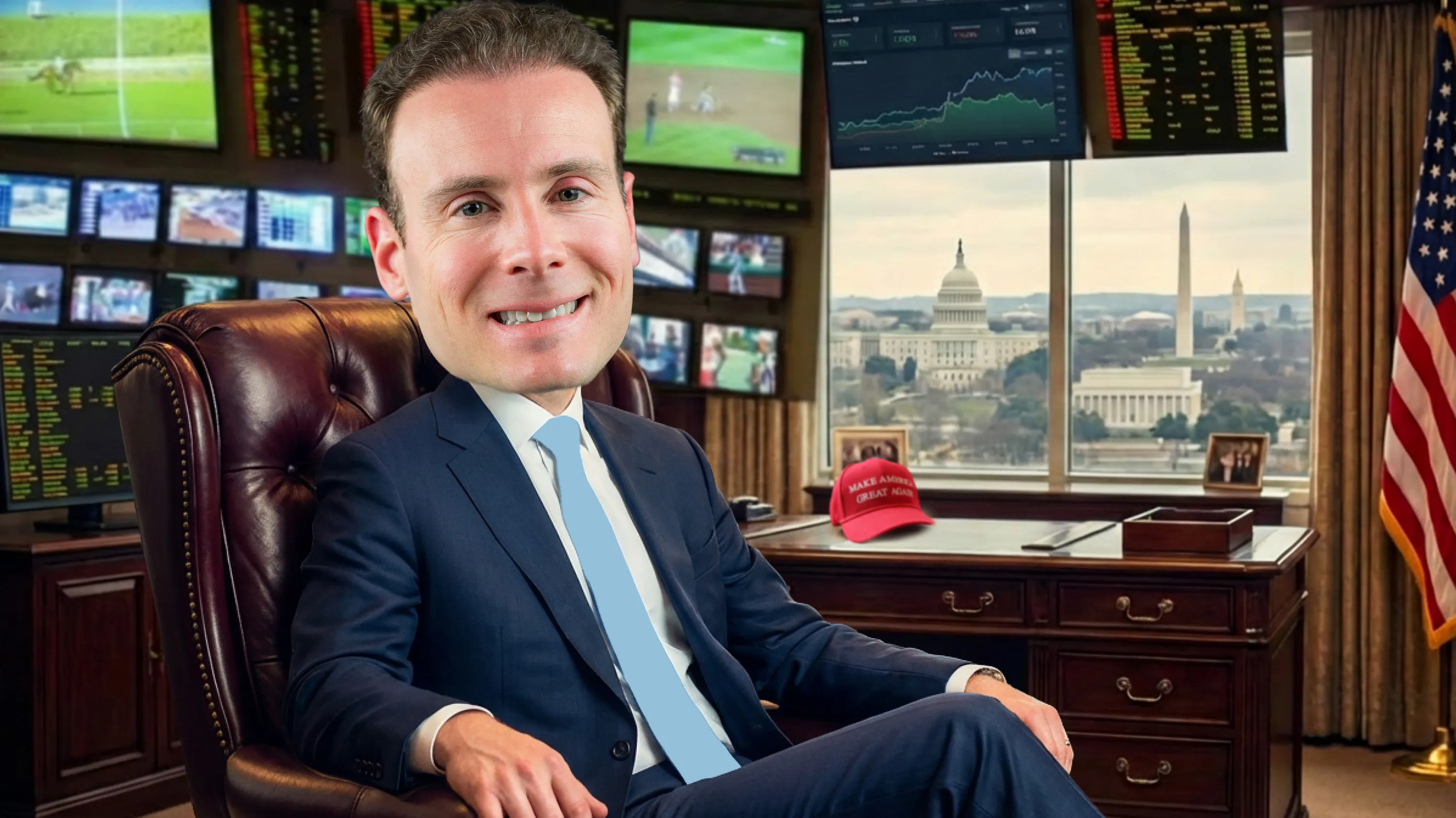
| CFTC Chair Michael Selig, a wonkish libertarian, hopes to secure a prominent new role for his agency by stopping other regulators from going after the startups. |
| |
 |
| Listening: “Expanse: The Nannup Four” |
| It’s funny how certain accents can convey such a precise mood, really enhancing a piece of entertainment. For instance, I think a British narrator vastly improves all historical fiction. Something about storybook fairytales? That’s a Grimm task—get a German. And to me, nothing more acutely conjures up a sense of dusty dread quite like an Aussie. I expect it’s because Down Under exists in my mind as a great unknowable, unpredictable place halfway around the world. |
| “Expanse: The Nannup Four” fits exactly into my perception, a fine mystery tale from the talented podcast folks at ABC, Australia’s public broadcaster. It delves into the overnight disappearance of four people—two men, a woman and a child—from a tiny blue farmhouse in remote southwestern Australia. Ostensibly, they picked up sticks and moved to Brazil. Or so said the strange note pinned to their front door. But then again, they also harbored a connection to a cult and nursed doomsday beliefs. Their fate might seem like standard true-crime fare, but it got far more interesting when ABC began receiving additional tips about them after the pod’s March debut, prompting the series to continue adding more episodes beyond its original six-installment run.—Abram Brown |
| Reading: “The Infinity Machine” by Sebastian Mallaby |
| I wouldn’t go so far as to call a 400-page book heavy on technical details about the race for AI superintelligence a romp, but “The Infinity Machine” is nonetheless highly entertaining. Kudos to author Sebastian Mallaby, a Council on Foreign Relations senior fellow, who somehow manages to be engaging and accessible when explaining complex technology and then sly and gossipy when describing the personalities fighting over it. (Mallaby is a veteran at those tasks; he previously wrote 2022’s “The Power Law,” which examines venture capital, as well as four other titles.) |
| In selecting a main character for “The Infinity Machine,” Mallaby’s pick of Demis Hassabis, Nobel Prize winner and co-founder and CEO of Google DeepMind, was a wise choice. Hassabis’ longtime refusal to leave London for Silicon Valley lends him more of an outsider’s critical perspective than Anthropic’s Dario Amodei, who grew up there, and OpenAI’s Sam Altman, who dropped out of Stanford to launch his first startup and then ran Y-Combinator. |
| Mallaby draws a further distinction between Altman and Hassabis. He portrays DeepMind as originally a vehicle to help Hassabis pursue his main passion: unraveling the biological mysteries of intelligence. Altman, in contrast, wanted his company to dominate the consumer market, Mallaby writes, and that singlemindedness gave OpenAI an early lead in selling AI. |
| Google DeepMind did eventually catch up, but it came at a price: Hassabis couldn’t be both a scientist pursuing the common good and a businessman focused on the bottom line. To run a successful AI company, he had to pick a side. Hassabis chose business. Call me a sentimentalist, but I found myself rooting for him to stick more to the noble-minded science.—Amy Dockser Marcus |
| Watching: “Beef” |
| I think “The White Lotus,” Mike White’s very popular HBO dramedy, and “Beef,” Lee Sung Jin’s popular Netflix series, are spiritual narrative cousins. They’re both interested in the same motif: Inherently, people behave badly, and it doesn’t take much to turn us into real jerks. But where “The White Lotus” is determined to show how a vacation and travel can bring out the worst in people, “Beef” likes to dwell in the mundane everyday and show how the prosaic grind of ordinary existence can push us toward acting like a Mr. Hyde. As “Beef” enjoys pointing out, technology amplifies the problem, and as we superglue ourselves to our devices, they fuel the delusions and desires that prompt us to act out. They can also make it impossible to escape those forces. |
| “Beef” scored a surprise hit with its 2023 first season, and rather than try to extend the storyline, Lee smartly opted to turn “Beef” into an anthology series. Its second season recently premiered, showcasing the talents of Oscar Isaac and Carey Mulligan: He is the workaholic manager of a ritzy California golf club, she an interior designer who nurses aspirations of running her own bed and breakfast. She is insipid. He is neglectful. They’re both snooty. Together, they’re miserable, but they try to pretend they’re not. That long-standing attempt to keep up appearances gets shattered one evening when a pair of young employees from the golf club (Charles Melton, Cailee Spaeny) inadvertently witness them having a venomous fight. |
| Over eight episodes, the tension among the foursome mounts, presenting a cautionary tale, one about wanting too much from other people while expecting too little from yourself. We often try to fix such a disconnect with a lot of make-believe (a pet phrase of Isaac’s character), which only goes so far—even in California, a place that counts make-believe as a top export.—A.B. |