| | In this edition: Angola’s debt warning, DRC’s cobalt quotas force firms to pivot, and an AI-driven c͏ ͏ ͏ ͏ ͏ ͏ |
| |  | Africa |  |
| |
|
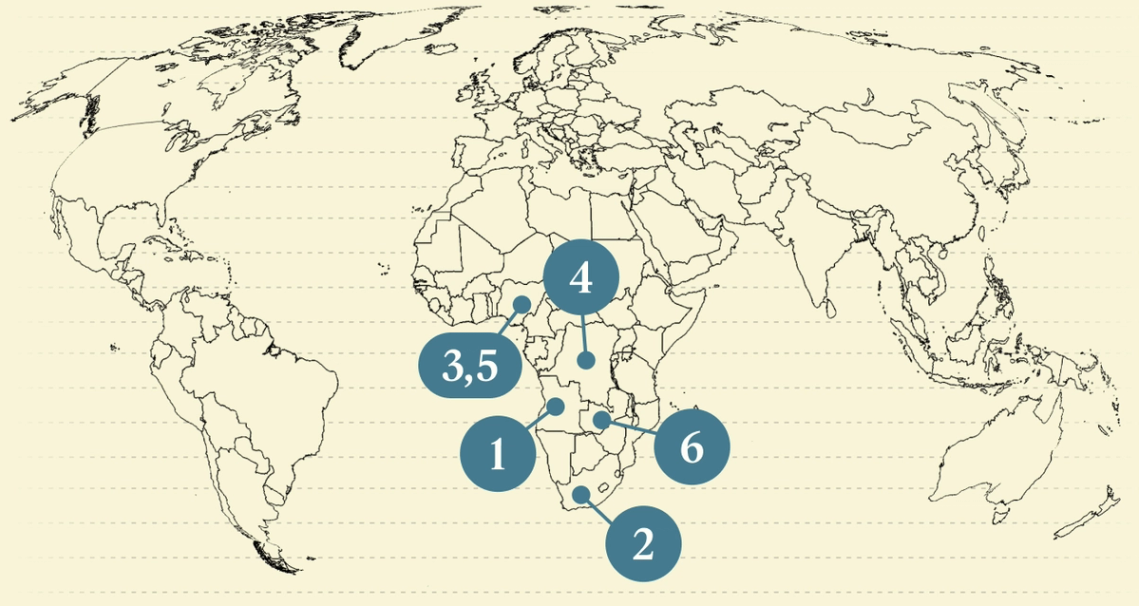 - Angola’s debt warning
- Moody’s exits S. Africa
- Nigeria’s Obi quits alliance
- DRC quotas force pivots
- OPay eyes IPO
- AI-driven copper mine
 The Week Ahead, and a life-saving new housing design. |
|
Angola’s debt ceiling warning |
 Sonangol oil and gas refinery in Luanda. Andrew Cabellero-Reynolds/AFP via Getty Images. Sonangol oil and gas refinery in Luanda. Andrew Cabellero-Reynolds/AFP via Getty Images.Angola’s public debt will hit its ceiling in the next few years, the International Monetary Fund warned, advising the country to deploy an expected windfall from rising oil prices toward reducing debt and building buffers. Africa’s oil-producing nations are set to receive a revenue boost due to shortened supply of oil on the international market due to the Iran war, with Nigeria estimated to be on track for a $3.6 billion windfall. Angola, Africa’s top recipient of Chinese loans and the continent’s second-largest oil producer after Nigeria, set a benchmark oil price of $61 for this year’s budget. The jump in crude prices above $100 a barrel could “provide a temporary offset to Angola’s declining oil revenues,” the IMF said. But the government would need to speed up revenue mobilization and fuel subsidy reforms to reach debt sustainability targets, the Washington-based lender said. Several other African nations are still recovering from a post-pandemic shock that sent debt burdens soaring, and inflationary pressures triggered by the Iran war now risk undoing that progress. Malawi, Mozambique, and Senegal are in debt crisis situations that could lead to defaults in the next two years, Citi’s chief Africa economist has warned. |
|
Moody’s pulls South Africa office |
 John Sibley/Reuters John Sibley/ReutersGlobal credit ratings agency Moody’s gave up its South African license, leaving a regulatory hole that hands GCR — the continent’s biggest home-grown ratings house — a clear shot at filling the gap with boots on the ground. The exit comes as global agencies face growing criticism for relying on offshore models that some African leaders and policymakers say misread local realities — a debate sharpened just this year by Afreximbank’s public break with Fitch. Moody’s said its decision was part of a wider shift to focus on serving “cross-border investors and African issuers looking to attract international funding.” For everything else, Moody’s pointed to GCR as its preferred vehicle for helping issuers raise capital in domestic markets. GCR is a Moody’s subsidiary that issues ratings under its own methodologies and brand. South African regulators have given banks a 24-month window to remap capital models that use Moody’s South Africa ratings. The agency’s Ba2 rating on South Africa’s sovereign debt — two notches below investment grade — will not be affected. |
|
Nigeria’s Obi leaves coalition |
 Nigerian opposition politician Peter Obi. Temilade Adelaja/Reuters. Nigerian opposition politician Peter Obi. Temilade Adelaja/Reuters.Nigerian politician Peter Obi withdrew from a coalition that agreed to present a united front against President Bola Tinubu in January’s election, increasing the likelihood that the opposition vote will be split. Obi’s announcement on Sunday that he will leave the African Democratic Congress (ADC) — whose members include Atiku Abubakar, a former vice president — came amid legal cases over the party’s leadership. Obi, who came third in the 2023 poll and won a quarter of the popular vote compared to Tinubu’s 37%, cited “endless court cases, internal battles, suspicion, and division” as being central to his decision. Defections are common during Nigerian election campaigns. Obi was on the ballot in each of the last two elections under different parties and now joins the relatively unknown Nigeria Democratic Congress. His 2023 campaign was driven by youth disenchantment with two establishment parties that had shared power since 1999. His campaign was notable for winning Lagos, Tinubu’s home state where he was governor for eight years. — Alexander Onukwue |
|
DRC cobalt quotas trigger new strategies |
| |  | Tiisetso Motsoeneng |
| |
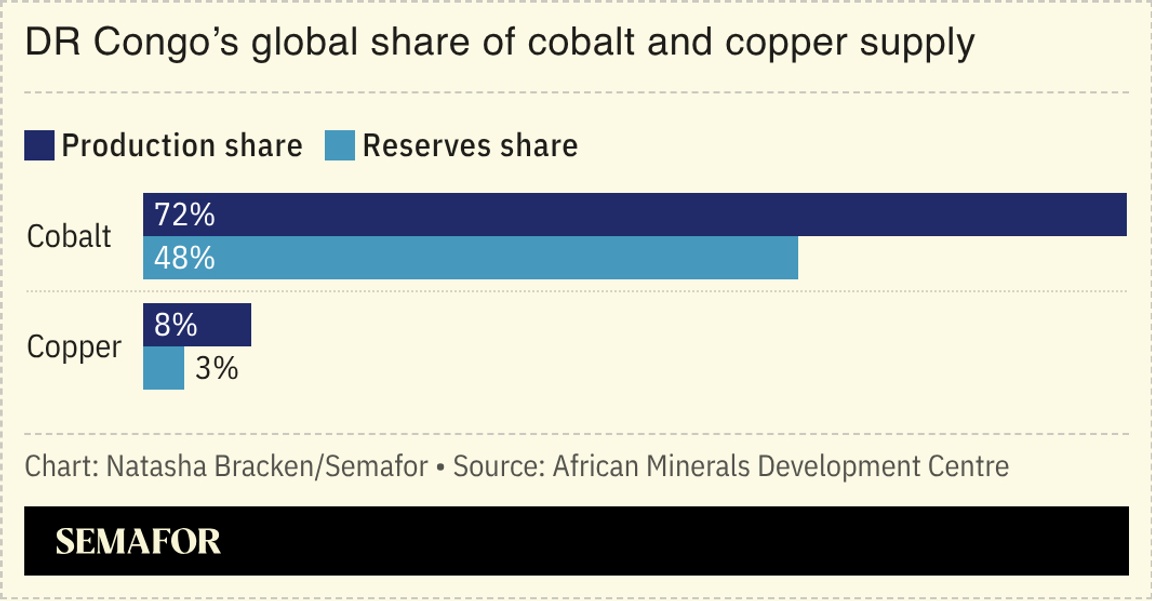 DR Congo’s cobalt export quotas have forced the metal’s largest producers to adopt new strategies as the central African country seeks to capture more value from its natural resources and curb illegal flows. The country, which accounts for over 70% of global cobalt mine supply, introduced export caps late last year in a bid to tighten control of a mineral that underpins the global battery industry. Last week, mining giant Glencore confirmed that its cobalt output fell 39% in the first three months of the year to 5,800 tons compared to the same period in 2025, a deliberate move to avoid producing material it cannot export under its 2026 quota of 22,800 tons. The London-listed company has instead adopted a copper-first regime, lifting production by 19%. China’s CMOC, the world’s largest cobalt supplier, is also leaning into copper expansion but it has decided to keep cobalt output at record levels, telling investors earlier last week that its high ore grades and low byproduct costs mean there is a commercial logic to maintaining normal output even if only a fraction can be exported. |
|
OPay eyes IPO with $4B valuation |
 Olympia de Maismont/AFP via Getty Images Olympia de Maismont/AFP via Getty ImagesOPay, a Chinese fintech company focused on Nigeria, is looking to go public in the US, Bloomberg reported. It has engaged three banks, including JPMorgan, to prepare the process that would value the company at around $4 billion, according to the outlet. OPay’s digital banking app has rivaled services from commercial banks over the past two years, making the firm one of Nigeria’s best-known financial services companies. OPay took off in 2019 with ambitions to be a super app that offered various features, including motorcycle taxi bookings, food deliveries, and quick loans. But a narrower focus on finance in recent years has coincided with a jump in its private valuation from $2 billion, when it raised $400 million in a round led by Softbank in 2021, to about $3 billion today. A handful of African tech companies have successfully listed in the US, notably e-commerce platform Jumia and telecom towers provider IHS. An OPay listing in the US would be the first by a fintech company with a mostly Nigerian customer base. |
|
AI-driven copper mine breaks ground |
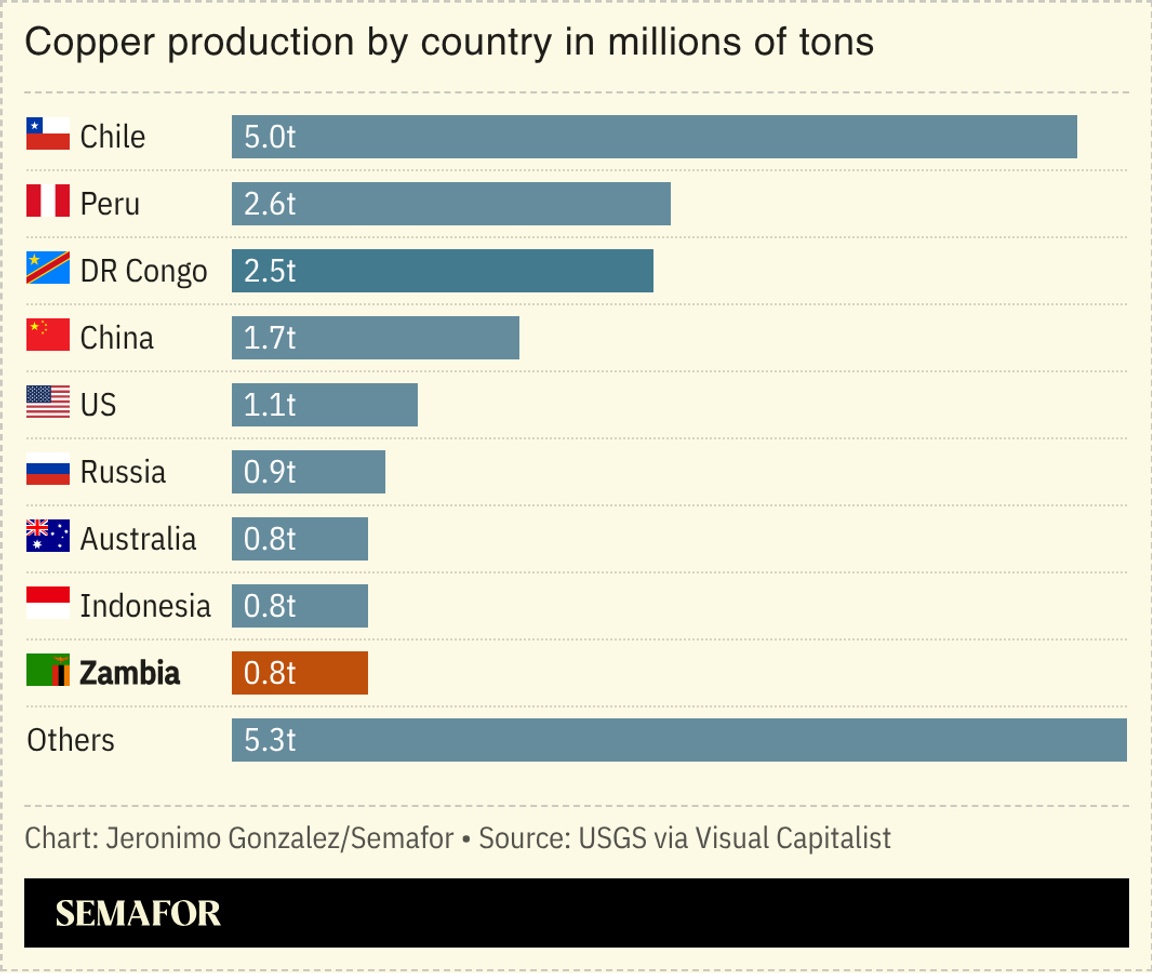 Work began on a $2.3 billion copper mine in Zambia backed by tech billionaires, including Bill Gates and Sam Altman. The Mingomba mine will be among the largest copper mines in the world and will eventually produce 300,000 tons of copper a year. AI is involved in every level of the project: The demand for copper is being driven up by data center construction and the need to diversify global supply chains away from China. KoBold, the Silicon Valley-based company that will run Mingomba, used AI to help find a previously unknown concentrated copper ore deposit on the site. The lode is more than a mile underground, and the area is prone to flooding, making the project challenging. This item originally appeared in Semafor’s twice-daily Flagship briefing. Subscribe here. → |
|
|
 - May 4-6: The Gitex Future Health Africa summit kicks off in Casablanca, with discussions due to focus on AI integration into healthcare.
- May 4-15: Nigerian President Bola Tinubu left for France on Saturday as part of a two-week, three-nation tour that will also take him to Kenya and Rwanda.
- May 5-6: Fintech and e-commerce leaders gather for the Converge Africa conference in Cape Town.
- May 6-7: Rwandan President Paul Kagame is due to visit Botswana, with talks likely to focus on trade, investment, and taxation.
- May 6-7: Impact Capital Africa launches the ICA Investfest, bringing together regional investors and business owners in Lusaka.
- May 8: Mauritius, Seychelles, and Tanzania are due to release their inflation data for April.
|
|
 Business & Macro |
|
|


