A Japanese office chair, the revamp of an 1800s Paris building and Design Award-winner Andu Masebo.
|
Wednesday 6/5/26
|

|
|
London
Paris
Zürich
Milan
Bangkok
Tokyo
Toronto
|
|
|
|

inside job
There is plenty to fuel your appetite for your design in this week’s dispatch, including a minimal Metabolist office chair and the renovation of a notable Paris government building with ties to a medieval profession. We also take a hands-on approach to homeware with Monocle Design Award-winner Andu Masebo and journey from Los Angeles to Ibiza via a coffee-table book on the work of interiors specialist Tara Bernerd. First, Mary Holland goes back to square one with a lesson in protecting heritage design.
|
|
OPINION: Mary Holland
Living legacy
How can we ensure that the legacy of a late, great designer lives on? Today, it’s becoming more and more commonplace for work from such creatives to be preserved in a trust or archive, protected by a foundation or even the state. The Charles & Ray Eames Foundation, the Louis Kahn Estonia Foundation, and Franco Albini and Vico Magistretti’s archives are just some high-profile examples. The ambition is often to protect heritage and provide a platform for continuing the creative direction of the designer by producing new works inspired by their archives.
|
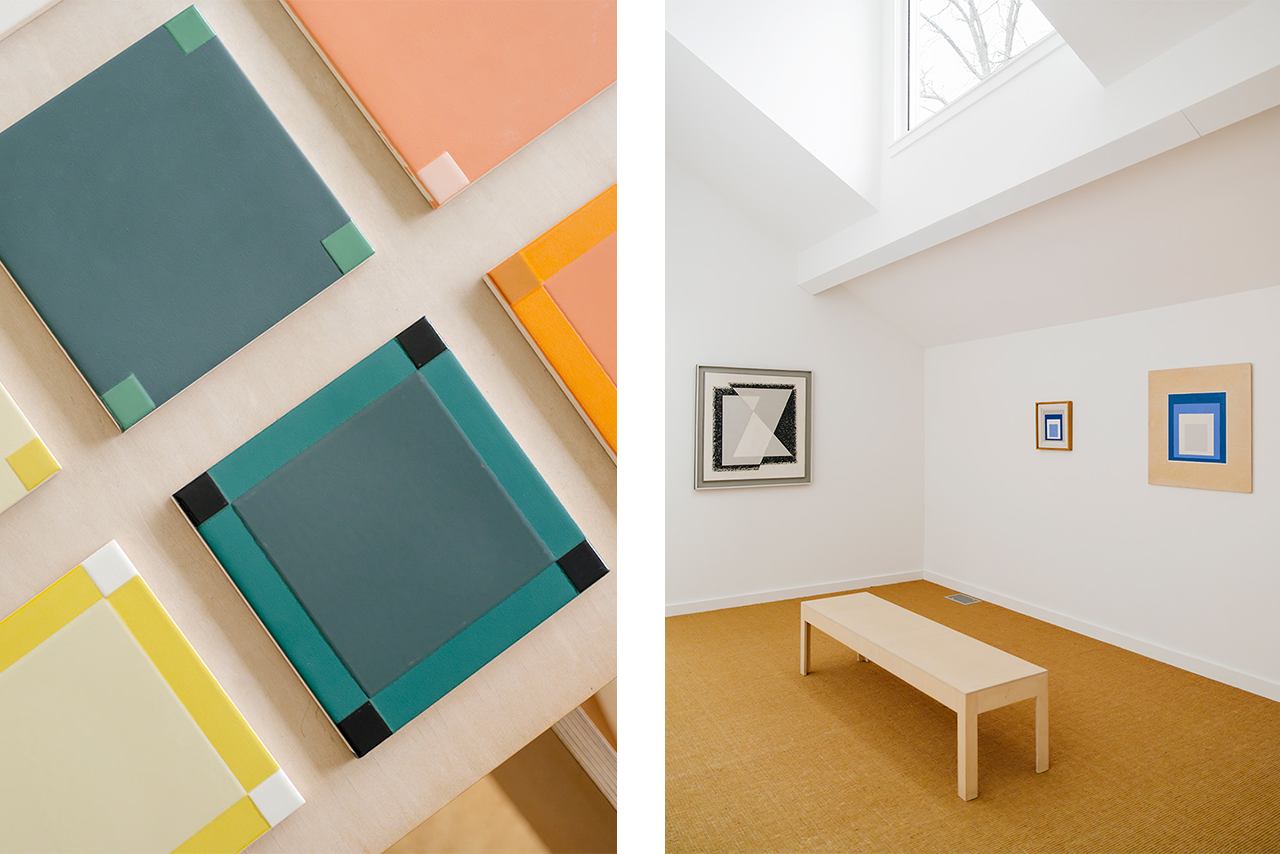
A new standard might be the recent partnership between Italian tile brand Mutina and the Josef & Anni Albers Foundation. Established in 1971, the latter is home to many of the US-based German duo’s Bauhaus artworks. But it also acts as a research centre, collaborating with creative brands and promoting education. What makes the partnership with Mutina a compelling model for others working with archives is that the approach, not just the outcome, mirrored that of the Albers. The duo, especially Anni, were always keen to experiment with new technologies and believed that good design should be accessible, functional and embedded in everyday life. “The Albers could be difficult because they had a very clear vision,” Nicholas Fox Weber, the foundation’s executive director, said after I visited its headquarters in Bethany, Connecticut. “They didn’t compromise on things.”
With Mutina, the foundation – much like the Albers themselves – took various stages of experimentation and two years of back and forth before a final design was agreed upon. Inspiration was drawn from Josef Albers’s iconic painting series, Homage to the Square, which is composed of either three or four nested squares in different shades, neatly layered on boards. The resulting tiles feature two patterns, allowing for almost endless arrangements, and are created using a traditional firing technique that preserves the natural variations that occur in the kiln. The approach gives the glazed surfaces depth and richness, with the tiles built up through the application of successive layers of glaze, much like Josef’s paintings. The collaboration, which was presented at Milan Design Week, begs the question: can this approach be adopted by other archives, where process as much as outcome is used to continue a legacy?
|
Perhaps – but there’s no easy answer, says Weber, explaining that arriving at a final idea is still an instinctive process. “It was like hearing a piece of music and knowing that you were on pitch or you were in tune,” says Weber. “It wasn’t what I would call an intellectual decision. It was a gut decision.” He likens it to a chef perfecting a dish. “There’s a moment when the taste and texture feel just right.” A reminder that we can catalogue, archive and cross-reference a design portfolio – but human touch is still essential to continuing a creative mission.
Mary Holland is Monocle’s New York correspondent. For more on the collaboration between Mutina and the Josef & Anni Albers Foundation, head to monocle.com.
|
|
DESIGN NEWS: Chamber of Notaries, France
Signed, sealed, delivered
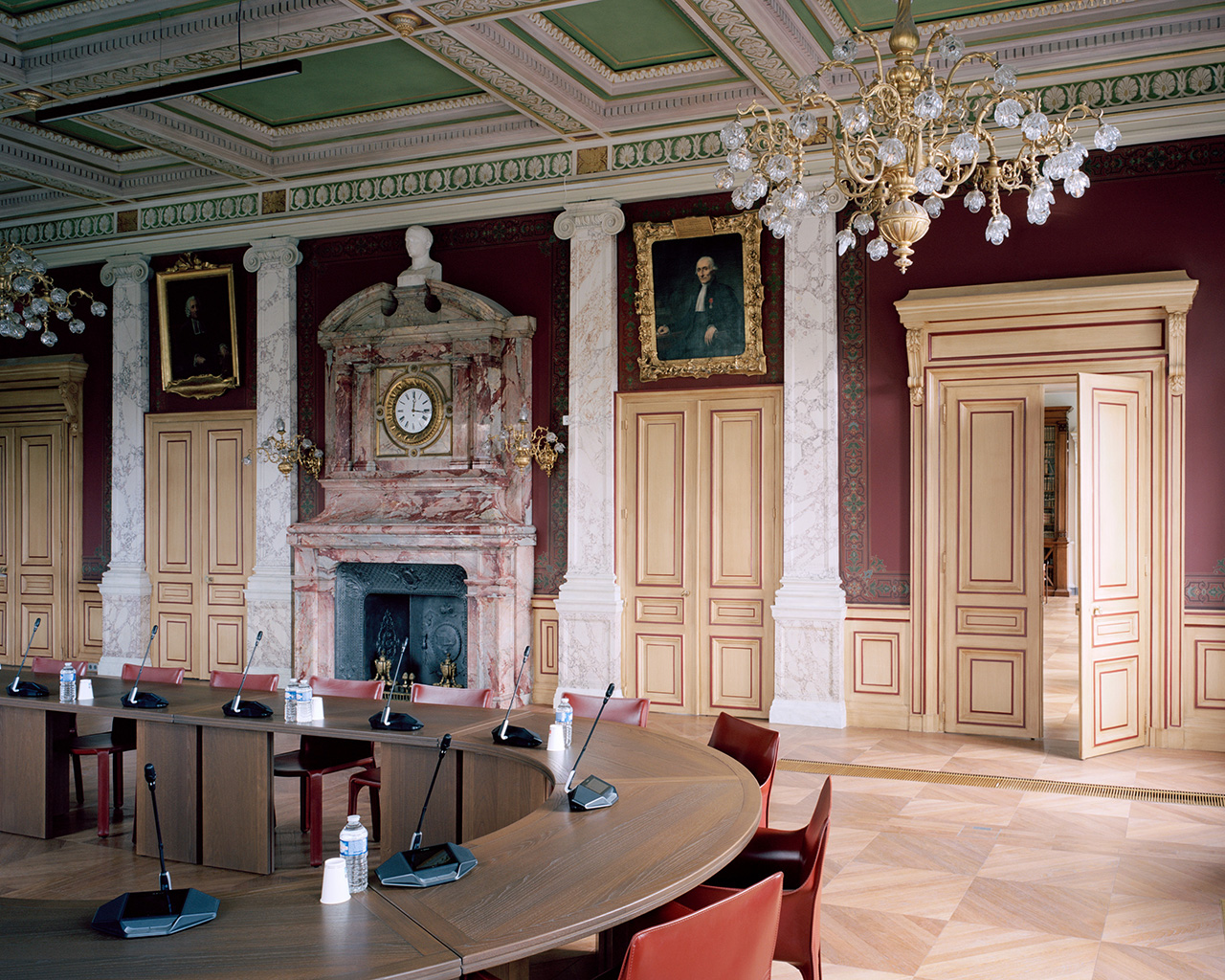
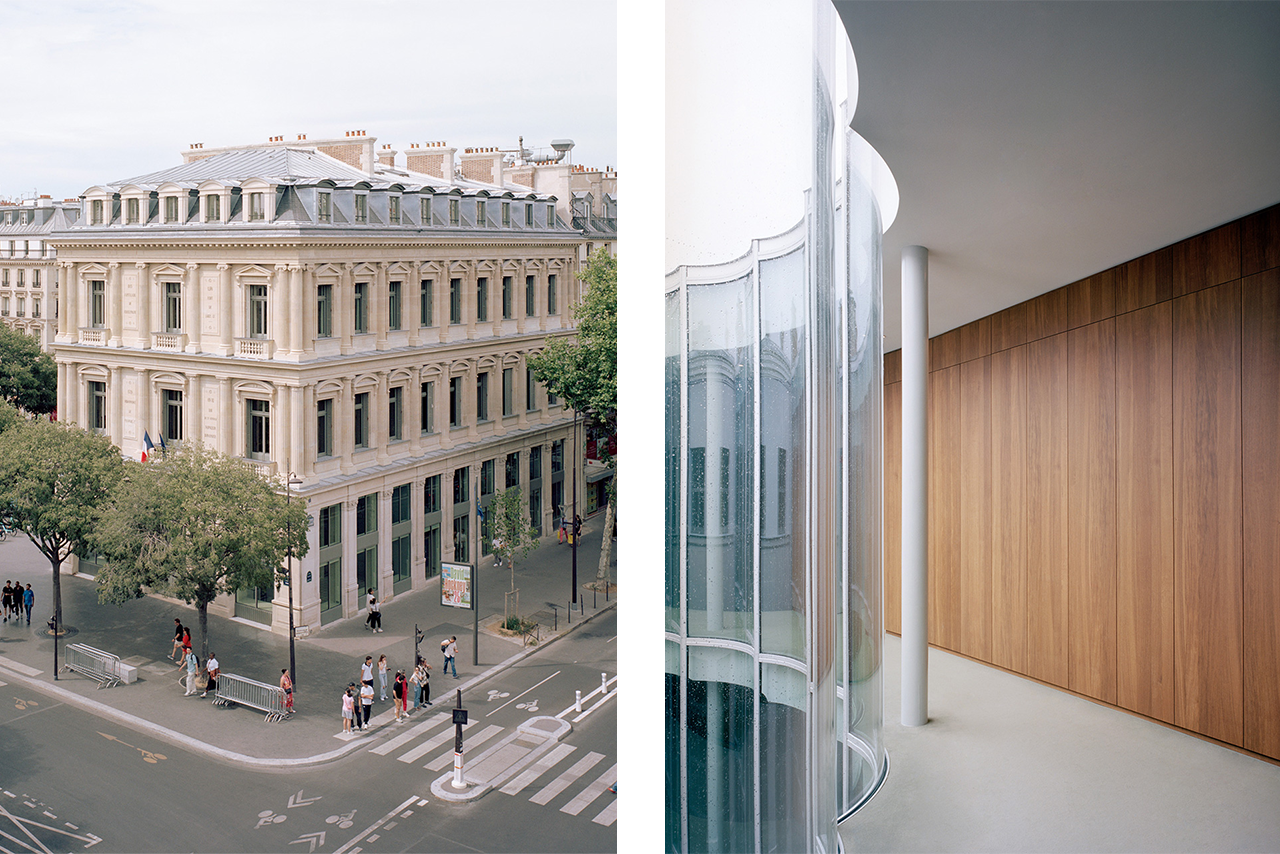
The French Chamber of Notaries in Paris’s Place du Châtelet is an architectural marvel hiding in plain sight. “Most Parisians don’t know about this building,” says David Dottelonde of L’Atelier Senzu. “It’s one of the oldest Haussmannian buildings in the city, dating back to 1855.” The notary profession’s ties to this location date back even further, to the medieval period, when royal scribes formalised legal acts under the authority of the crown. When Dottelonde and co-founder Wandrille Marchais took on the restoration of the building, they were tasked with bringing it up to date but also with helping to modernise the image of the people working there. “The profession isn’t well known by the public, even though it’s central to major moments in people’s lives,” says Marchais. “The brief was to reconnect the building with the clients and with the public space,” says Dottelonde.
|
|
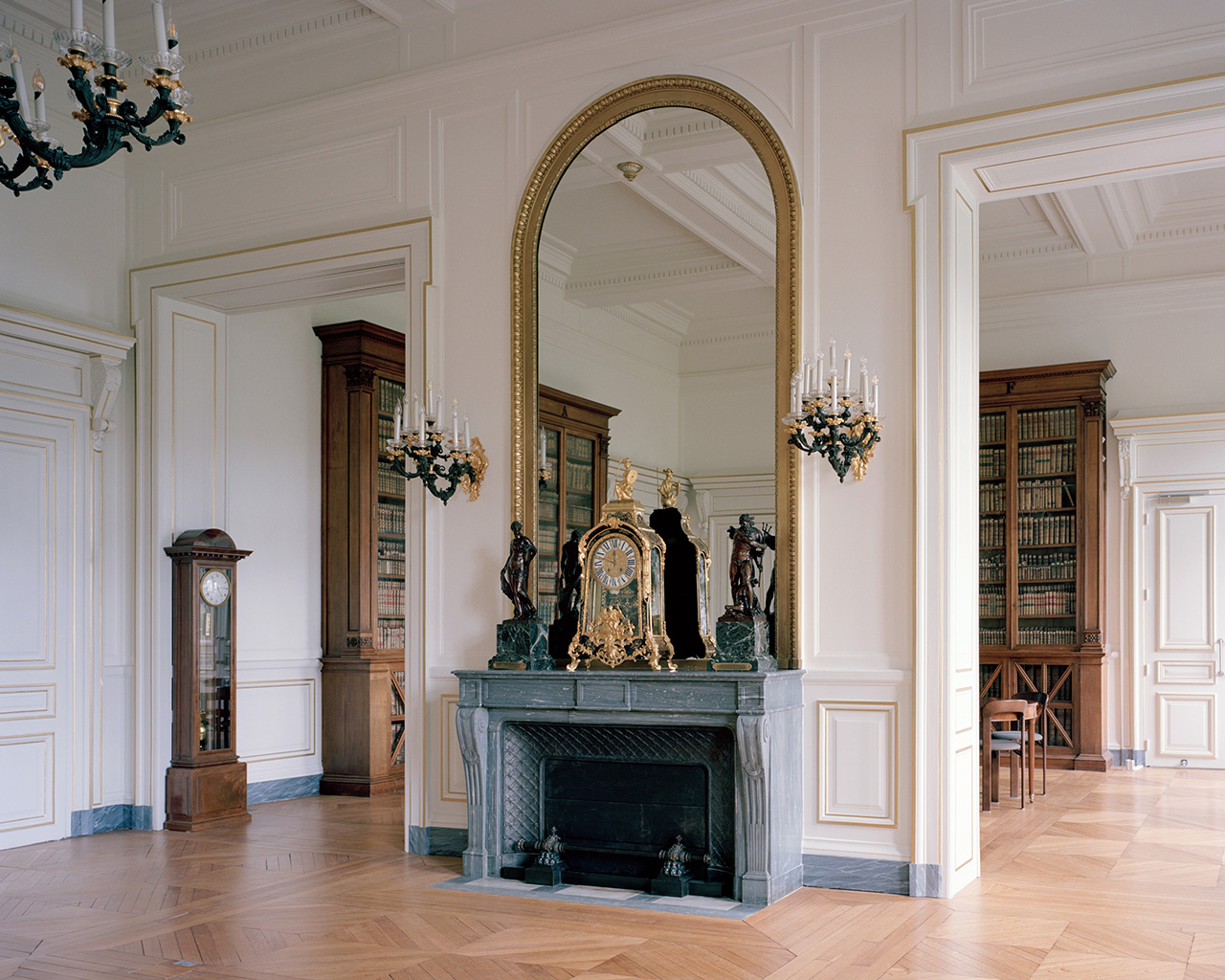
Part of the façade was replaced with glass windows. The stone removed to achieve this was then repurposed for slabs used in the entrance-hall floor. The interior’s stucco columns and woodwork were restored, while moveable aluminium partitions were added to allow for a more flexible use of the space. Since this renovation project was commissioned in 2019, the number of French notaries has increased. In 2016 a law reformed the profession, making it more accessible but, as a result, more competitive. At the same time, the field is adapting to digitisation and cybersecurity challenges while trying to preserve the security and trust that it has cultivated for centuries. Thankfully the forward-thinking work of L’Atelier Senzu ensures that the home of notaries in Paris is now better-equipped to lead them into this new era.
lateliersenzu.com
The Chamber of Notaries won the prize for Best Government Building in this year’s Monocle Design Awards. See the full list of winners here. Even better, order a copy of the May issue of the magazine online or pick it up on good newsstands everywhere.
|
|
WORDS WITH... Andu Masebo, UK
Making the grade
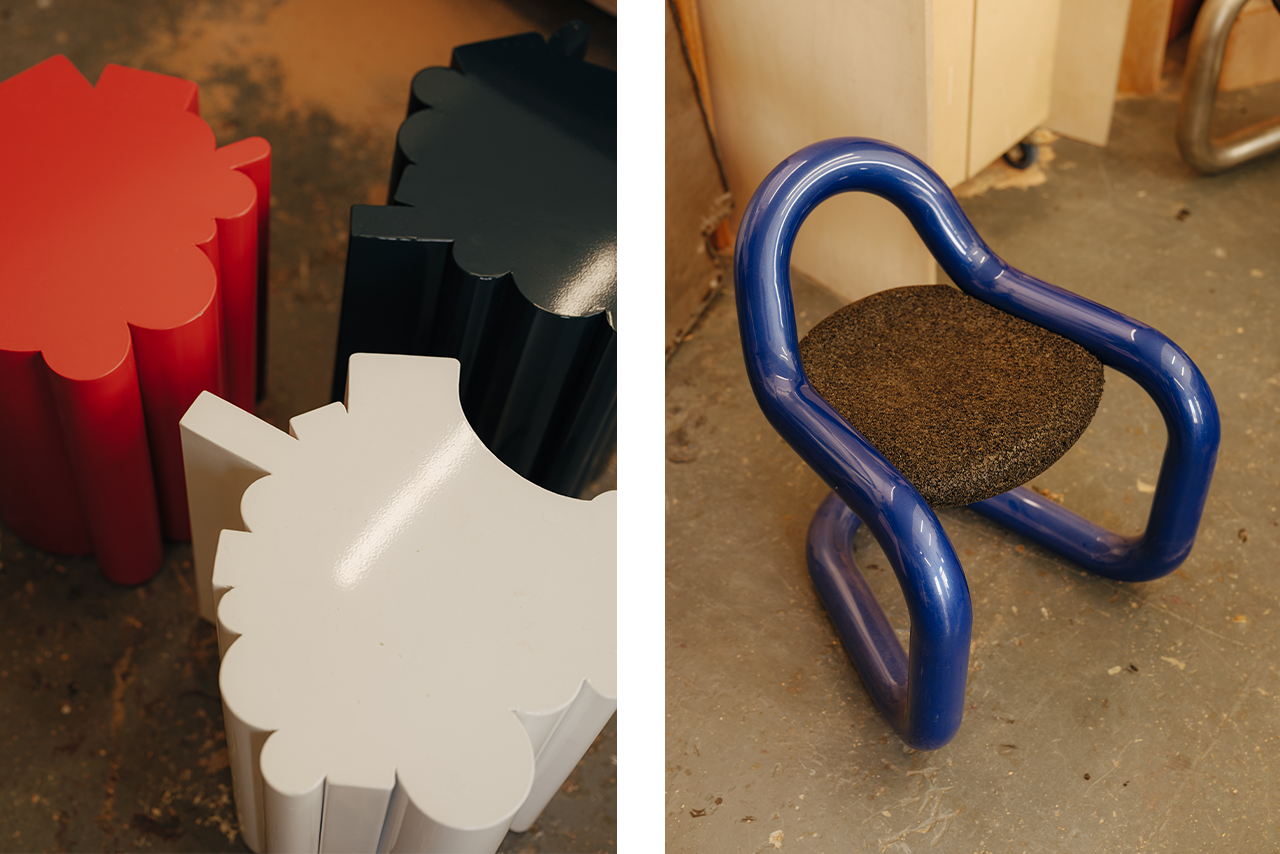
Andu Masebo takes a hands-on approach to design in his London workshop. With a background in carpentry, metalwork and ceramics, Masebo creates furniture and homeware with unexpected details for users to enjoy. Take, for example, his On the Round shelving system. The freestanding unit is made from soft douglas fir and features rotating dividers that can be tilted at will. Metal designs for the tabletop include a bent piece of tubular steel repurposed as a candleholder or an incense holder that can rock back and forth for better smoke diffusion. The designer’s applied attitude creates a conversation between the workshop and the final destination of a piece. This approach earned Masebo a Monocle Design Award for 2026 as our designer-maker of choice. We caught up with him in his studio-cum-workshop.

|
How would you describe your design style?
I see design as an excuse to insert myself into the world. I am interested in the places and the conversations that it can bring about. The interactions that I would have within the parameters of a project lead to the choice of materials or a form.
How do you approach a new project?
You have to establish a set of brackets, the parameters of what a project is about. A precondition could be finding out what the local shopkeepers think of how an area is changing. I’ve done projects where I’ve followed a bus route or started off by disassembling a car. You set yourself a task or a process of investigation. From there, the output is filtered through interactions, observations, people you’ve met, places you’ve been.
|
How important is it for you to be hands-on and be a maker, as well as a designer?
There is meditation to be found in the act of doing. For me, it’s not so much about the ritualistic elements of making. It’s more that, when I design something, I want it to be considered from top to bottom – the intention for the overall object but also the way that the bolts connect to the feet that interface with the floor. I want that to be part of the object and not an afterthought. It requires going through the motions of making to really understand the process of how it comes together.
Click here to read the full interview from Monocle’s May issue. For more from Andu Masebo, tune in to ‘Monocle on Design’ on Monocle Radio.
|
|
from the archive: Kotobuki office chair, Japan
No mean seat
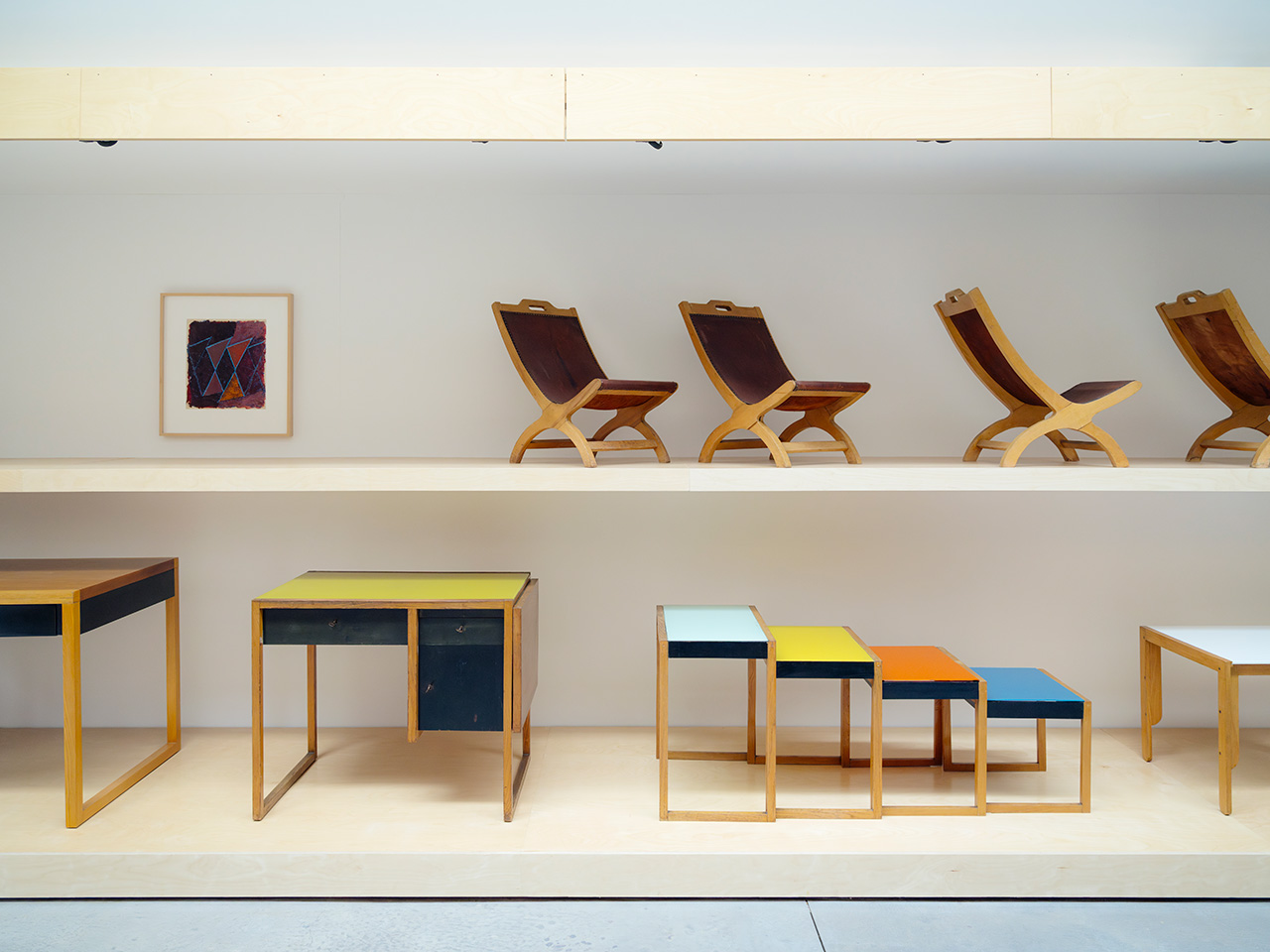
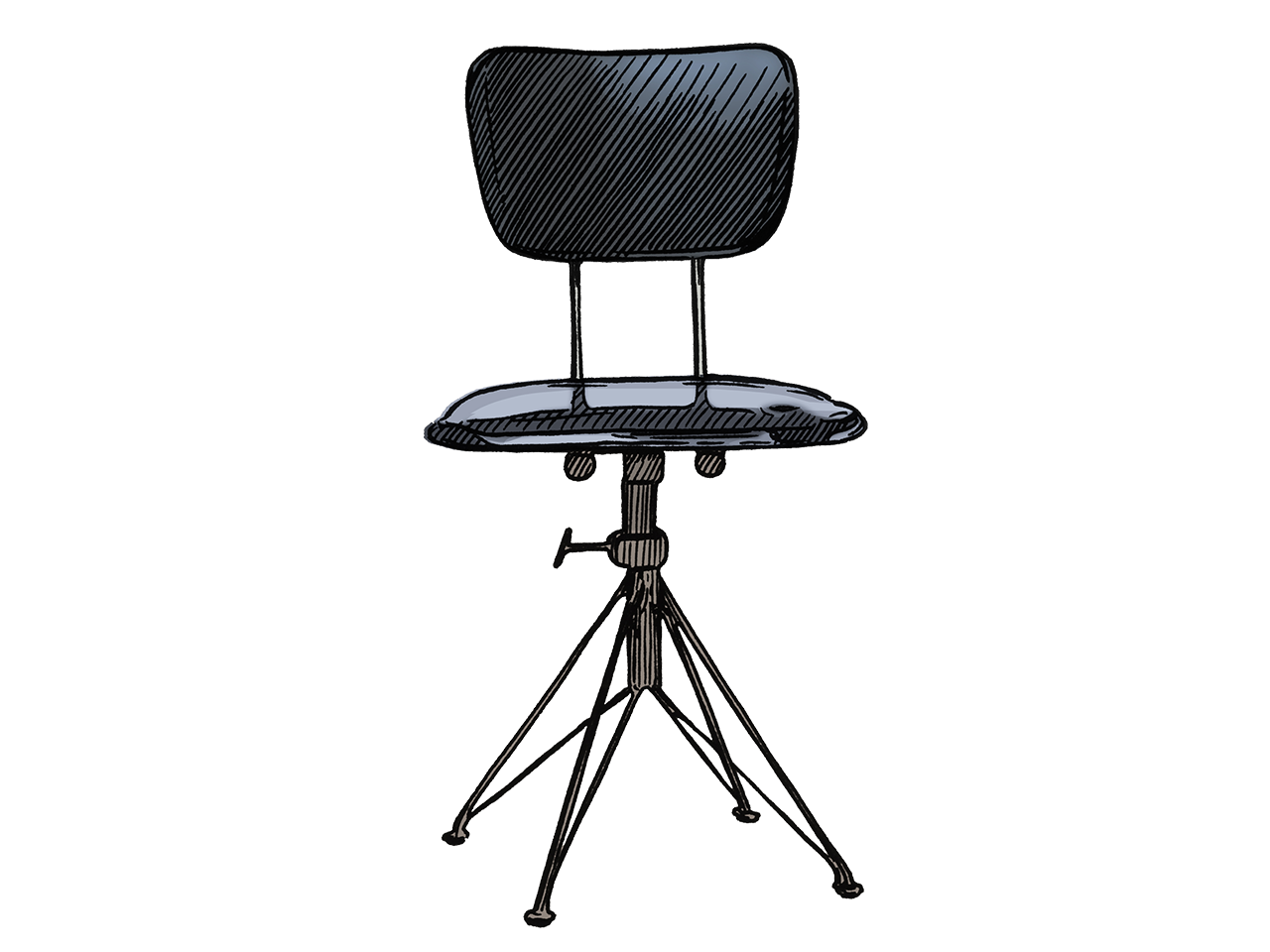
Much has been said about the impact of Japanese aesthetics on 20th-century Western design but, at the time, inspiration was flowing in the other direction as well. Architect Kenzō Tange was deeply influenced by Le Corbusier when he started designing public buildings around Japan and became a patron of the Metabolist movement, which strove for an unadorned and universal architectural language. Though best known for his monumental béton-brut buildings, Tange also created some furniture, including this minimal all-rounder office chair.
|
This chair was designed in the 1950s and manufactured by Kotobuki, a longstanding Japanese family of companies that produces everything from ballpoint pens to theatre seating. With a swivelling, adjustable frame and a leather seat, it is a classic drafting stool of the kind that also has well-known variants from Sweden (by Nordiska Kompaniet) and Germany (by Egon Eiermann). Given how well the few remaining examples of Tange’s design have aged, it’s likely that the Japanese version, if reissued, would also be in high demand worldwide.
|
|
In The Picture: ‘Tara Bernerd: A Design Journey’, USA
The journey home
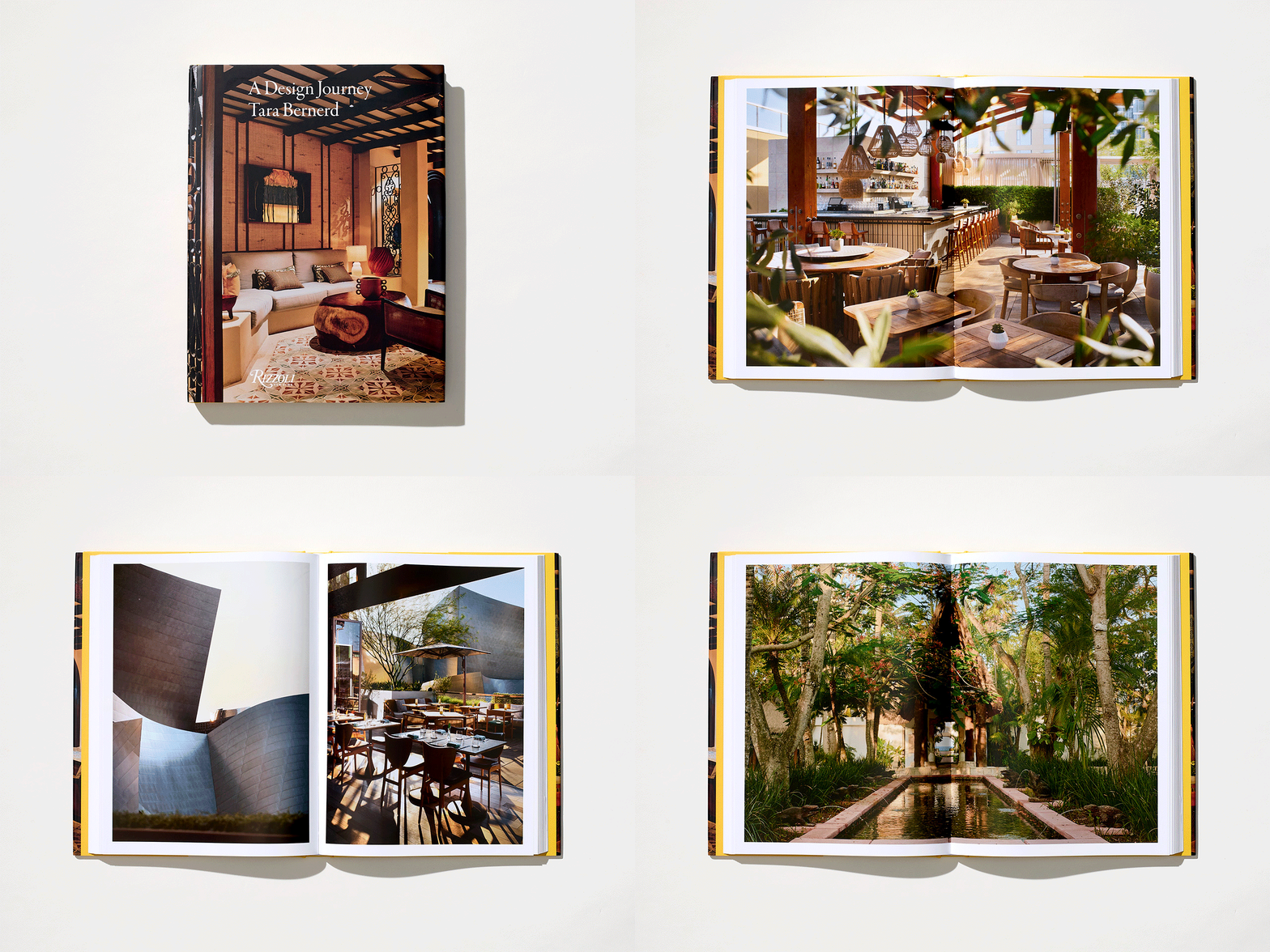
Interiors by Tara Bernerd are textured, sophisticated and evocative. In Tara Bernerd: A Design Journey, a new book by Rizzoli New York with a foreword by Monocle’s editorial director, Tyler Brûlé, the designer reflects on some of her landmark projects across the world, as well as how travel weaves into each of them. From Hong Kong to Los Angeles via Ibiza and Milan, each of the 11 hotels and residences featured in this book evoke a true sense of place.
Bernerd also asks design questions big and small, such as how to play with scale and maximise the integration of local materials, as well as how to successfully create a hotel bar that is both inviting and seducing. Double-spread landscape photos paired with detailed captions give a sort of director’s commentary on her interior design, making this book a thoughtful addition to the coffee-table stack, primed for perusal when in need of inspiration.
rizzoliusa.com
|
|
| | |