Big oil braces for volatility

Global news you can trust.

Download the Reuters App.


Power Up

Power Up

A Reuters Open Interest newsletter

By Ron Bousso, ROI Energy Columnist


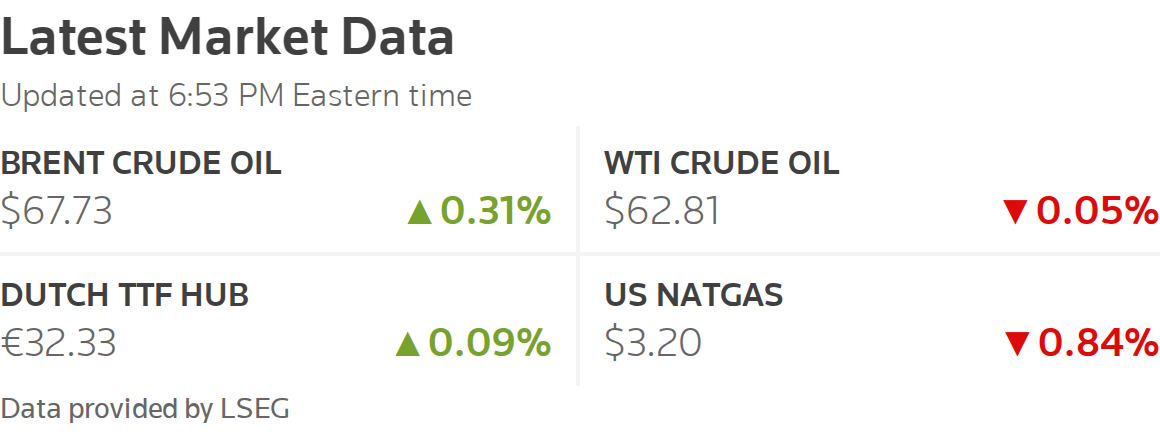
Data refreshes every time you open this email. For more energy news, click here. Please send any feedback to powerup@thomsonreuters.com.

Hello Power Up readers,

Hopes for a breakthrough in the stalled U.S.-Iranian peace talks have come and gone since our last newsletter. On Sunday, President Donald Trump dismissed Iran's response to the latest U.S. proposal as "unacceptable," raising concerns that the 11-week-old conflict will drag on, keeping shipping through the Strait of Hormuz paralysed.

Oil prices rose by over 2% to above $103 a barrel on Monday, reversing some of last week’s sharp losses.

By now a clear pattern is emerging – Trump wants a quick resolution of the Iran war and the full re-opening of the strait, while Iran seeks heavy concessions from the United States in exchange for the lifting of its near-complete blockade on the vital waterway through which a fifth of the world’s oil and LNG flowed before the war.

So the standoff continues, even if some ships are making it through the strait, be it in coordination with Iran or by taking huge risk.

Meanwhile, the conflict continues to batter the global economy. Indian Prime Minister Narendra Modi on Sunday urged a ‌spate of measures to conserve fuel, including work-from-home practices and limits on travel and imports, following similar steps taken by many other Asian countries.

The Iran crisis will be high on Trump’s agenda when he travels to Beijing later this week for talks with Chinese President Xi Jinping, their first face-to-face meeting in more than six months. China has historically bought large volumes of oil from Iran, but whether it would be willing, or able, to influence Tehran’s position is far from clear.

The crisis goes far beyond oil and gas, though. Buyers of electric vehicles and consumers of diet cola in India may seem to be two groups with little in common, but they are both at risk from the fallout of the ongoing closure of the Strait of Hormuz, ROI Asia Commodities Columnist Clyde Russell wrote.

Finally, major oil companies are bracing for prolonged turbulence in energy markets, which should curb any temptation to ramp up spending after the Iran war concludes. More on this below.

Here are a few more headlines:

  • Millions of Americans are unknowingly financing electric grid projects before they get any benefit. Policymakers, in an urgent bid to overhaul the nation’s aging electric grid, are increasingly letting utilities charge customers for power plants and transmission lines long before they’ve been built, according to a Reuters review of regulatory disclosures.
  • Europe’s co-located renewable power and battery capacity is expected to surge more than 450% by 2030, with Germany the most attractive country ‌to build projects, a report by Aurora Energy Research showed on Monday.

As always, don’t hesitate to contact me at ron.bousso@thomsonreuters.com or follow me on LinkedIn with any questions or thoughts.


Top energy headlines

  • Strait of Hormuz disruption could push oil market recovery into 2027, Aramco CEO says
  • OPEC oil output hits new low in April on Hormuz export disruption, Reuters survey finds
  • Why millions of Americans pay for unfinished electricity projects
  • Second Qatari LNG tanker heads through Hormuz to Pakistan as Iran war continues, data shows
  • Oil prices rise $2 as US-Iran talks hit impasse 


Volatility

Big Oil’s biggest fear these days is not missing the next oil rally, but being on the wrong side of the inevitable retreat.

The Middle East conflict and the near-airtight closure of the Strait of Hormuz since February 28 have triggered an unprecedented oil and gas supply crunch, pushing crude prices above $100 a barrel and sparking a global search for alternative supplies.

The loss of more than 13% of global oil supply and roughly a fifth of LNG flows, combined with the extensive damage to energy infrastructure across the Gulf, will likely have long-lasting consequences that put a floor under prices for years.

On the face of it, this should be the ideal backdrop for energy majors such as BP, Chevron, Exxon Mobil, Shell and TotalEnergies to ramp up spending, expand production, and capture market share. All five beat first-quarter earnings expectations.

Yet the industry’s response has been strikingly restrained thus far. None of the majors has raised spending plans for 2026 or beyond.

Read the full column
 

Get full access to Reuters.com for just $1/week. Subscribe now.


Sponsors are not involved in the creation of newsletters or other Reuters news content. Advertise in this newsletter or on Reuters' website

LiveIntent Logo
AdChoices Logo