Hello there,
The strains on the U.S. economy, the world's largest, are all too visible this week as its leader launches talks with his Chinese counterpart - and that, insists Donald Trump, is just fine.
Arriving in Beijing on Wednesday for a summit with Xi Jinping, the U.S. president affirmed that he did not need Chinese help to end the Iran war or ease Tehran's grip on the Strait of Hormuz, which has sent global energy prices soaring.
And anyway, he had argued the day before, the pain being felt as a result by American consumers moves him "not even a little bit" to rush into a deal with Iran as he attempts to ensure it will never obtain a nuclear weapon.
Set aside the question of whether the U.S. strikes since February 28 have inflicted any real impediment to an ambition Tehran says it does not have.
Evidence is mounting of damage to the U.S. economy: the latest data show U.S. inflation in April increased at its fastest pace in three years - with spillover into higher prices for food, airfares and even rental costs.
Further proof of a broadening effect of the energy shock was seen on Wednesday as U.S. producer prices - the cost to firms of raw materials, labor and other items - posted their biggest gain in four years. Make no mistake: wherever possible they will try to pass on those higher costs to their customers.
With the economy back home feeling the pinch and his public approval ratings suffering, Trump may have more incentive to maintain a fragile trade truce with Beijing.
His hand has been further weakened by the fact that U.S. courts have hemmed in his ability to levy tariffs - his go-to tool of persuasion - on goods imported from China and other countries.
Chinese officials will also be aware that Trump’s domestic troubles increase the risk his Republican Party will lose control of one or both chambers of Congress in November's midterm elections.
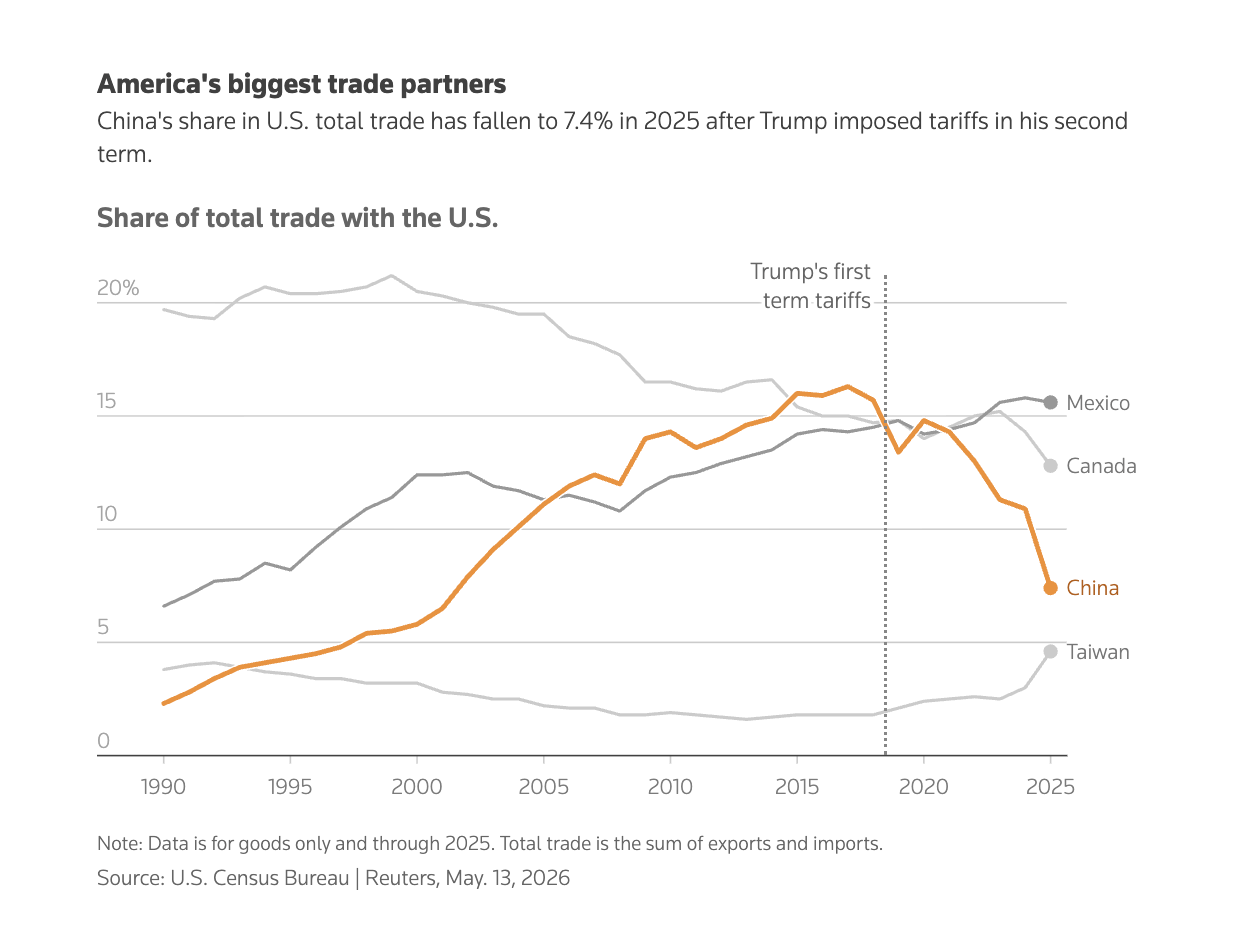
No doubt the Iran war and China's claims over Taiwan will feature in the two leaders' talks, but economic matters are likely to be central, including Trump's push to sell more U.S. products to China and Xi's arguments for lower U.S. tariffs.
While China and its faltering economy have nothing to gain from a new row with the U.S., Trump may need this meeting more than Xi does.