| | Donald Trump calls off planned strikes on Iran, Elon Musk loses his lawsuit against OpenAI, and rest͏ ͏ ͏ ͏ ͏ ͏ |
| |  | Flagship |  |
| |
|
The World Today | 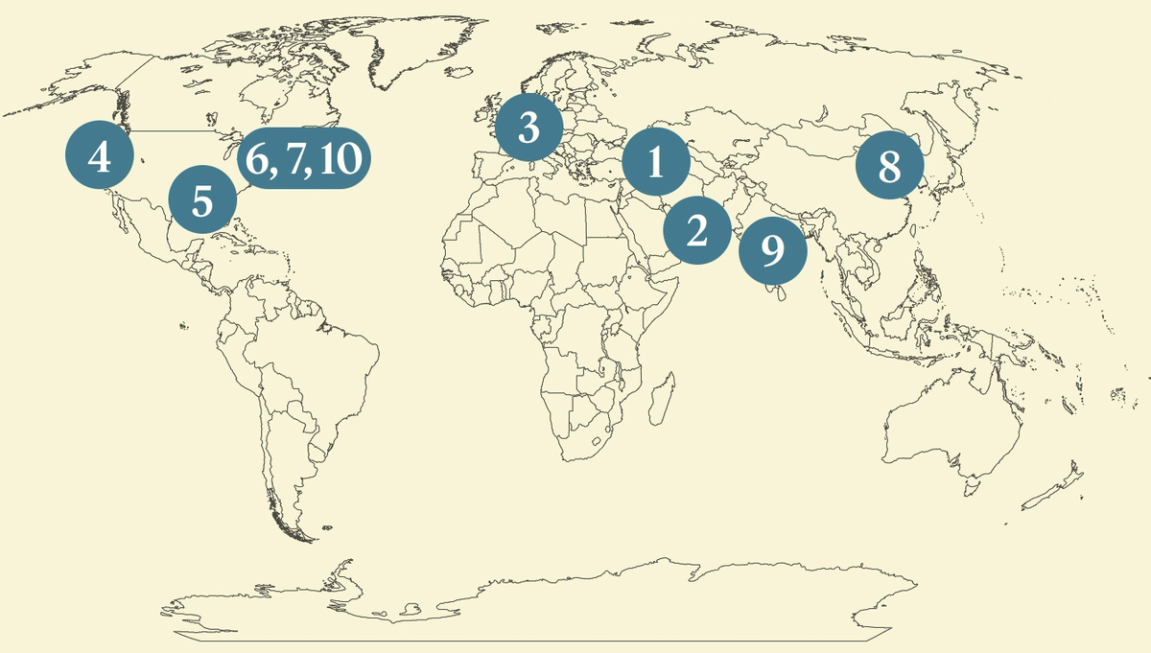 - Trump calls off Iran strikes
- US’ historic energy exports
- Downplaying jet fuel concerns
- Elon Musk loses OpenAI suit
- Creating a global utility giant
- US tariffs vs. US AI buildout
- An ‘anti-weaponization fund’
- The latest ‘Chinamaxxer’
- Population push expands
- The decentralization of media
 The real-life castaway who inspired Robinson Crusoe. |
|
Trump suspends planned Iran strikes |
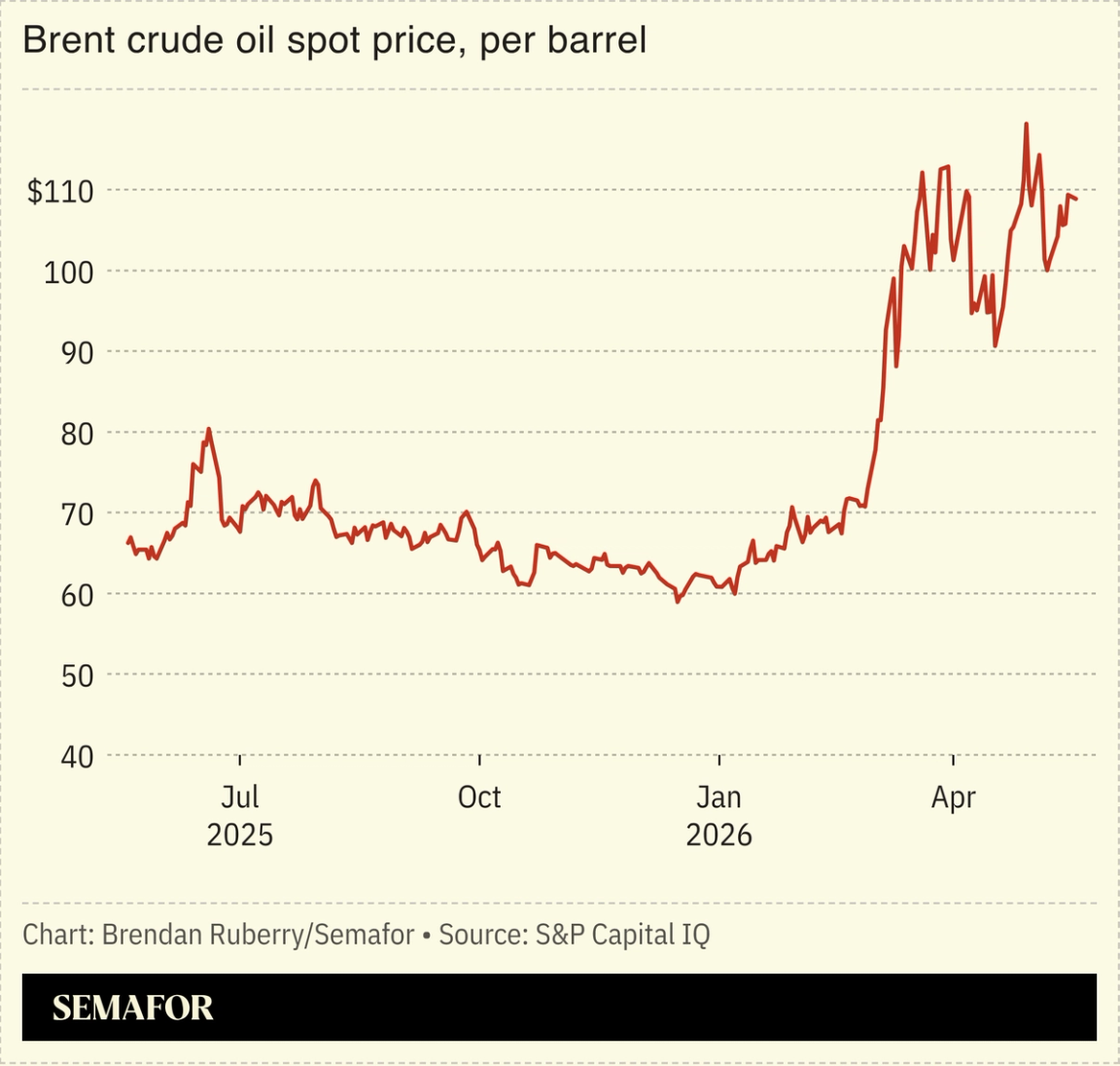 US President Donald Trump said Monday he is suspending planned strikes on Iran at the behest of Middle East allies who cited ongoing “serious negotiations” for a deal. Oil prices dropped, capping a day of wild swings: Prices dipped earlier after reports that Washington had offered to temporarily lift sanctions on Iranian oil, then ticked back up after a US denial. The administration did, however, issue a 30-day extension of a sanctions waiver on Russian oil already at sea, reflecting the pressure on Trump to contain rising fuel costs amid a global supply crunch. While a handful of non-Iranian tankers have managed to exit the Strait of Hormuz, Tehran announced a new body that would control the critical waterway. |
|
US energy exports drive up fuel prices |
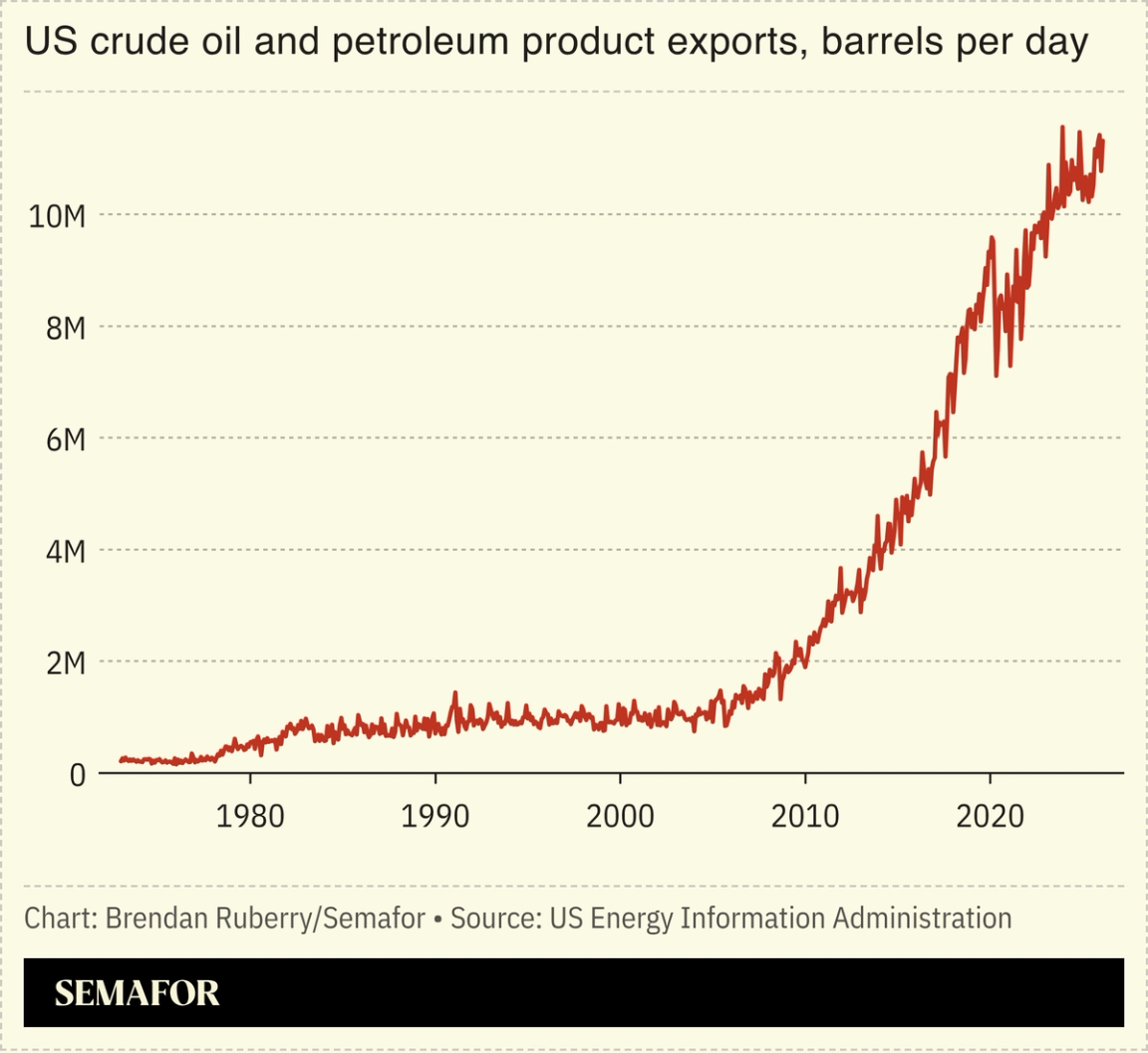 US energy exports have hit record highs, at the cost of higher fuel prices at home. The country shipped 14.2 million barrels of crude and products daily in April, equivalent to typically one out of seven barrels consumed globally, The Wall Street Journal reported: “No other nation in the world’s history has ever exported as much energy.” But domestic inventories are depleting, oil producers can’t keep pace, and the Trump administration has ruled out banning energy exports, forcing Americans to pay more for fuel. “This is all just going to end so badly,” a Kpler analyst said. Meanwhile, as Iranian strikes have paralyzed LNG production in Qatar, the Gulf is increasingly betting on the US’ LNG boom. |
|
Europe downplays jet fuel supply concerns |
 Evelyn Hockstein/File Photo/Reuters Evelyn Hockstein/File Photo/ReutersA European airline chief said Monday he had “almost zero concerns” about a jet fuel shortage this summer, echoing oil companies that have downplayed dire warnings about supplies running out. Concerns of fuel shortages stemming from the Iran conflict had threatened to upend summer travel across the continent — the IEA warned in April that Europe had mere weeks of supply left — but Ryanair’s CEO suggested the crisis has been averted thanks to refiners maximizing production, more energy imports from the US and Africa, and some airlines taking fuel from Russia. However, he warned that travelers could face higher airfares later, and energy traders still believe the summer will be a “stress test” for the sector, the Financial Times reported. |
|
Musk loses case against OpenAI |
 Manuel Orbegozo/Reuters Manuel Orbegozo/ReutersElon Musk lost his lawsuit against Sam Altman’s OpenAI on Monday, closing a dramatic chapter in the tech leaders’ bitter feud. Musk alleged that Altman “stole a charity” when he converted the startup to a for-profit entity; OpenAI’s lawyers called the lawsuit “a case of sour grapes,” suggesting that Musk — who left OpenAI over differences with Altman — only sued following ChatGPT’s success. A jury determined the Tesla CEO’s claims were barred by the statute of limitations. “Regardless of the outcome, the reality is that everybody lost,” Semafor’s tech editor wrote before the verdict. The proceedings “unearthed embarrassing emails, texts, and diary entries of some of the most powerful people in Silicon Valley… ultimately feeding the angry, anti-AI masses.” |
|
NextEra deal sets up largest global utility |
 Bing Guan/Reuters Bing Guan/ReutersUS power company NextEra Energy said Monday it was acquiring Dominion Energy in a deal that would create the world’s largest utility amid soaring AI-driven energy demand. In addition to providing scale — Dominion powers the world’s largest data center market, and the combined entity would be the world leader in renewables and battery storage — the deal will likely be pitched to US regulators as providing savings for consumers, a Bloomberg Opinion columnist wrote; ballooning utility costs have spurred public backlash against data centers. While the AI boom has prompted a rash of blockbuster energy acquisitions, this deal could face more scrutiny given its potential to become an “impossible to regulate” mega-entity, an energy nonprofit executive told The New York Times. |
|
US tariffs could hamper AI buildout |
 Karen Pulfer Focht/Reuters Karen Pulfer Focht/ReutersThe White House’s push to build AI data center infrastructure may be undermined by its own tariff policy. There are nearly 3,000 centers under construction in the US, on top of an existing fleet of 4,000, Apollo’s chief economist noted. The Trump administration is aggressively backing that buildout, a Center for Strategic & International Studies analysis said, but at the same time is applying tariffs on the semiconductors and metals that the data centers need. Depending on tariff policy details, the buildout’s cost could be increased by more than a trillion dollars, CSIS argued. Another threat to data center construction is public opposition, Stratechery noted, partly due to misunderstandings about the technology’s water use. |
|
DOJ creates ‘anti-weaponization fund’ |
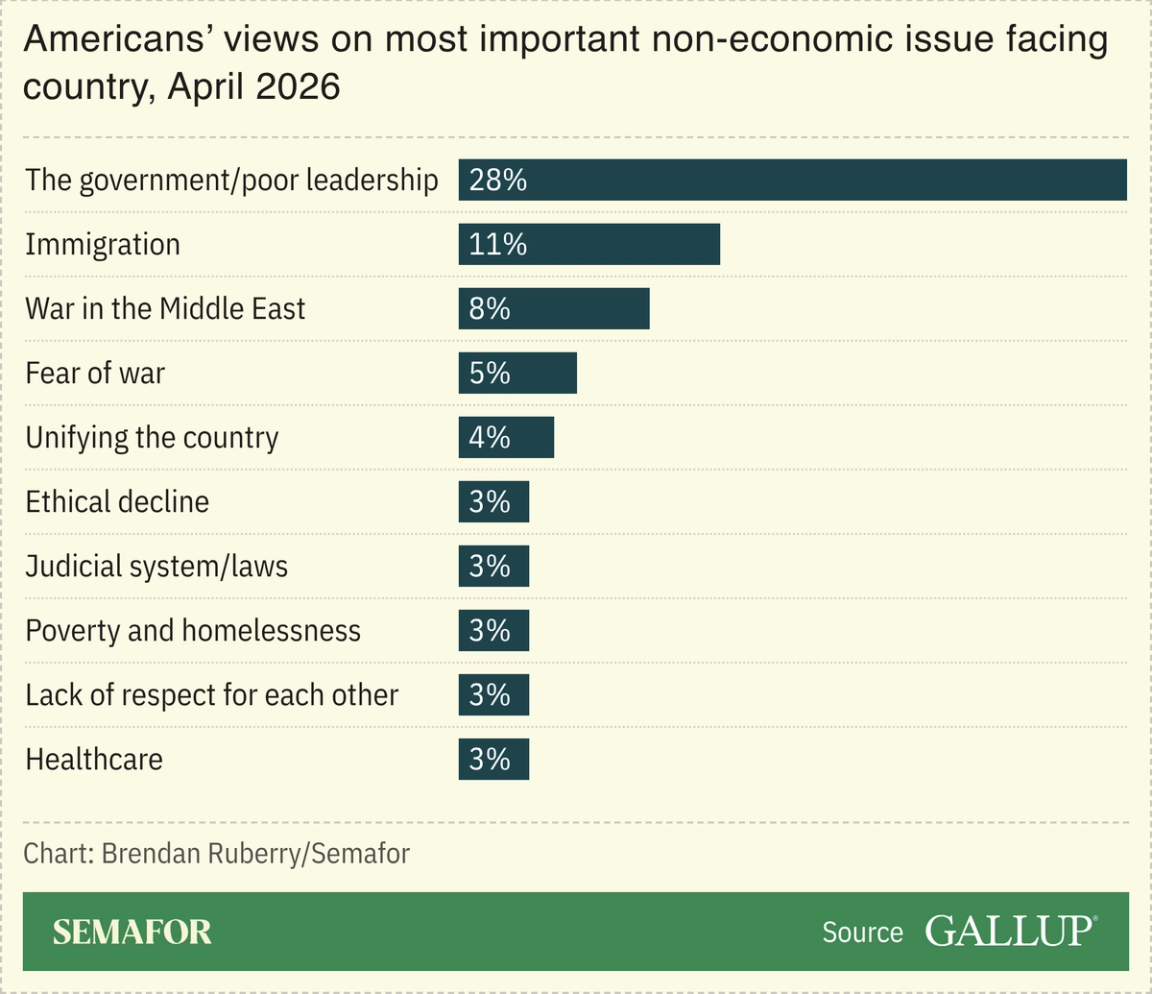 US President Donald Trump will drop his lawsuit against the Internal Revenue Service as part of a settlement creating a $1.8 billion fund to compensate victims of Biden-era government “weaponization,” the Justice Department announced Monday. The five administrators of the fund will be appointed by Acting Attorney General Todd Blanche, and could “direct federal money to President Trump’s allies with minimal oversight,” The Wall Street Journal noted; Democratic lawmakers criticized it as “pure fraud and highway robbery.” Corruption, not debates over AI data centers, will be “a central political front in 2028,” Semafor’s Ben Smith wrote. As polling suggests, accusations of Washington’s self-dealing are set to become “yet another partisan Rorschach [test].” |
|
 On Wednesday, June 10, Semafor Tech will convene in San Francisco to explore the most significant technological breakthroughs on the horizon, from quantum computing and fusion energy to humanoid robotics. The challenge extends beyond tracking innovation to understanding its downstream effects across industries, institutions, and power structures. Semafor Tech Editor Reed Albergotti will host on-the-record conversations with Jeetu Patel, President and Chief Product Officer, Cisco; Aaron Levie, co-founder and CEO, Box; Charina Chou, Chief Operating Officer, Google Quantum AI; Max Hodak, co-founder and CEO, Science Corporation; and Pete Shadbolt, co-founder and Chief Scientific Officer, PsiQuantum, as they explore how breakthrough technologies are reshaping industries, redefining competitive advantage, and transforming the global economy. June 10 | San Francisco | Request Invite |
|
Trump’s White House is ‘Chinamaxxing’ |
 The White House/X The White House/XUS President Donald Trump is “Chinamaxxing,” a former US government official argued. In promoting glossy images from last week’s summit that demonstrate, in Washington’s view, Chinese leader Xi Jinping’s deference to Trump, the White House risks instead glorifying “China as a dazzling and imposing peer superpower” of the US, wrote Julian Gewirtz, a China adviser in the Biden administration. Like the social media trend of drinking hot water and dabbling in other “Chinese” traditions, the US is emphasizing visuals over substance, following a summit that was light on concrete deliverables. Regardless of the US-China “bonhomie” on display, Beijing’s hosting of Russia’s Vladimir Putin this week underscores that its closest partners are “connected by… resistance” to the US, Gewirtz wrote. |
|
World faces falling birth rates |
 Mohamed Azakir/Reuters Mohamed Azakir/ReutersDeveloping countries are moving to stem falling birth rates as demographic decline widens beyond high-income nations. An Indian state government is offering cash incentives for larger families, with the country’s births now below replacement rates, while the Turkish president’s calls for parents to have more children have failed to address a long-term slowdown. The issue affects most of the world, the Financial Times’ data reporter said: Two-thirds of countries have below-replacement birth rate |
|
|


