| | | | | | In today’s issue: - The Trump administration finalized sweeping Affordable Care Act marketplace changes that could prompt legal challenges
- Sen. Bill Cassidy’s (Louisiana) GOP primary defeat is poised to reshape Senate health politics, with implications for Trump administration nominees and the Senate’s health panel
- Top FDA officials are departing or shifting roles following Marty Makary’s resignation amid broader changes within the administration’s health agencies
… and more. Happy Monday, and thanks for checking in with the Health Brief newsletter. BREAKING: More than 600 generic drugs are being added to the TrumpRx website in collaboration with industry partners including Mark Cuban’s Cost Plus Drugs, Amazon Pharmacy and GoodRx, President Donald Trump announced Monday at a White House briefing. (Amazon founder Jeff Bezos owns The Washington Post.) This is developing, and I’ll have more on this soon. In the meantime, please send any tips, documents or intel to megan.wilson@washpost.com, or message me on Signal at megan. 434. | 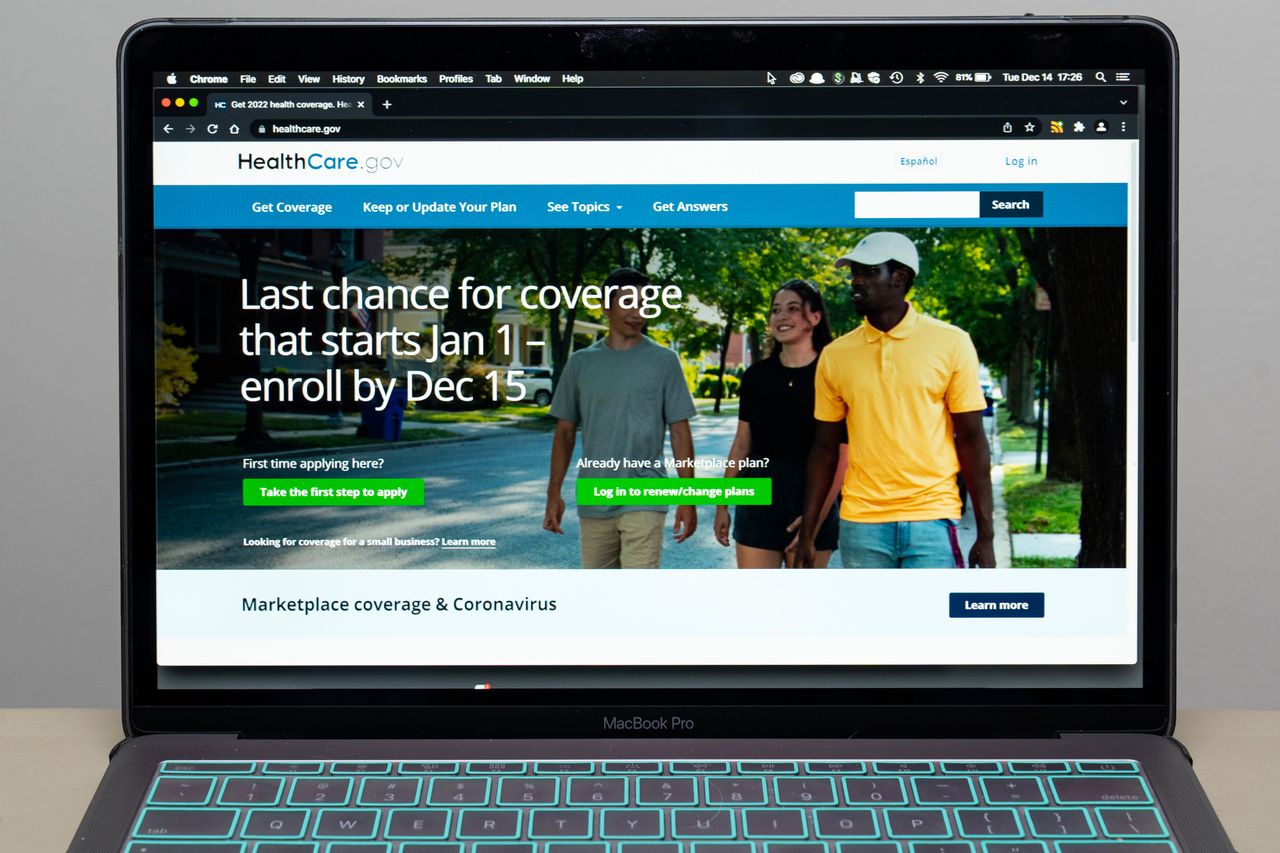 | | The Trump administration finalized rules that overhaul Obamacare without involving Congress. (Alex Brandon/AP) | | | |  | The Lead Brief | The Trump administration has finalized rules expanding access to catastrophic health plans with bare-bones coverage, and opened the Affordable Care Act marketplaces to certain nontraditional insurance models that supporters say could lower costs for some patients. Top health officials are pitching the changes as a way to make coverage “more affordable and consumer-driven.” But consumer advocates — and some providers — warn the rule could leave patients exposed to higher out-of-pocket costs and more complicated plan choices, while weakening some of the Affordable Care Act’s guardrails around standardized benefits. It’s a massive regulation, but these are the most contentious provisions: - The new rules broaden eligibility for catastrophic coverage plans, which typically carry lower monthly premiums but higher deductibles and scantier coverage — and allow insurers to offer those plans for up to 10 consecutive years.
- They’ve also created a new pathway for certain “nonnetwork” plans to qualify as marketplace coverage. Those plans do not rely on traditional contracted provider networks, and instead often reimburse patients using fixed cash payments for medical services.
The updated regulations were first proposed in February and finalized on Friday evening. THE LOOMING FIGHT OVER CHANGES → Sidecar Health, a start-up insurer that has championed the no-network model, praised the move. The company says the approach encourages patients to shop among providers for lower-cost care and increases price transparency. However, enrollees can still owe costs above the plan’s reimbursement amount. “The exchanges are falling short in large part because the network requirement has meant that every plan available is based on the same struggling model. This decision opens the door to real competition between genuinely different models,” said Patrick Quigley, Sidecar Health’s chief executive. “The more adoption we see of a transparent, shoppable, network-free model, the more providers can compete for patients’ business, shining a light on cost and quality — ultimately improving both,” he added. → Supporters argue the changes could lower premiums and expand consumer choice at a time when Republicans on Capitol Hill allowed enhanced Affordable Care Act subsidies to expire, increasing costs for many marketplace enrollees. Why it matters: It’s another way the Trump administration is trying to bolster its affordability messaging. But critics say the cumulative effect could push more Americans into more meager coverage that eventually becomes expensive when they or their families need significant medical care. “Policymakers are right to focus on lowering the cost of coverage, but premiums are only part of the affordability equation. For patients, affordability is about what they pay out of pocket and whether coverage translates into real access to care,” said Charlene MacDonald, leader of the Federation of American Hospitals, a hospital industry group. “Plans built around high deductibles and narrow — or even nonexistent — provider networks can put care further out of reach,” MacDonald said. → The new rules also provide a way — as my WP Intelligence colleague Rebecca Adams wrote back in March — for the Trump administration to overhaul Obamacare without involving Congress. The coverage rules are revised every year, offering the opportunity to overhaul how individuals buy insurance — but some argue the administration could be going too far. WHAT TO WATCH The sweeping changes to the Affordable Care Act, including broadening the eligibility to attain catastrophic coverage plans, could lead to litigation, according to Katie Keith, founding director of the Center for Health Policy and the Law at Georgetown Law. → During a WP Intelligence briefing last month on the administration’s proposed changes, Keith said that the law had placed limited eligibility on catastrophic plans “for a reason.” “Catastrophic plans themselves were meant to be a fail-safe,” said Keith. “And so there’s some real questions about if you can stretch the statute in that way.” Keith told me Monday that the interested parties are likely still poring over the final rule, which stretches to more than 1,100 pages. Previous legal challenges to Trump administration attempts to roll back Obamacare marketplace rules have come from cities and states. | | | |  | Election watch | Sen. Bill Cassidy failed to advance in a GOP primary in Louisiana to keep his seat, despite an outpouring of financial support from health industry political committees, providers and lobbyists representing health clients. Cassidy leads the Senate Health, Education, Labor and Pensions Committee (HELP) and sits on the Senate Finance Committee, which both have jurisdiction over health care issues. The senator had a financial advantage over his opponents, The Post’s Theodoric Meyer reports. Cassidy’s campaign and an allied super PAC, Louisiana Freedom Fund, spent more than $22 million on ads, according to the tracking firm AdImpact — more than Rep. Julia Letlow, Louisiana State Treasurer John Fleming and their allies combined. WHAT TO WATCH - Trump administration nominees: Multiple health nominees — including White House selections to lead the Centers for Disease Control and Prevention and the Food and Drug Administration — will have to gain approval from the Senate HELP Committee to advance.
Cassidy failed to hold votes on several of the Trump administration’s health picks — including Casey Means, a favorite of the Make America Healthy Again movement who’d been selected to serve as U.S. surgeon general — amid concerns about their viability. The White House swapped Means out for Nicole Saphier, a radiologist and former Fox News contributor. Saphier has yet to make her first appearance before the committee. - Senate HELP gavel up for grabs: Cassidy’s defeat shuffles leadership on the Senate’s health panel. Senators who are the most senior on the committee — including Sens. Rand Paul (R-Kentucky), Susan Collins (R-Maine) and Lisa Murkowski (R-Alaska) — already have plum chairmanships on other committees they’d have to relinquish to lead the Senate HELP Committee.
If they stay in place at their respective committees, it could fall to Sen. Roger Marshall (R-Kansas) — an OB/GYN who, unlike Cassidy, has embraced Health Secretary Robert F. Kennedy Jr. and his policies. President Donald Trump endorsed one of Cassidy’s Republican challengers, Letlow. Letlow, who failed to secure more than half of the vote, will face a primary runoff against Fleming on June 27. Cassidy has drawn the ire of the president and his supporters after voting to convict Trump during the 2021 impeachment trial, but has tried to get back in Trump’s good graces. → Letlow sits on the House Appropriations Committee — including a subcommittee with oversight of the FDA’s budget — and the House Education and the Workforce Committee, which oversees health policies including those that impact employer-sponsored health plans. Letlow has also garnered campaign support from many health care-related interests. | | | | | | Executive Health Brief | Top FDA officials are departing the agency following the resignation of leader Marty Makary, Rachel Roubein reports from The Washington Post newsroom. Here’s a quick overview: - CDER: Michael Davis will become acting director of the Center for Drug Evaluation and Research, which oversees prescription and over-the-counter drugs. He previously served at the FDA in the Office of New Drugs from 2016 to 2022 and returned in 2025. He’s replacing Tracy Beth Høeg, who announced on social media Friday that she had been fired.
- CBER: Karim Mikhail will serve as the acting director of the Center for Biologics Evaluation and Research, which regulates products including vaccines and novel treatments. Mikhail began at the FDA last year and has experience working within the pharmaceutical industry, including spending more than two decades at Merck. Mikhail replaces Katherine Szarama, an ally of former CBER head Vinay Prasad.
- Chief of staff: Lowell Zeta, a top agency official, is slated to move into the acting chief of staff role, replacing Jim Traficant. Zeta had worked in the first Trump administration and returned to the FDA last year.
Sam Doran, the deputy chief of staff at the agency, is expected to depart. Jeremy Walsh, the FDA’s chief AI officer, has reportedly left the agency. | “To our career staff, you hold the public trust, and I respect your judgment and your dedication to the mission as we navigate this transition together. … Moving forward, the FDA must continue to engage stakeholders and advocates for innovative perspectives — and, just as importantly, empower you to carry out your work with the rigor and purpose our mission demands.” Kyle Diamantas, acting FDA commissioner, wrote in an email to FDA staff obtained by The Post. | | | | Key context: As Rachel, Lauren Weber and Dan Diamond at The Post report in a separate story, the upheaval at the FDA mirrors other changes within the Trump administration’s health agencies. Officials who had been favored by Kennedy are increasingly being replaced with picks with more traditional experience, my colleagues report. It’s part of the Trump administration’s effort to stabilize the messaging at the health agencies — and tamp down on controversies — ahead of the midterms. Read more: “RFK Jr. promised a health overhaul led by outsiders. Now many are gone.” | | | | | | Jobs Report | Drugmaker Merck has hired Chuck Clapton away from Gilead Sciences to serve as its vice president of U.S. federal public policy and government affairs. Clapton, who had been with Gilead since 2017, will begin the role on June 1. Clapton has also worked in the lobbying shop at the Pharmaceutical Research and Manufacturers of America, the high-profile industry group for branded drug manufacturers, and as a partner at Hogan Lovells. He spent 17 years on Capitol Hill, including serving in top staff roles at the Senate HELP Committee, the House Ways and Means Committee and the House Energy and Commerce Committee. → Merck poured nearly $11 million into federal lobbying last year, ranking tenth among health care organizations and companies in 2025 lobbying expenditures, according to an analysis of disclosures filed to the Senate. Gilead spent $7.8 million on lobbying last year, according to disclosures. | | | | |


_tstmp_1756933376-1920-1080.png)