UK Health Security Agency's Strategy 2026–2029
I want to start by saying thank you. Protecting the public from health threats is not something any single organisation can do alone, and we are hugely grateful for the partnership and collaboration with all of you who work with and alongside us.
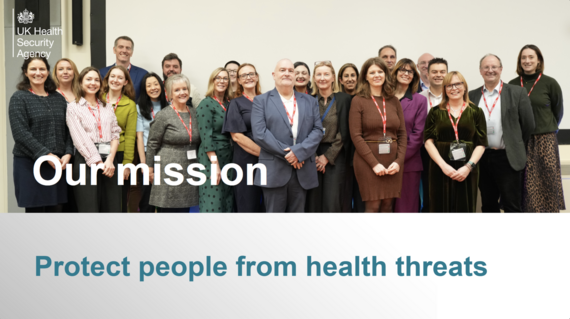
UKHSA exists to protect people from health threats, every day and in times of crisis. We work on a local, regional, national and global stage to detect risks early, provide expert scientific advice and insight, prevent harm where we can, and respond quickly and effectively when threats emerge.
The world we are operating in is becoming more demanding. Climate change, global mobility and the ever-present risk of another pandemic are all increasing the complexity of the health threats we face. Misinformation is making it harder to maintain public confidence in health measures. Antimicrobial resistance is growing. This strategy sets out our ambition in the face of those challenges over the next three years.
We have refined how we explain our mission to protect people from health threats and set out our vision for UKHSA to build on our strengths and be clearly known as science-led, data-driven and operationally excellent. This focus will enable us to continue to grow and develop, while prioritising the issues where we can have the greatest impact.
Our new strategy is organised around our ambition in our three pillars – the services we offer, and our two foundations – the capabilities that make all of our work possible.
Improving our impact through our pillars:
-
Understand – detecting health threats earlier through upgraded laboratories, expanded genomic sequencing and AI-powered surveillance, so we can act on intelligence faster.
-
Prevent – shifting our focus upstream, strengthening the national immunisation programme, supporting targeted action in underserved communities, and reducing harm before it becomes an incident.
-
Respond – leading faster, better-coordinated responses when threats emerge, with clearer frameworks, tested surge capacity and coherent public communications that counter misinformation.
Strengthening our foundations:
-
Expertise and infrastructure – Underpinning all of this is a commitment to our people, to ensure they have the capabilities and the infrastructure to deliver excellent work
-
Leadership and collaboration – Central to our strategy is a continued focus on stronger partnerships, ensuring that we can maximise outcomes through collaboration, and addressing health inequalities so that the no community is left behind.
We will hold ourselves publicly accountable for delivering on these ambitions, and we will report our progress openly.
Professor Susan Hopkins
Chief Executive, UK Health Security Agency

New stories
- Ebola disease outbreak in the Democratic Republic of the Congo and Uganda
- Latest information on the hantavirus cruise ship outbreak
- First Heat Health Alert of the year & updated hot weather communications toolkit
- New HIV report shows progress but inequalities persist in access to testing, PrEP and early diagnosis
Ongoing issues
- UKHSA Conference 2026 – sponsorship and exhibition sales open
- From RSPH: call for evidence on access to vaccines
- Latest measles case data
- Measles resources for stakeholders
- Measles epidemiology and outbreak response webinar (21 May)
- Request for stakeholder feedback: Childhood immunisations campaign
UKHSA communications toolkits
- Information on how to access UKHSA communications toolkits
UKHSA data, analytics and surveillance
- Statistics at UKHSA
- UKSA data dashboard
- Notification of Infectious Diseases report
On 17 May, the World Health Organization (WHO) declared that the Ebola disease outbreak in the Democratic Republic of the Congo and Uganda constitutes a public health emergency of international concern (PHEIC).
The current Ebola outbreak poses a low risk to the UK population. Although the outbreak is serious, it is rare for Ebola cases to occur in returning travellers and the NHS has safe procedures in place for any such cases and specialist centres where they can be looked after. We will continue to work closely with international partners.
When a serious outbreak like this is identified overseas, UKHSA works to assess and monitor the situation and provide up to date information and advice to the public, travellers and the NHS. UKHSA also works with the Foreign, Commonwealth & Development Office, Department for Transport and Border Force to ensure travellers returning from affected areas know what to do if they develop symptoms. We also provide testing services to the NHS for anyone who is unwell after travelling to the affected areas and support workers returning from the outbreak area.
As this situation develops, we will continuously update our newly published blog.
|
UKHSA is continuing to monitor, respond to and provide public health advice regarding an outbreak of hantavirus linked to the Dutch cruise ship MV Hondius. The risk to the general public remains very low.
You can find further updates on the public health response:
|
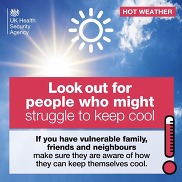
The first Heat Health Alert (HHA) of the season has been issued today, with the East Midlands, West Midlands, East of England, London & South East placed under a yellow alert from Friday 22nd May 9am until Wednesday 27 May 5pm.
The core alerting system will start on Monday 1 June, but this heat health alert has been issued outside of the core system due to unseasonably high temperatures.
Individuals and organisations that wish to receive the impact based HHA must register to receive the alerts where users will be able to specify which regions they wish to receive alerts for. The alert status is also publicly available on the UKHSA Data Dashboard.
To support stakeholders with their hot weather communications this year, we have updated our communications toolkit for 2026. The material in this toolkit is intended to provide basic health information that can be communicated during hot spells so that the right messages reach the right people at the right time. This year we have included some new messaging on staying safe from direct sun.
The toolkit supports UKHSA’s Adverse Weather and Health Plan (AWHP) and Weather-Health Alerting (WHA) system, which issues HHAs.
If you are unable to access the toolkit, please email externalaffairs@ukhsa.gov.uk and we can send across a hard copy. Please do not publish the toolkit anywhere online to prevent old, outdated versions of the toolkit circulating.
|
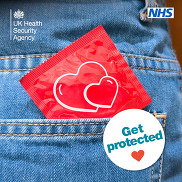
A new report published by the UKHSA shows that the trend in HIV diagnoses in England have continued to fall, with England meeting the UNAIDS 95-95-95 targets again — with 95% of people living with HIV having been diagnosed, 95% of those diagnosed receiving treatment and 98% of people on treatment having suppressed viral loads, meaning the virus is undetectable in their blood.
Over 1.3 million people were tested for HIV through sexual health services in 2024. However, testing uptake was lowest among Black African heterosexual and bisexual women (78%) and other ethnic minority heterosexuals (79%), compared to over 95% among gay and bisexual men.
UKHSA is reminding the public that condom use, testing and PrEP remain the most effective ways to prevent HIV for sexually active people. HIV tests and PrEP are free and confidential through the NHS and local sexual health services. Condoms can also be accessed free across some parts of the country — you can check availability by searching ‘Find free condom services – NHS'.
|
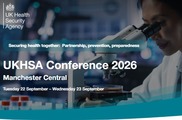
The UKHSA Conference 2026 will take place on Tuesday 22 and Wednesday 23 September at Manchester Central. The conference will bring together partners from across public health, health protection and the wider health security community to share learning, showcase innovation and strengthen collaboration.
Exhibition stands are now available to purchase, offering a fantastic opportunity to showcase your organisation to delegates from across the health security community. Sponsorship packages are also available for organisations looking to raise their profile and support this flagship event. To find out more about exhibition and sponsorship opportunities, check out our Sponsorship and Exhibition Brochure.
For more information, or if you’d like to arrange a call, email us at conference@ukhsa.gov.uk
|
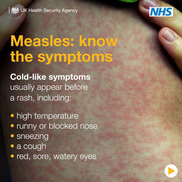
The latest measles case data* (published 30 April) shows that activity has increased since January 2026, mostly driven by outbreaks in North London and Birmingham.
Between 1 January 2026 and 27 April 2026, there have been 477 laboratory confirmed measles cases reported in England, an increase of 35 cases since the 20 April 2026. Measles activity increased from January 2026, with the highest number of cases concentrated in North London and Birmingham.
Measles is a nasty illness for any child, but for some it can lead to serious long term complications and tragically death, but is so easily preventable through vaccination.
Having two doses of the measles, mumps, rubella and varicella (MMRV) vaccine gives children the vital protection they need against this highly contagious disease. It also helps protect more vulnerable children around them who are too young or unable to have the vaccine due a weakened immune system.
Older children and adults who missed out on their vaccine when they were younger can catch up at any age with the measles, mumps and rubella (MMR) vaccine.
*Measles case data is currently published fortnightly during April 2026. The next update will be published tomorrow, 14 May 2026.
|
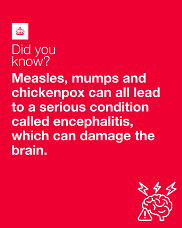
We have a series of resources available to help stakeholders communicate on measles and the vaccines that can prevent it:
- We have a measles communications toolkit on our Google Drive to help support colleagues who are managing outbreaks in their communities. This has been updated this week with further social media assets to help raise awareness of measles, its signs and symptoms, and the MMRV/MMR vaccine. These can be found on p13-14 of the toolkit.
- UKHSA and NHSE stakeholder communications toolkit on the Campaign Resource Centre (CRC): resources to help communicate the MMRV vaccine
|
Measles Epidemiology and Outbreak Response Webinar Thursday 21 May, 1pm - 3pm.
Are you involved in measles outbreak preparedness or response? Join this two hour webinar with health experts, and hosted by NHS England, to share learning from recent outbreaks and strengthen system-wide readiness, with a focus on acute trust settings. The session will cover the epidemiological picture, national immunisation strategy, public health case management, and clinical guidance including Infection Prevention and Control (IPC) and occupational health, with real examples and a live Q&A. The webinar is relevant to NHS, UKHSA and public health professionals.
If the event registration isn’t working on your web browser, try accessing it from your mobile phone, or contact NHS England for assistance (details on the web page).
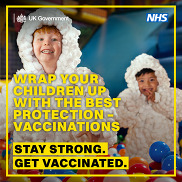
We are seeking feedback from stakeholders who helped promote the childhood immunisations campaign, which was ran by the Department of Health and Social Care, UKHSA and NHS England, in February 2026.
We are also interested in hearing from those who used materials outside of the main campaign, such as the childhood vaccines postcard, the illustrative vaccines creative and the MMRV communications toolkit.
Your feedback is crucial in shaping our future campaign strategies and communications approaches. Please fill out the feedback form by Thursday 11 June 2026. Please share with any other colleagues who might be interested in providing insight.
If you have any questions or would like to get in touch with us directly, please email externalaffairs@ukhsa.gov.uk.
|
|