And, autoimmunity in long COVID.

Get full access to Reuters.com for just $1/week. Subscribe now.


Health Rounds

Health Rounds

By Nancy Lapid, Health Science Editor

Hello Health Rounds readers! Today we highlight another study of GLP-1 drugs, this time for type 2 diabetes patients who were not responding well to standard initial treatment. We also report on two studies with findings that could bring eventual relief for patients still struggling with long COVID symptoms.

In breaking news: US FDA advisers recommend COVID vaccines target XFG variant; France becomes first EU country to reimburse anti-obesity drugs; small biotech firms quicker to 'latch onto' AI than big ones; and resident doctors in England to strike next month.

On Ebola...  WHO urges Ebola treatments, vaccines for Bundibugyo variant be tested only in trials; WHO calls for ceasefire in Congo to contain Ebola as cases surge; the epidemic outpaces world's response; funding pledges for Ebola outbreak almost halved; countries tighten travel rules; the US plans to send exposed Americans to quarantine in Kenya; and DR Congo says World Cup delegation compliant with US Ebola protocols.

...and hantavirus: Australia extends quarantine for hantavirus-hit cruise ship passengers and the EU secures emergency deliveries of potential treatment against hantavirus.


Industry Updates

  • California sues 23andMe over 2023 data breach.
  • CVS brings back coverage for Lilly's obesity drug Zepbound.
  • Italy probes Biogen for allegedly hindering sales of rival's MS drug.
  • US FDA approves AbbVie rare blood cancer drug.
  • CVS, Walgreens and Walmart defeat hospitals' opioid lawsuit.
  • GSK hepatitis B drug helps achieve functional cure.
  • Boston Scientific hits two-year low on low demand for heart device.
  • Apogee secures up to $1.3 billion to advance eczema drug.
  • CSL's Seqirus to discontinue bacterial infection drug.
  • Australia sues 3M for $1.4 billion over PFAS 'forever chemicals'.
  • Amazon puts Amwell co-founder in charge of healthcare unit.
  • Agilent raises 2026 profit forecast on strong demand for lab tools.
  • Sandoz files anti-dumping complaint about Chinese antibiotics imports.


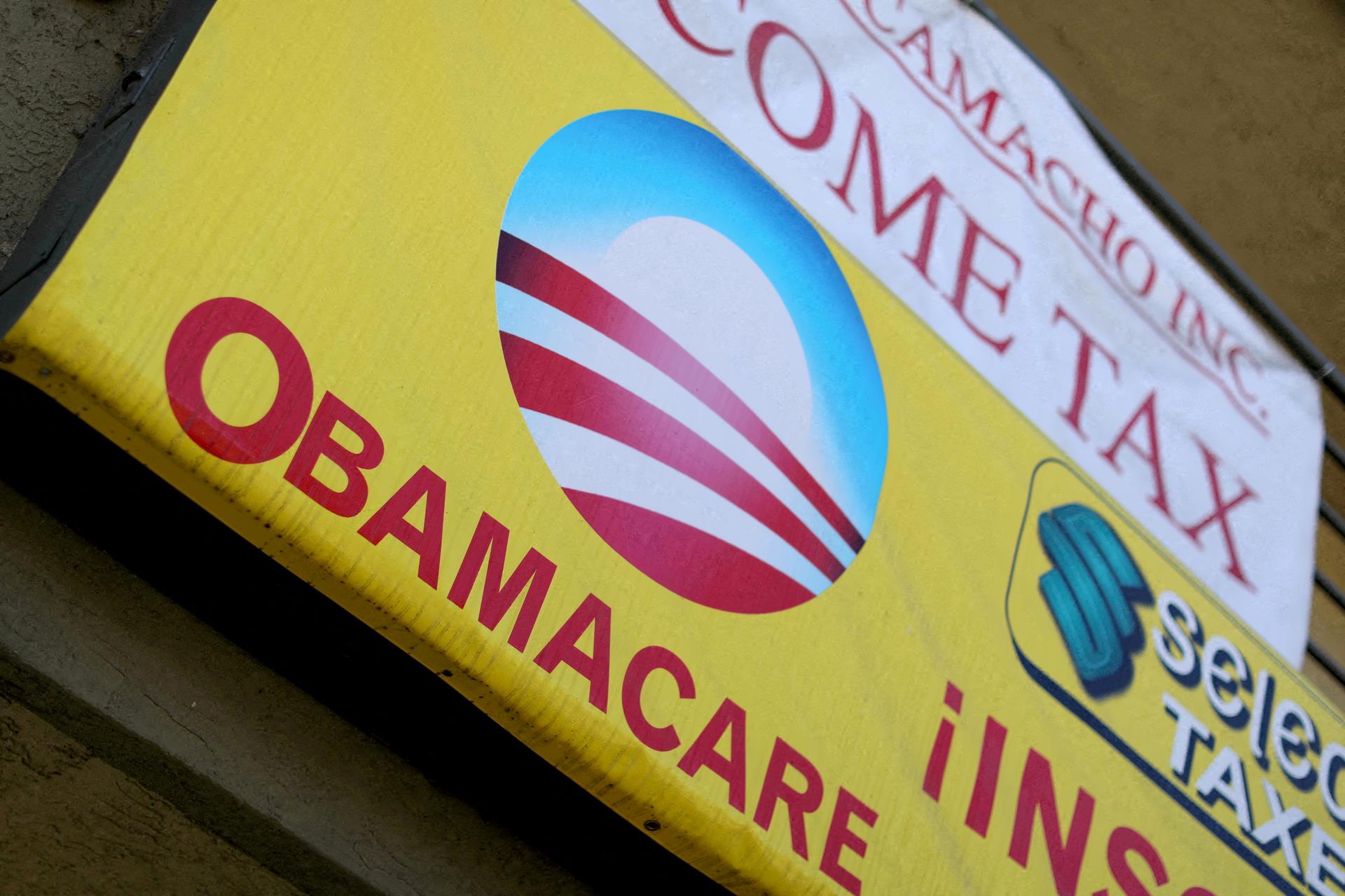
Americans are dropping out of Obamacare

REUTERS/Mike Blake/File Photo

More Americans are dropping out or being kicked off Obamacare health insurance for non-payment than in past years, with the cancellations posing a political liability for the Republican party ahead of November midterm elections expected to turn ‌on affordability. Read more here.


Study Rounds

Early use of Lilly GLP-1 Mounjaro shows advantages in type 2 diabetes


Recently diagnosed type 2 diabetes patients who did not respond well to a usual first-line treatment fared better after adding Eli Lilly's GLP-1 tirzepatide than with the addition of other drugs in the class, a study funded by the company found.

Tirzepatide is sold under the brand name Mounjaro for diabetes in the U.S. and for both diabetes and obesity in other countries.

In the SURPASS-EARLY trial, nearly 800 adults diagnosed with type 2 diabetes within the past four years whose disease was not adequately controlled with metformin, diet and exercise were assigned to add either tirzepatide or other medications.

Most patients in the control group received other GLP-1 drugs such as semaglutide, which Novo Nordisk sells for diabetes as Ozempic or Rybelsus, or Lilly's Trulicity (dulaglutide).

Two years later, patients receiving the weekly tirzepatide injections had greater improvements in blood sugar control as reflected by hemoglobin A1c level, and in weight and waist circumference, compared to patients in the control group.

Furthermore, roughly 60% of participants receiving tirzepatide had achieved normal blood sugar levels after two years, compared to 24% of patients in the control group, according to a report of the study published in Annals of Internal Medicine.

The findings suggest that starting tirzepatide earlier if standard care is inadequate may provide stronger and more sustained metabolic benefits than other standard approaches, the researchers said in a statement.


Immune system may cause long COVID neurological symptoms 

The debilitating neurological symptoms of long COVID are often due to the body's mistaken attack on itself, according to discoveries from two studies that could lead to effective treatments for the condition and changes in blood donation policies.

In both studies, researchers collected so-called autoantibodies in blood from volunteers with long COVID. Normally, the immune system's antibodies defend the body from attack, but autoantibodies – commonly seen after acute viral infections and persisting during long COVID – attack the body by mistake.

When the human autoantibodies were infused into healthy mice, the mice developed neurological features mimicking those of the patients, including fatigue, loss of balance, pain sensitivity, and nerve fiber damage.

In one experiment, the effect was reproduced even when the autoantibodies were collected from patients two years after the initial infection, according to a paper in Cell Reports Medicine.

“This new awareness of the physiology of long COVID will enable us to identify a number of effective treatments for autoimmunity that could significantly improve the symptoms of millions of people with this chronic condition,” Dr. David Putrino from the Icahn School of Medicine at Mount Sinai in New York, coauthor of a separate study published in Cell, said in a statement.

“Before we had no way of predicting who would benefit from (existing) therapies,” he said. “Our study now shows that if you are in a subgroup of long COVID patients who have autoantibodies circulating in your body... you may be a good candidate for these drugs.”

A commentary in Cell said the two studies “provide compelling evidence that autoantibodies directly contribute to symptom generation in a subset of people with long COVID," but neither study provides definitive proof of a single, central mechanism behind the condition.

In addition to their clinical significance, Putrino believes the findings carry an urgent public health warning regarding blood donation.

“In the UK, having long COVID is an exclusion for donating blood, while in the United States these individuals are still allowed to donate,” he said.

“Given the dangers that (autoantibodies in) plasma from people with long COVID can pose for others, this country should be considering fundamental changes to its donation policies.”