| | A Russian drone hits Romania, the EU hardens its stance towards China, and Israel launches a push in͏ ͏ ͏ ͏ ͏ ͏ |
| |  | Flagship |  |
| |
|
The World Today | 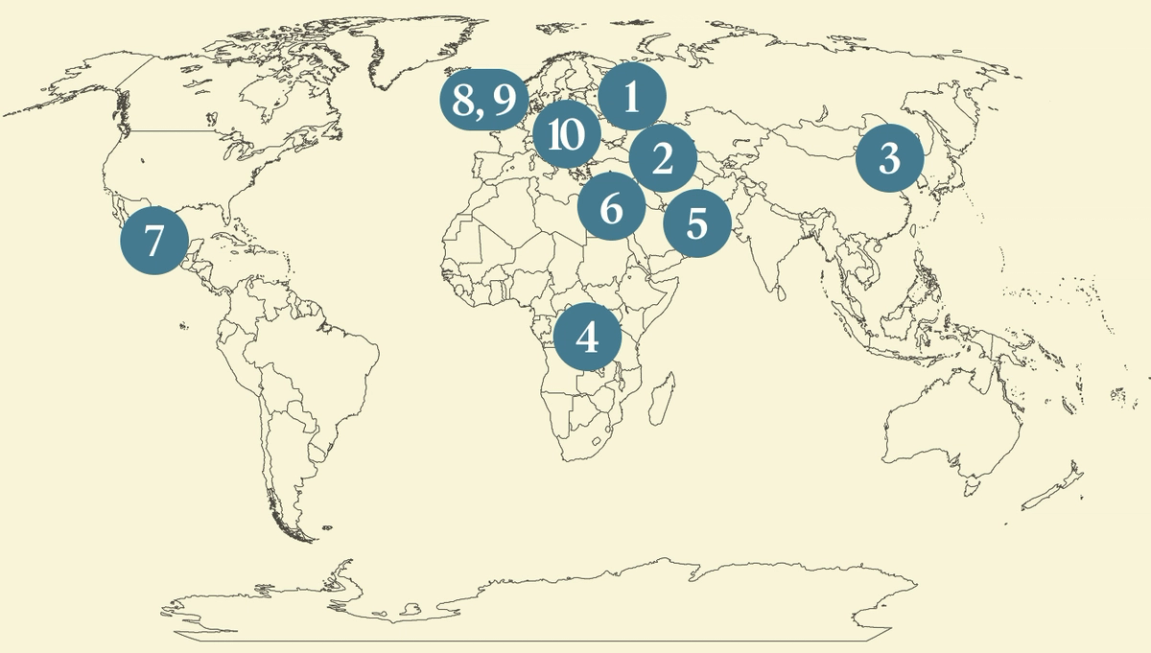 - Russia drone hits NATO state
- Moscow’s waning influence
- EU hardens against China
- Ebola outbreak worries grow
- Iran hopes, energy concerns
- Israel’s Gaza, Lebanon push
- Sheinbaum popularity dips
- UK immigration falls sharply
- British universities face crisis
- A quantum mechanics success
 A biography of the other great 16th-century English playwright. |
|
Moscow loses regional allies |
 Leonhard Foeger/Reuters Leonhard Foeger/ReutersTwo countries long friendly with Moscow moved towards Brussels, pointing to Russia’s waning sphere of influence. Hungary and Armenia were largely pliant allies of the Kremlin’s in years past, but Viktor Orbán’s recent electoral defeat and Yerevan stating its intention to pursue EU membership have upended Moscow’s strategy. The shift comes into stark relief today, with new Hungarian leader Péter Magyar in Brussels to revive EU ties that fell into disrepair during Orbán’s tenure. Armenia will also skip a summit of the Moscow-dominated Eurasian Economic Union. Russia’s hold is even weakening in Central Asia, as Beijing vies for influence there, a “trend [that] has become so persistent that Moscow has virtually no chance of reversing it,” an expert wrote. |
|
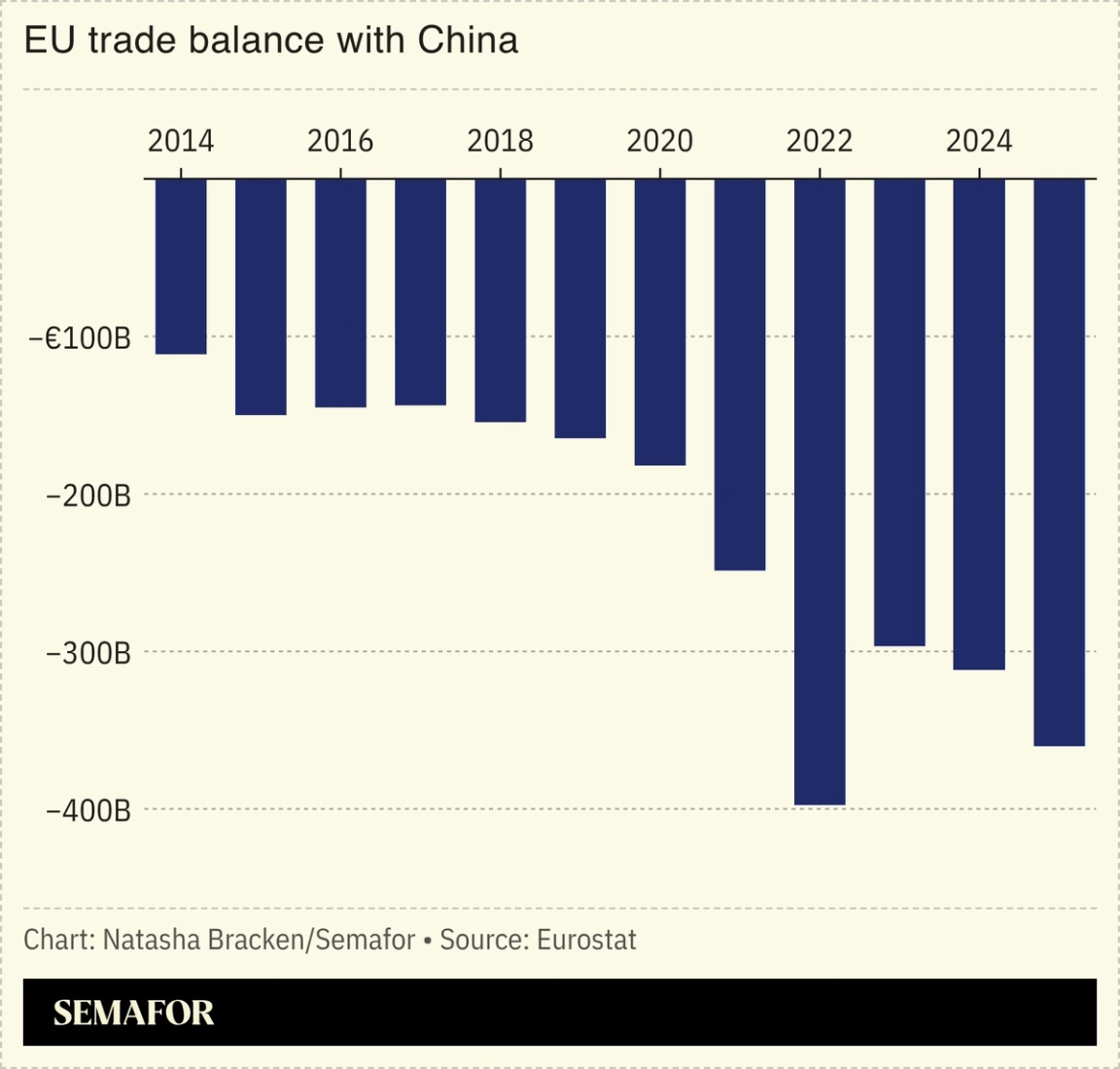 The EU fined one Chinese company and opened an investigation into a takeover bid by another for a German firm, underscoring Brussels’ hardening stance towards Beijing. The €200 million fine on Temu and the probe into JD.com’s acquisition of an electronics retailer come ahead of a meeting of bloc commissioners today focused on relations with China. The EU’s executive arm wants to crack down on the Asian power’s alleged unfair trading practices, but member states are divided: France wants to take a harder line, whereas Germany is fearful of losing access to China’s market. “There’s a sense of imminent collapse of industry, of imminent danger,” the head of a top Brussels think tank told The New York Times. |
|
African nations race to fight Ebola |
 Gradel Muyisa Mumbere/Reuters Gradel Muyisa Mumbere/ReutersAfrican health authorities insisted the Ebola outbreak on the continent could be stopped and promised a vaccine would be ready by year-end, even as a top former US health official said the epidemic could be the worst ever. More than 200 deaths and nearly 1,000 cases have been recorded, though the World Health Organization said those were likely undercounts. Combatting the outbreak has been complicated: The virus strain is new, and the epicenter of the outbreak in the Democratic Republic of Congo is the site of fighting between multiple groups. “This is on track to potentially be as bad as the [2014] West African Ebola outbreak if not worse,” a former US health security official told Semafor. |
|
Markets buoyed by potential Iran deal |
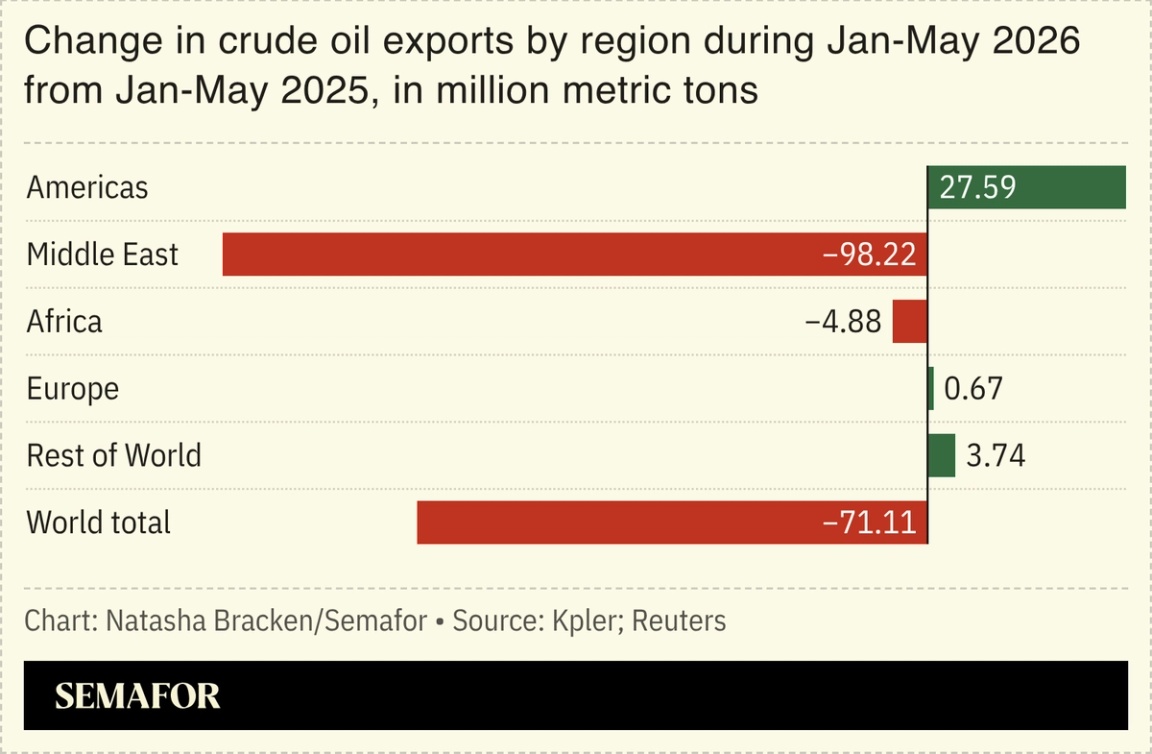 Oil prices fell and stocks rose on optimism that the US and Iran were nearing a lasting peace deal, but analysts warned that huge challenges remained for the global energy market. The effective closure of the Strait of Hormuz has curtailed flows of much-needed fossil fuels, leading to shortfalls across Asia and Europe, which are dependent on imports via the waterway; an agreement between Washington and Tehran is seen as essential to reopening it. But even if a deal were reached, the energy market is in trouble: Chevron, Exxon, and Morgan Stanley all warned that oil inventories were nearing troublingly low levels, and high insurance rates for ships passing through the strait have barely budged. |
|
Israel expands Gaza, Lebanon operations |
 Nir Elias/Reuters Nir Elias/ReutersIsraeli Prime Minister Benjamin Netanyahu ordered his forces to expand their control of the Gaza Strip while the country’s military launched strikes on south Beirut. The twin offensives are targeting Hamas and Hezbollah respectively, though critics argue that the operations are motivated at least in part by domestic politics — Israel is due to hold elections by October — and are amplifying troubling humanitarian situations in Gaza and Lebanon. Netanyahu’s political calculus, in particular, is one he has consistently leveraged to become his country’s dominant leader, two experts argued in Foreign Policy: “The most successful leaders of his type do not always win by persuading a majority that they are admirable. They win by persuading enough voters that the alternative is intolerable.” |
|
Sheinbaum’s popularity slides |
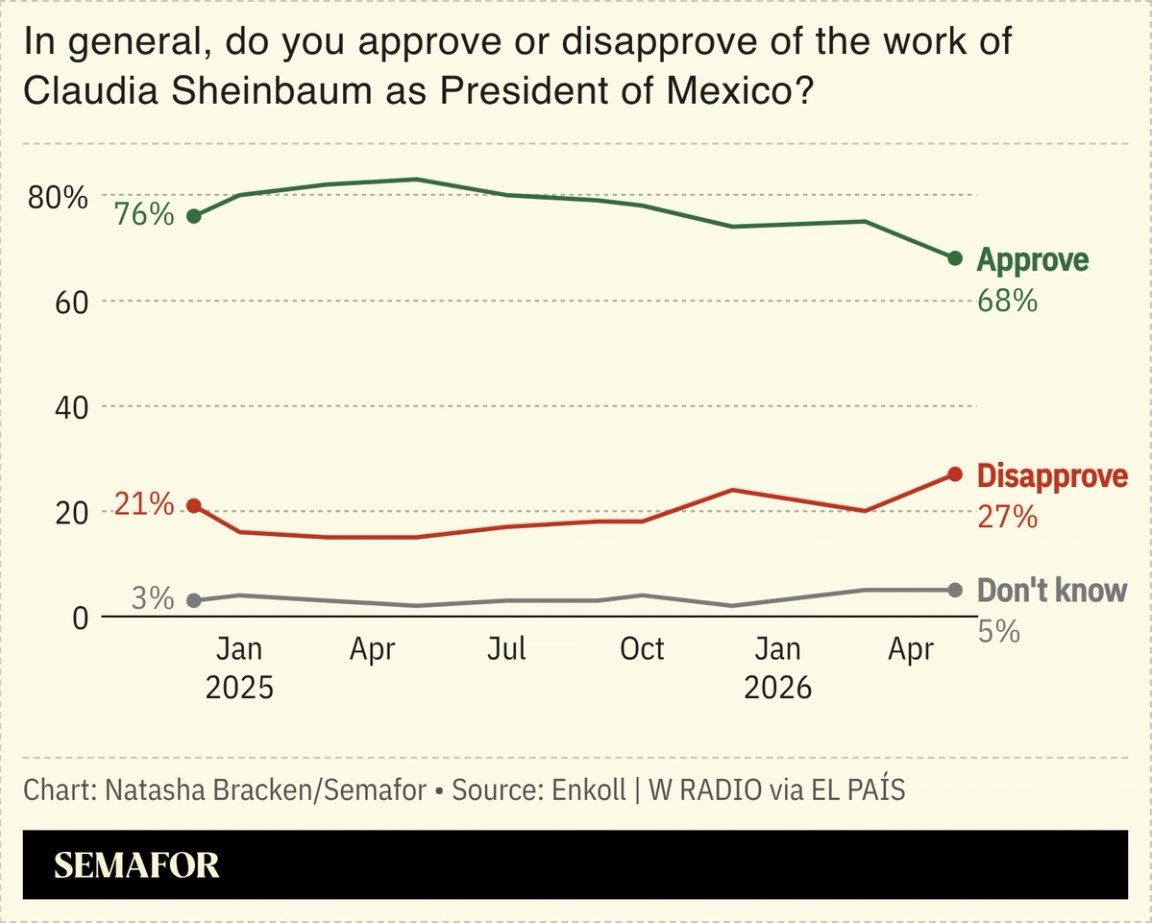 Mexican President Claudia Sheinbaum’s popularity plummeted to its lowest-ever level, as she struggled to contain the fallout from a US corruption indictment of a close ally. US prosecutors allege that Sinaloa Governor Rubén Rocha Moya, a member of Sheinbaum’s party, relied on the state’s eponymous cartel to help win an election, in return providing it with protection and leaked information. Sheinbaum and her predecessor, Andrés Manuel López Obrador, ran on anti-corruption campaigns, but Mexico’s corruption perception rating has slipped during their time in office, and officials in the country fear opinions could worsen further as Washington eyes new indictments of alleged drug lords and their supporters. “If they don’t do the job, we will,” US President Donald Trump said. |
|
 Fox News host Bret Baier has spent years interviewing presidents, moderating debates, and operating at the center of American political media. On this week’s episode of Mixed Signals, he joins Max and Ben to discuss how he navigates tough questions while maintaining access to President Donald Trump, what he actually learned from the Fox News Dominion discovery process, and why he doesn’t vote. Plus, his new book, his 2028 predictions, and whether CBS News has any shot at replicating what he’s built. Listen to the latest episode of Mixed Signals now. |
|
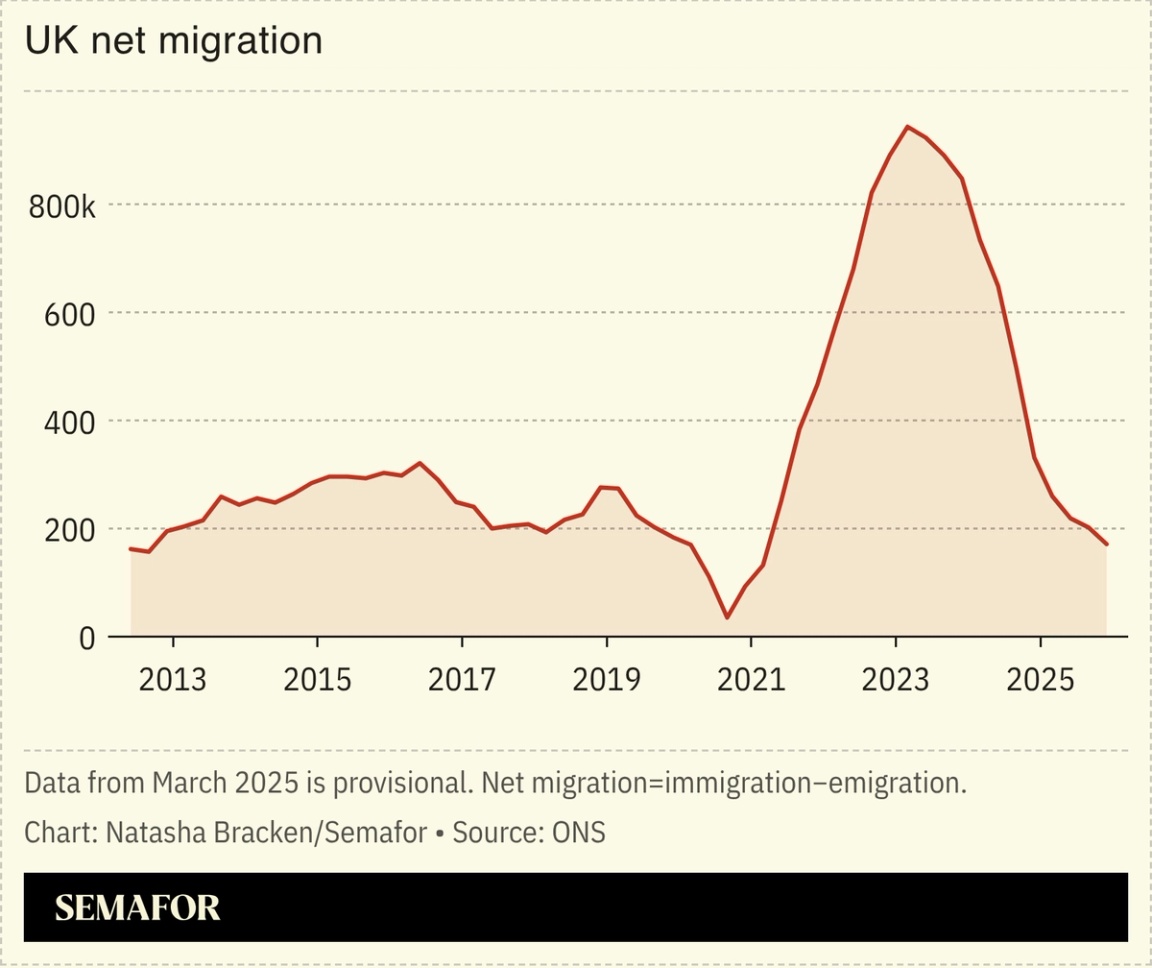 Britain’s net migration has halved during Prime Minister Keir Starmer’s tenure, but Britons believe it is still rising. Immigration surged after the pandemic, peaking at almost 1.5 million a year in 2023. The subsequent collapse has not reached the public consciousness, perhaps because the numbers of asylum seekers on small boats — the most visible, and to some voters least palatable, form of migration — remain stable. It has been a millstone for the embattled Starmer, with voters naming it the most important issue facing Britain and most thinking numbers should come down. The fact that the numbers have come down, largely unnoticed, may not be surprising: Surveys find voters in many countries are misinformed on statistical issues such as crime, immigration, and budget allocations. |
|
UK universities face funding crisis |
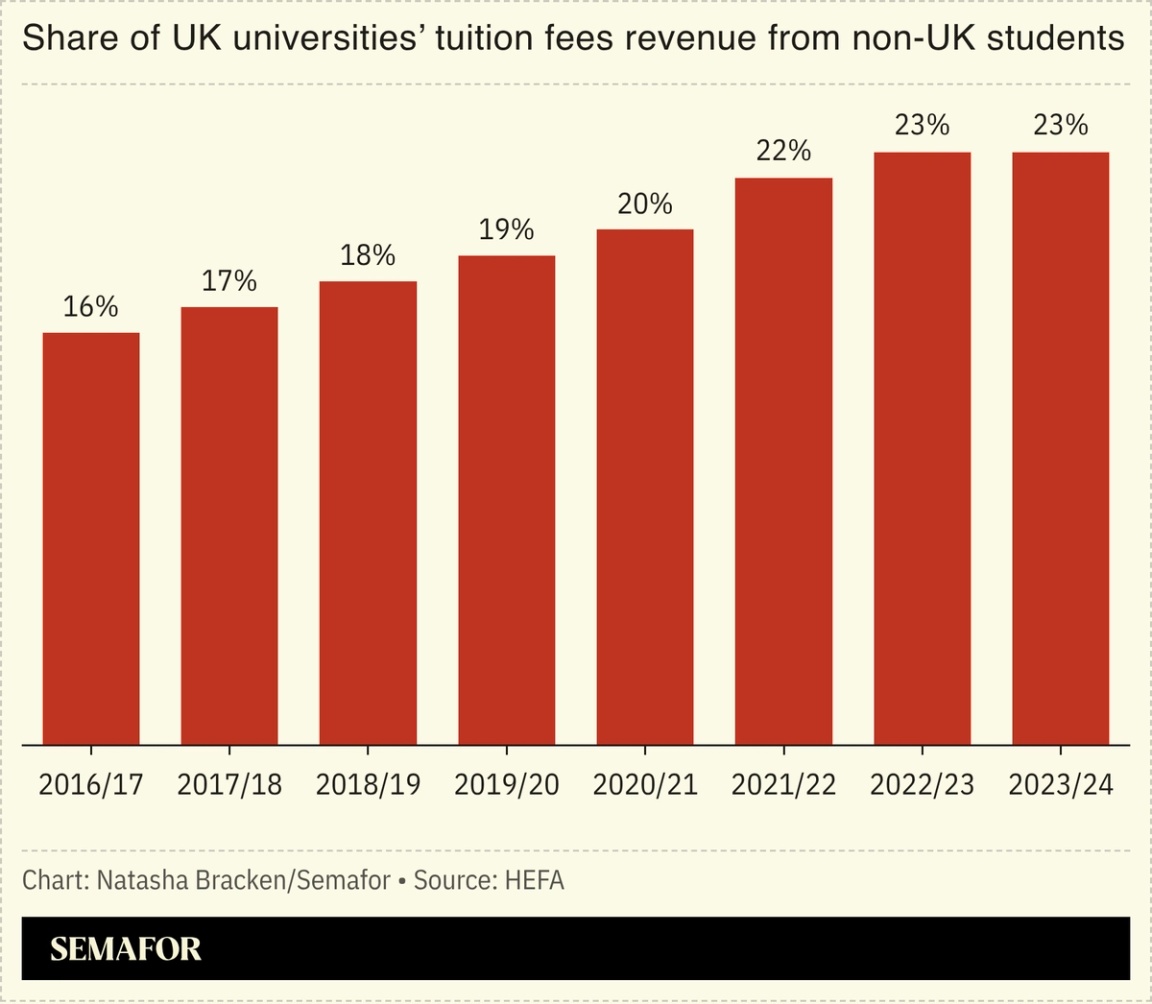 Britain’s universities are firing staff, cutting courses, and curtailing research over an intensifying financial shortfall. Prior changes to the country’s higher education system expanded access while reducing government support, increasing institutions’ reliance on fees — particularly from international students — to generate revenue. Successive governments have, however, sought to curb foreign student numbers to cut immigration, hammering universities’ funds. Critics say that ultimately, Britain offers neither the benefits of the US system of well-endowed, fee-paying universities, nor of far cheaper European offerings. “Britain has attempted to make an accelerated transition from an elite to a mass system of higher education without reckoning the consequences of such a huge structural change,” a Cambridge University emeritus professor wrote in the London Review of Books. |
|
|


