(Sean Gallup/Getty Images) |
|
|
|
Trader “AlphaRaccoon” wasn’t just feeling lucky when he took positions on a prediction market site related to last year’s top search results, but using insider information from working at Google, according to a criminal complaint. The case alleges the account made $1.2 million across various trades, including a highly unlikely bet on the No. 1 search for 2025. As we noted last year, the stakes involved and the volume of activity around this one specific subject aroused suspicion.
The S&P 500, Nasdaq 100, and Russell 2000 all closed at new record highs following reports that the US and Iran have reached a tentative deal to extend the ceasefire by 60 days, pending President Trump’s approval. |
|
|
|
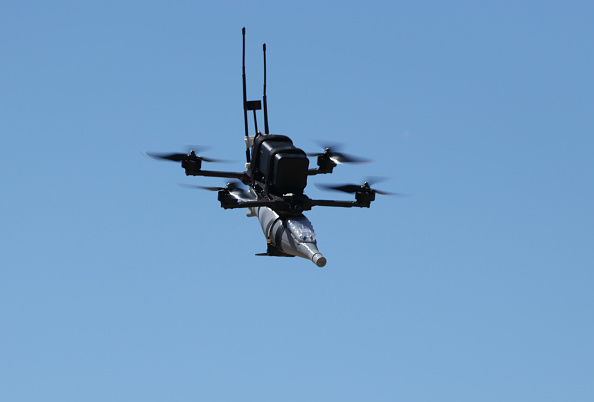
US drone stocks surge on talks of government deal, while banned Chinese drone giant fights to clear its name |
All is fair in love and war, unless you are a Chinese drone company.
The Wall Street Journal reported yesterday that the US government is in talks to provide funding to a small group of American drone companies, which may include equity and debt positions. |
-
Shares of Florida-based Unusual Machines surged 57%. It’s one of the companies mentioned in the report, and it also happens to have the president’s son Donald Trump Jr. as an investor and board member.
-
While not mentioned as a possible recipient of government funding, other drone-linked stocks like Red Cat Holdings (up 32%), Kratos Defense (up nearly 14%), AIRO Group Holdings (up 22%), and AeroVironment (up 18%) also jumped.
- Privately held Neros Technologies, which is backed by Sequoia Capital, and Performance Drone Works were also highlighted as possible recipients of government funds in the report.
-
The Trump administration has announced plans for equity or warrant stakes in rare earth companies, Intel, defense contractor L3Harris, and most recently, the quantum computing industry.
|
|
|
|
DJI published a report showing the results of a thorough study it commissioned from US cybersecurity firm OnDefend. After five months of adversarial testing of the DJI Air 3S and DJI Matrice 4E drone platforms, OnDefend found no evidence of transmitting data back to China, supply chain tampering, or unauthorized backdoors in the hardware or software.
DJI is estimated to have a dominant share of the nonmilitary drone market. Its products are used by first responders, farmers, infrastructure inspection firms, and many other small businesses. |
|
|
|
Waymo to launch free robotaxi rides in its new Ojai vans |
- Incorporating an initial 100 Ojai vehicles into its autonomous commercial fleet is a first step toward deploying “tens of thousands of units annually” from Waymo’s Arizona factory. There, working in partnership with vehicle builder Magna, the company takes purpose-built vehicle shells and integrates its proprietary self-driving tech.
-
The four-seater Ojai will debut the company’s sixth-generation Waymo Driver. The tech is both more powerful — it can drive in snowier conditions than the existing fleet — and, importantly, cheaper than the tech powering Waymo’s 3,000-plus fleet of Jaguar I-PACEs in 11 markets.
- It’s also operating on top of a less expensive vehicle to begin with: the Zeekr-made van likely costs around $38,000 versus $75,000 for the Jaguar.
|
Like its existing fleet — and unlike Amazon’s Zoox — the Ojai has a steering wheel and pedals, though it’s being configured to operate without those in the future, according to a Waymo spokesperson. The Ojai seats up to four people and has more legroom than the I-PACE. It also has three screens, a number of charging ports, and is easier to clean.
|
|
|
|
Waymo wouldn’t provide an estimate for the total cost of the vehicle and its autonomous add-ons, but based on previous Morgan Stanley estimates, the Ojai could cost around $125,000, whereas the fifth-generation I-PACE was closer to $200,000. Investor and Future Fund managing partner Gary Black has penciled in the fully equipped Ojai at a breezy $75,000.
Faster and cheaper autonomous vehicle assembly is essential for Waymo to expand into its planned 20-plus markets. |
|
|
|
How Pro Investors Actually Use Options Data |
Understanding market sentiment is a vital tactic of trading, yet many individual investors are left guessing based on sub-par information.
In collaboration with Nasdaq, we explore how professional-grade options data goes beyond basic put/call ratios — and how traders of all types can use it to go from reactive trading to proactive positioning. Read the 5 minute explainer on Sherwood → |
|
|
|
|