Hi! Hold the phones… Counterpoint Research has downgraded its smartphone shipment forecast to just 1.08 billion units this year, which would mark a record 13.9% annual fall amid an ongoing chip supply crunch. Today we’re exploring: |
- Pump it up: Costco’s gas business just posted record volumes as fuel prices soar.
- Hut’s off: Yum! Brands is in exclusive talks to sell Pizza Hut.
- Byte back: Software stocks are rebounding as AI fears ease.
|
Costco’s gas stations are breaking records as drivers seek cheaper fuel |
As the Iran war’s effects on energy prices ripple through almost everything, Americans are feeling the squeeze at the pump, in their delivery bills, and even when walking down the humble fruit-and-veg aisle. For Costco, though, the pain has come with a perk: record demand at its gas stations.
Last week, the warehouse giant said its gas business had posted “record-breaking” sales volumes for its fiscal third quarter, ended May 10. Higher gas prices brought “many members” to Costco’s pumps for the very first time this quarter, CEO Ron Vachris said on the earnings call, with the final five weeks ranking as the company’s top weeks for fuel volumes in history.
Demand was so intense that many stations required “multiple daily gas deliveries,” Vachris said, as more people rushed to Costco pumps in the middle of a national gas-price spike.
Indeed, with its pumps typically priced about $0.30 cheaper per gallon than traditional stations and local competitors, fuel has long been one of the warehouse club’s reliable traffic drivers, alongside its famous $1.50 hot dogs and $4.99 rotisserie chickens. |
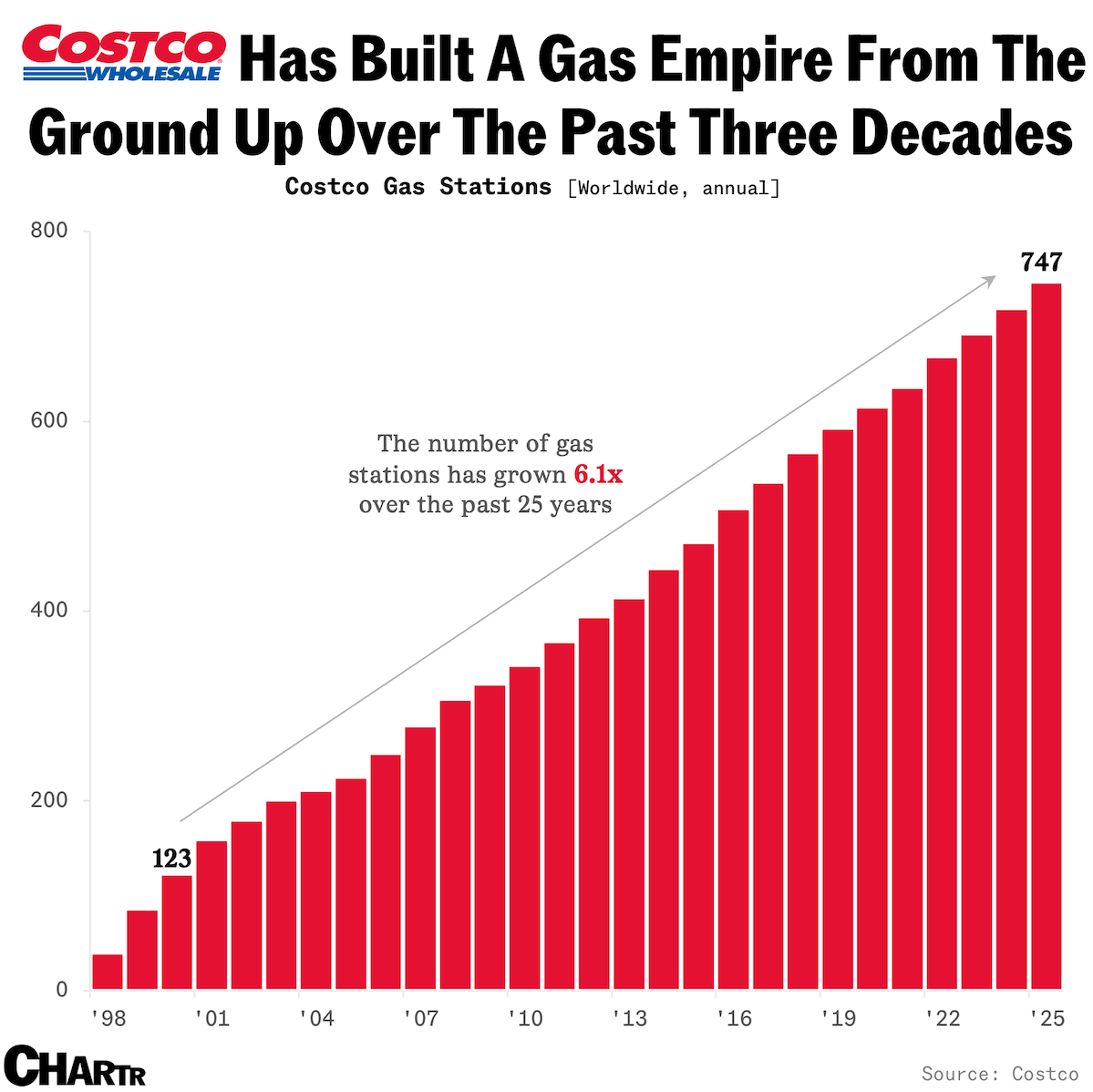
After opening its first gas station in 1995, Costco has steadily expanded its fuel network, operating 747 locations worldwide by the end of 2025 — more than 6x its footprint at the turn of the century, and roughly 300 more than Walmart’s planned total for the end of last year.
The pump is also a gateway to getting Costco’s stickier, high-spending members through the doors: just under half of its gas station visitors end up going inside the warehouse, according to CFO Gary Millerchip, and they also tend to visit more frequently, spend more overall, and renew their memberships at a higher rate. |
Yum! Brands might have found a potential buyer for Pizza Hut |
Toward the end of last year, Yum! Brands, the behemoth behind KFC, Taco Bell, and Pizza Hut, set tongues wagging in the fast-food world by announcing that it was exploring “a range of strategic options” for the latter brand, to help the pizza business “realize its full value.”
Now, with Reuters reporting that private equity firm LongRange Capital is in exclusive talks to potentially snap up the slice giant, it appears that the Hut reaching its true potential might mean doing so in separation from the Yum! Brands family. |
While Pizza Hut might have established itself as a mainstay in the unending American pizza chain wars — opening its first branch in Kansas almost 70 years ago and ballooning to see its global store count reach just shy of 20,000 at the latest yearly count — the brand has undoubtedly lost some of its shine of late, especially alongside the impressive company it keeps under the Yum! Umbrella.
|
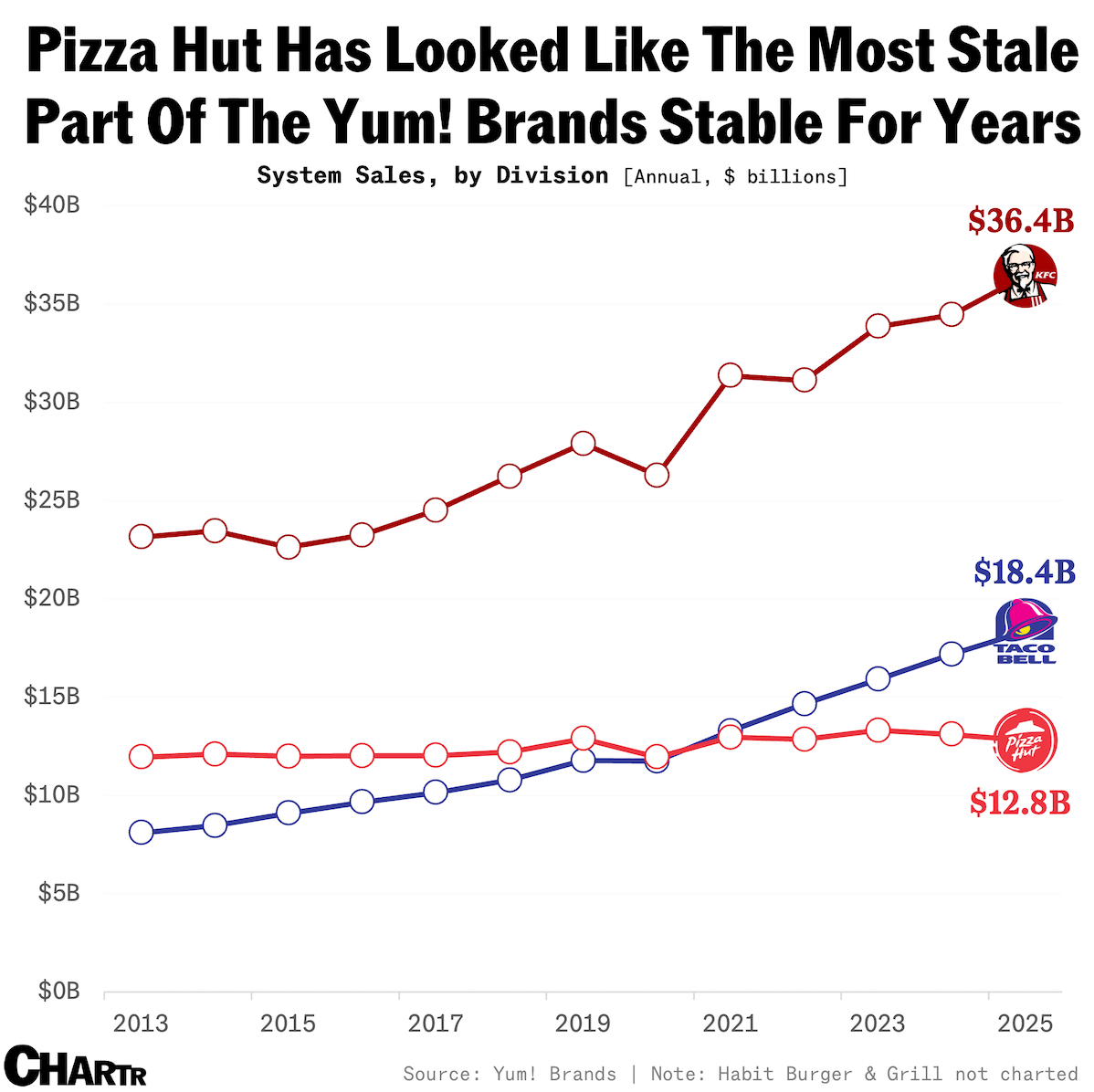
In 2025, Pizza Hut actually saw its systemwide sales slip for the second year in a row, down 2.4% to $12.8 billion. Meanwhile, the division’s same-store sales have also either sunk or stagnated for nine consecutive quarters now, as competition in America’s crowded pizza market heats up and Yum! continues to shut Huts or restore old-school interiors to try and retain some of the chain’s former glory.
Taco Bell, on the other hand, as the home of the fastest drive-thrus in America and the ever-important Crunchwrap, has been growing its sales in recent years. The taco chain has, at times, looked like a sole hope in the Yum! portfolio, leapfrogging Pizza Hut as its second-biggest brand for the first time in 2021 and not looking back since.
Taco Bell’s $18.4 billion systemwide sales figure for the last fiscal year is made even more impressive by the Mexican-inspired chain’s comparatively low store count, hauling in over $5.5 billion more than Pizza Hut in 2025 despite having less than half as many units around the world. |
|
|
|
Software stocks strike back |
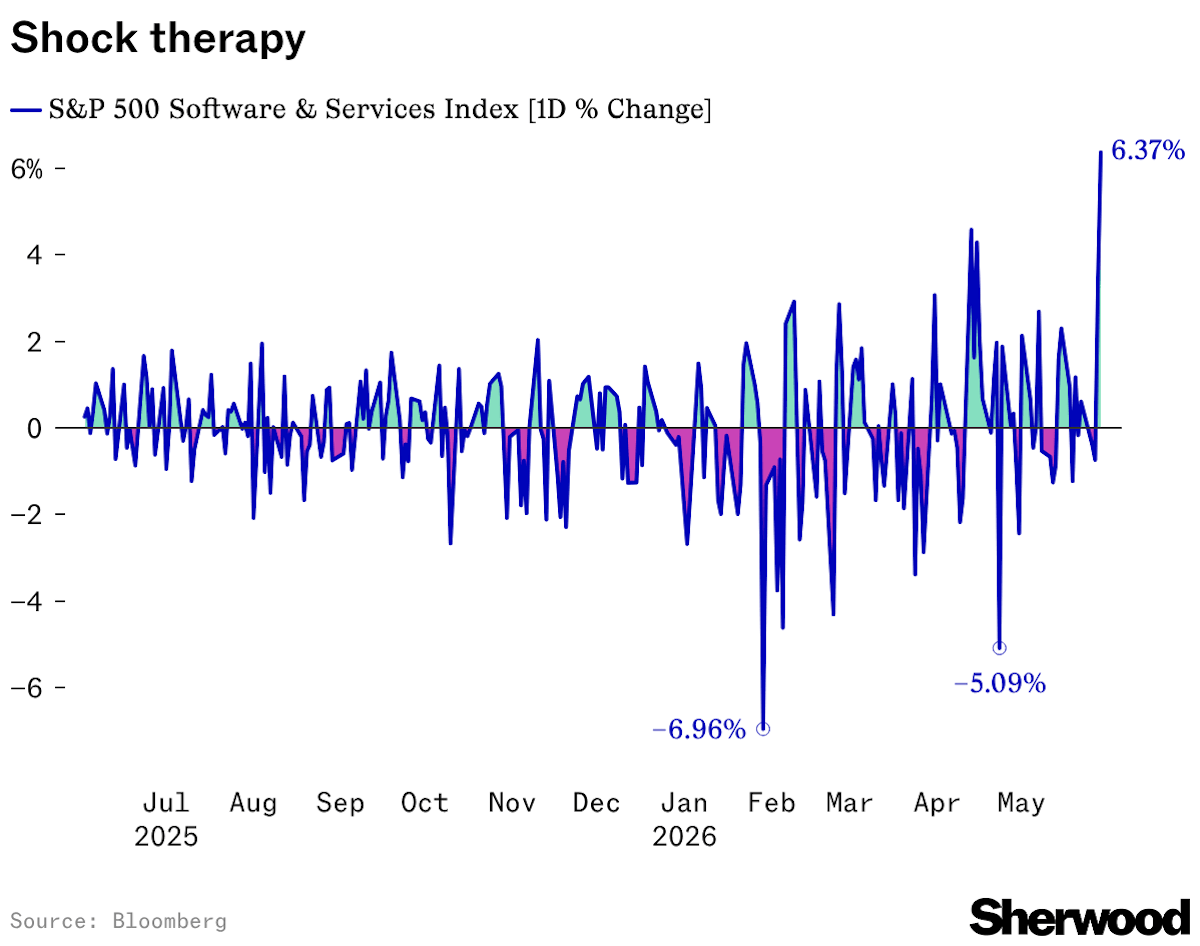
Software’s back, baby. After being hammered for much of this year, with every iteration of Claude Code starting a fresh wave of doom-mongering, software struck back at the end of last week, with the S&P 500 Software & Services sector cranking out a 6.4% gain on Friday — its best one-day performance since the bounceback from the Liberation Day tariff announcements of 2025. |
If Snowflake’s strong print and MongoDB’s insane heartbeat move post-earnings on Thursday were the signs of a pulse, then Okta’s blowout beat was the defibrillator shock that sparked the entire sector back to life, building on a growing body of evidence that the AI boom might actually benefit the growth and margins of at least some software stocks for at least some time.
The good vibes are continuing into Monday as well, after Nvidia’s Jensen Huang said yesterday that it’s an “incredible time” to be a software company in a speech at Computex in Taiwan. Contradicting the “SaaSpocalypse” narrative, he added that “because there are going to be so many agents, the world is no longer limited by the number of people. Therefore, those agents are going to use more tools than ever.” Just the opposite of how quantum names plummeted on Huang’s comments earlier this year, his words sent software stocks like ServiceNow, Atlassian, and Salesforce jolting up in premarket trading on Monday.
But many high-profile software names still have a long way to go to return to their highs, even if — and that is a big if — the latest momentum in the sector holds. |
|
|
|
-
Made in China: Recent OECD research found that some 60% of the increase in the global market share of Chinese businesses from 2005 to 2024 was driven by government subsidies.
-
Berkshire Hathaway is buying Taylor Morrison Home in a $6.8 billion all-cash deal, marking its first major acquisition since Greg Abel took the helm at the start of 2026.
-
Kane Parsons’ “Backrooms” notched $81 million domestically in its opening weekend, making the 20-year-old YouTuber the youngest filmmaker to top the charts in North America.
-
The Georgian government recently unsealed Josef Stalin’s wine cellar filled with 40,000 bottles for the first time, and plans to auction off the collection to fund a wine education school.
-
Microsoft is reportedly working on a single super app that would merge GitHub Copilot (the coding assistant), Copilot (the chatbot), Copilot Cowork, and a new agentic workflow Autopilot.
|
|
|
|
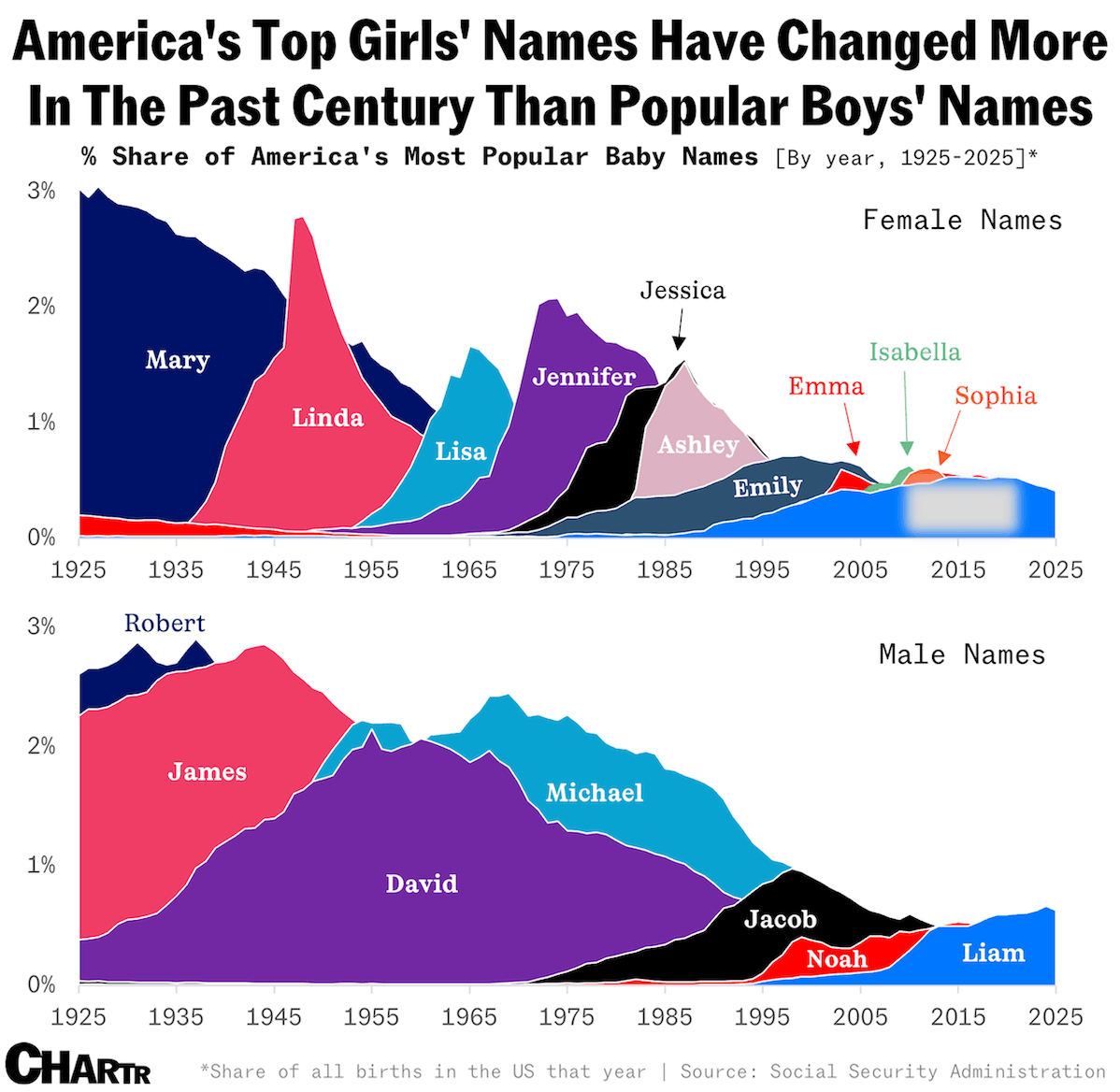
Off the charts: Although popular female baby names tend to shift a little more than their male counterparts, which girls’ name topped the ranking for the seventh year in a row in 2025? [Answer below]. |
Not a subscriber? Sign up for free below. |
Sherwood Media, LLC produces fresh and unique perspectives on topical financial news and is a fully owned subsidiary of Robinhood Markets, Inc., and any views expressed here do not necessarily reflect the views of any other Robinhood affiliate... See more |
|
|
|
SHERWOOD MEDIA, LLC, 85 Willow Road, Menlo Park, CA 94025 |
|
|
|
|