| | In this edition, the AI bill is coming due, and the “Jensen effect” is the new “Trump bump.”͏ ͏ ͏ ͏ ͏ ͏ |
| |  | Business |  |
| |
|
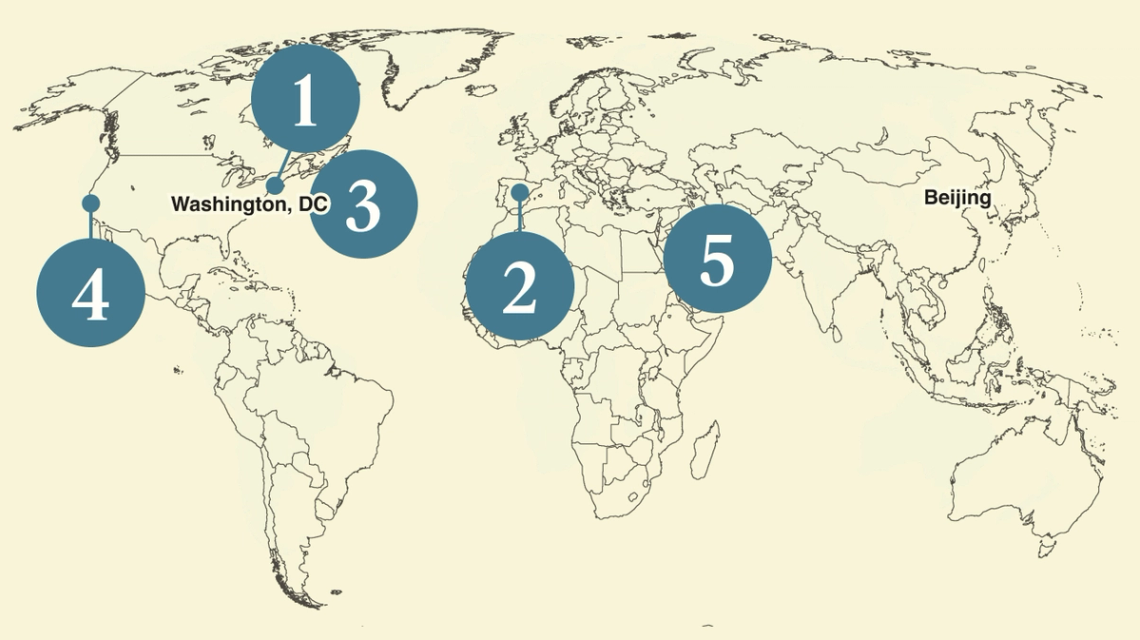 - Private credit withdrawals
- Hedging soccer
- ‘Uncomfortable’ jobs balance
- Jensen’s seal of approval
- Gulf reckoning
|
|
 The AI bill is coming due. For years, Alphabet did what most big companies do when flush with cash: It bought back stock. But after averaging $14 billion per quarter in buybacks over the past five years, the most profitable company in the US didn’t buy back a single share in the first quarter. And this week, it announced plans to sell $85 billion in new shares — its first equity raise since 2005 (a year after it went public). Investors took the dilution, estimated at 1% to 3% depending on the final terms of convertible preferred stock, in stride, presumably calmed by the presence of Berkshire Hathaway as anchor investor. The changes reveal something the byzantine financing structures around the AI buildout have worked hard to obscure: Stockholders are the ultimate risk-bearers for any corporate moonshot, and they’re increasingly handed the bill. The spending numbers are staggering. Meta, Microsoft, Alphabet, and Amazon doubled their combined capex to $450 billion in 2025 to pay for the AI buildout; analysts expect spending to top $700 billion this year. In the salad days of 2024, that spending was comfortably covered by their cash-cow businesses in advertising, cloud, e-commerce, and software. By the middle of last year, even those gushers weren’t enough, so the companies turned to the bond market and started shifting costs off their balance sheets — Meta’s $27 billion Louisiana data center campus, Alphabet’s chip joint venture with Blackstone, and a growing web of off-ledger arrangements that have kept the spending out of sight. Now, as AI costs march higher, they’re resorting to selling fresh stock. In addition to Alphabet’s offering, Oracle plans to raise as much as $25 billion in equity and equity-like securities this year, and Amazon has hinted it might do the same — turning to the most expensive option and the one CFOs typically reach for last. There’s a reason private-equity shops put as little equity, and as much debt, as possible on their buyouts. Even if that capital funds home runs, profits will be spread across more shares. Companies’ share counts are likely to soar after shrinking for years. Increased issuance of higher comp to lure AI talent will pad them, too. We may live in the golden age of “capital solutions” with seemingly endless amounts of go-anywhere money hawking creative solutions. But here we are, anyway, with shareholders subsidizing token supply. |
|
Private credit withdrawals spike |
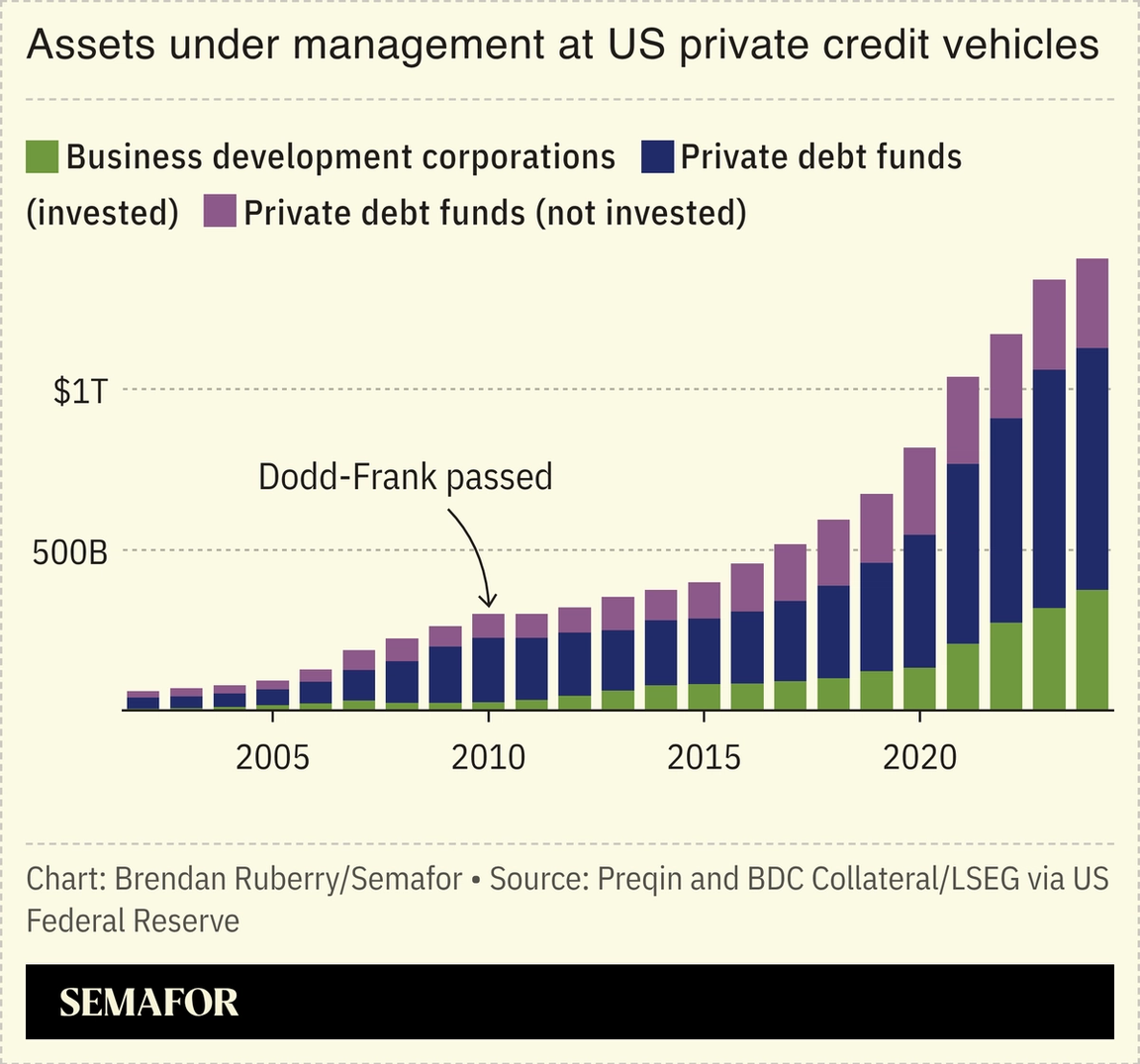 It’s that time of year again — private credit withdrawal season. Investors in Blackstone’s flagship private credit fund sought to yank 10% of their money this quarter, showing that the jitters engulfing the industry may be deepening. At Cliffwater’s main lending fund, the figure was 17%. Requests at both funds were higher than in the previous quarter, and both are holding the line by capping redemptions at 5%. (Blackstone had dipped into its own pockets and those of employees to honor the 8% redemptions it received last quarter.) Default rates have risen and the AI fears around loans to software companies are real, but most financiers don’t see a crisis brewing. “This economy is much stronger than the narrative suggests,” Goldman Sachs president John Waldron told Semafor in April, as withdrawals were mounting at credit funds. Worries aren’t limited to the credit side: redemption requests for Partners Group’s flagship fund, which includes a mix of debt and equity, rose to 10% this quarter. Partners, like Blackstone and Cliffwater, capped payouts at 5% of the fund’s value. — Rohan Goswami |
|
The (good) future of prediction markets |
 Albert Gea/Reuters Albert Gea/ReutersA Spanish soccer team on the brink of being kicked to a lower league hedged its risk on Kalshi, the latest sign that prediction markets are moving beyond their retail roots. The club placed a multimillion-dollar bet on its own relegation to protect it from the lost ticket and broadcast revenues, brokers involved in the trade told Semafor. Trading firm Susquehanna, an early player on Kalshi, took the other side of the bet and pocketed more than $1 million when the club narrowly stayed in La Liga’s top tier. Prediction markets are pushing beyond their YOLO roots and into areas dominated by traditional finance firms. Relegation risk is commonly hedged in the insurance market, and much of it ends up inside Lloyd’s of London. “We want to see how prediction markets would handle this,” the team’s broker told Semafor. But the line between institutions hedging their downsides and betting against themselves is a thin one. |
|
Jobs numbers could show resilience |
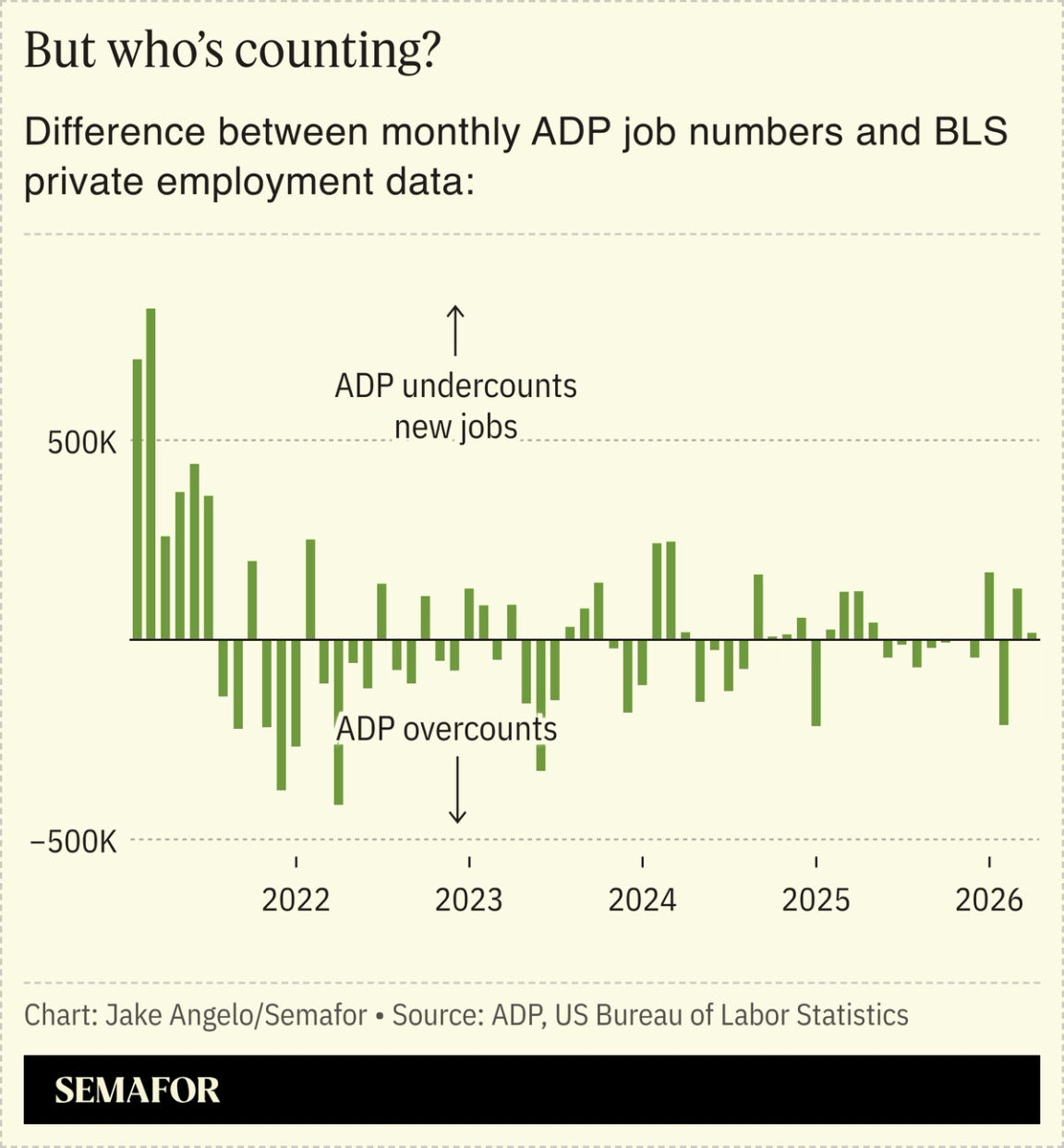 May’s jobs report tomorrow is expected to show a resilient, if not robust, labor market. Economists forecast about 85,000 new jobs and an unemployment rate unchanged at 4.3%. Data from payroll firm ADP released Wednesday showed the private sector added 122,000 jobs in May, with gains in eight out of the 10 sectors. (Its numbers don’t count government jobs and can diverge, sometimes sharply, from the Bureau of Labor Statistics data.) The US doesn’t need as many new jobs as it once did because of the Trump administration’s immigration crackdown and birth rates that have been falling since the 1990s. In his final press conference as Fed chair last month, Jerome Powell described a labor market that is in “an unusual and uncomfortable kind of a balance” with little hiring, little firing, and few new jobs created. US employers laid off more workers in May than in any month since 2020, according to outplacement firm Challenger, Gray & Christmas, which blamed AI for about 40% of the cuts. |
|
‘Jensen effect’ replaces ‘Trump bump’ |
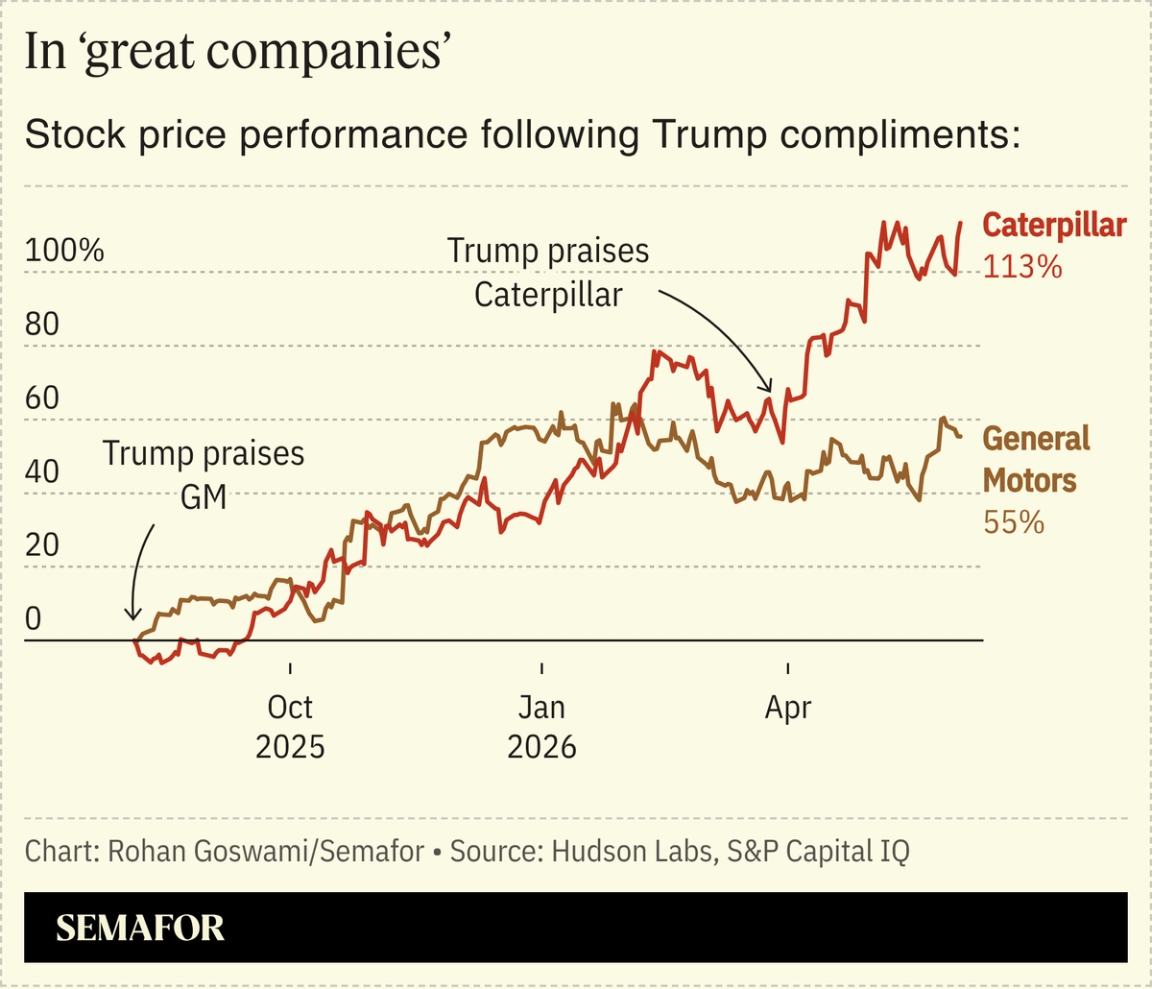 Jensen Huang’s magic touch isn’t limited to Nvidia. Shares of AI infrastructure provider Nebius, chip design company Cadence, and hyperscaler CoreWeave all rose as much as 10% this week after Nvidia CEO Jensen Huang complimented them on stage at a company event in Taiwan, according to an analysis from market-intelligence provider Hudson Labs. Nebius is a “world-class AI cloud,” Huang said on stage, while also highlighting a design partnership with Cadence. It’s a new spin on the “Trump bump,” which has boosted shares across companies favored by the president. Micron shares are up 880% since Trump dubbed them a “great company” in August. Caterpillar, Ford, and General Motors have all seen their stocks rise by double digits since the president praised them. Ditto for Coca-Cola, which he commended for pledging to use cane sugar instead of corn syrup. — Rohan |
|
 Amr Alfiky/Reuters Amr Alfiky/ReutersEconomic indicators in the Gulf don’t capture the lasting damage of the Iran war, and recovery will be slower than people think, Semafor’s Mohammed Sergie reports from the sidelines of a sparsely attended and uneasy business conference this week in Dubai. The region’s stock markets have largely recovered, but construction costs have spiked and lenders have also become more cautious. The CEO of the region’s largest bank predicted a gradual recovery, not a sharp, V-shaped bounceback. Travel-booking platform WEGO has seen strong demand in Saudi Arabia and Egypt, its CEO said, but that didn’t stop its bank from pulling a $10 million credit line. And many international investors “don’t want to touch geopolitical risk,” Shane Shin, founding partner of VC firm Shorooq Partners, said this week. The risk premium has risen, Shin said, and valuations will have to adjust. |
|
➚ BUY: Obsession. GameStop’s sales of rare Pokémon cards, Labubus, and other collectibles rose by two-thirds, accounting for 42% of first-quarter revenue. ➘ SELL: Back rooms. AI and offshoring are wiping out the white-collar back-office jobs that once provided a sure path to the middle class in the US. Phoenix alone has seen a 26% drop in customer service jobs in just four years, WSJ reports. |
|
 Companies & Deals- Take it or leave it: SpaceX is slapping a $135-a-share price on its stock, forgoing the wiggle room of a pricing range that most IPO-bound companies prefer. The move is meant to limit haggling in investor meetings ahead of an offering expected next week, a person close to the deal said.
- Changing his tune: Bill Ackman is selling his remaining stake in Universal after the company rejected his takeover bid. Pershing Square stands to make at least $600 million in profits from its five-year investment, WSJ reports.
- Tokenmaxxing: Some employees at JPMorgan are spending more on tokens than they earn in salary and bonus, an executive told Semafor, prompting questions about whether AI, like Bloomberg terminals, should be limited to certain roles. (There is no token leaderboard at the House of Morgan.)
Watchdogs- NIMBY: A California city banned data-center construction, in what appears to be a first-of-its-kind move. Efforts to make them prettier and quieter haven’t swayed local communities.
Markets- Bottom of the barrel: The Iran war has drained US oil reserves to their lowest level since 2004, as more is exported to Asian countries that relied on Gulf oil.
|
|
|