
|
 |
These Are the Issues That Could Decide Michigan’s Crucial Senate Race
Watch my interviews with all three candidates.
|
| ||||||||||||


 |
A PRETTY BIG JOLT just hit one of this year’s most critical Senate races. And I don’t mean the one in Maine.
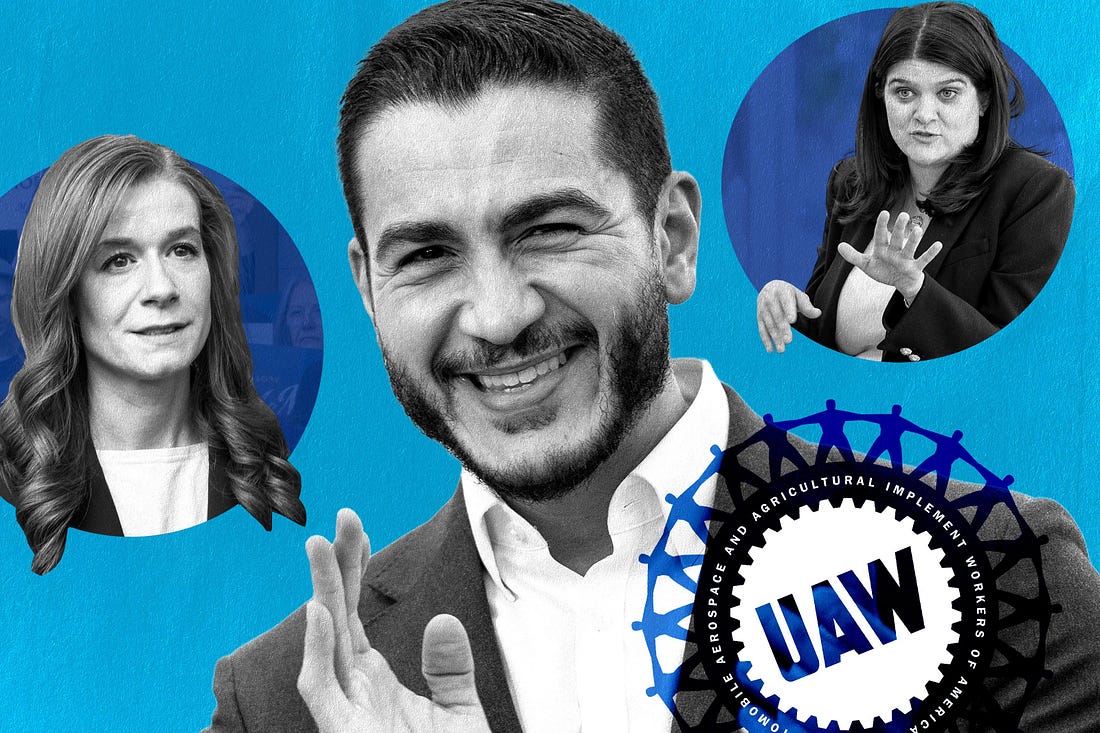
On Friday, Michigan’s chapter of the United Auto Workers announced it was endorsing Abdul El-Sayed’s bid to become the Democratic nominee for the state’s open Senate seat. El-Sayed is the former public health director for Detroit and Wayne County, a Bernie Sanders–backed progressive whose campaign mantra is “money out of politics, money in your pocket, Medicare for All.” The union in its announcement signaled that all three parts of the slogan resonated.¹
The endorsement means El-Sayed can count on phone banking, mailers, and other forms of organizing from a union that—with more than 300,000 members in Michigan—is the state’s largest. It also means that same support won’t be there for his two rivals, state Senator Mallory McMorrow and U.S. Representative Haley Stevens.
The blow to the Stevens campaign seems especially noteworthy, given how much her candidacy is tied up with manufacturing in general and the auto industry in particular. She first came to national attention while working for the Obama administration’s task force that in 2009 saved General Motors and Chrysler—and, most likely, the jobs of countless UAW members. On the campaign trail, she has portrayed herself as the best friend of labor, the strongest champion for Michigan’s economy, and the logical heir to Gary Peters, the popular Democratic incumbent whose retirement has created the vacancy she wants to fill.
That’s hardly the only case for her candidacy, or for McMorrow’s. An argument for both—sometimes implied by the candidates themselves, often stated explicitly by their supporters—is that they are more electable in a purple state that is practically essential to the hopes for a Democratic Senate majority. The idea here is that El-Sayed will have a much harder time winning over moderate-minded voters who would never even think of pulling the lever for somebody who embraces the likes of Hasan Piker. Already, GOP strategists are attacking El-Sayed as “fringe” and “radical.”
It would be a mistake to assume the UAW endorsement will simply give El-Sayed the inroads with working-class voters to counterbalance any loss he might suffer with moderates. The union is not as synonymous with the hard-hat crowd as it once was, thanks to an influx of graduate students and other members of the professional class whose politics skew reliably to the left on a variety of issues. That includes Middle East policy, which has been as divisive for Democrats in Michigan as in any state—and on which Stevens has struggled to defend her history of strong support for Israel (and her backing by AIPAC).
But plenty of Michigan UAW members are still in manufacturing.² And to local leaders like Chad Fabbro, the financial secretary of UAW Local 598 and cohost of a weekly podcast on politics called “Unapologetic Americans,” it’s not hard to imagine why the kind of factory workers who frequently disdain “the left” might still find El-Sayed appealing.
“It’s based on people being frustrated with the party, blaming a lot of shortcomings on the current leadership,” Fabbro told me when we spoke Friday, after the endorsement came out. “They just don’t have a lot of faith on what was done, what worked in the past. They think the rules have changed, so the way we play the game has got to change too.”
It’s hard to know exactly how prevalent this mentality really is, either inside or outside the UAW.³ But it picks up an underappreciated way the candidates are different—one that is less about where they each sit on the traditional ideological spectrum and more about how they imagine change happening in Washington.
It’s a difference that became most apparent to me over the last two weeks, when I had a chance to interview all three of them. We spoke by video, each for about thirty minutes. Going in, my primary goal was to suss out what the candidates actually believed on key domestic policy questions that might come up if they were in the Senate—like why they have all said they would support the federal government taking a more active role in helping families to raise kids, or under what circumstances (if any) they thought it was alright to approve spending even if it meant running higher deficits in the near term.⁴
You can decide for yourself what you think of their answers. Excerpts of their interviews are intercut here:
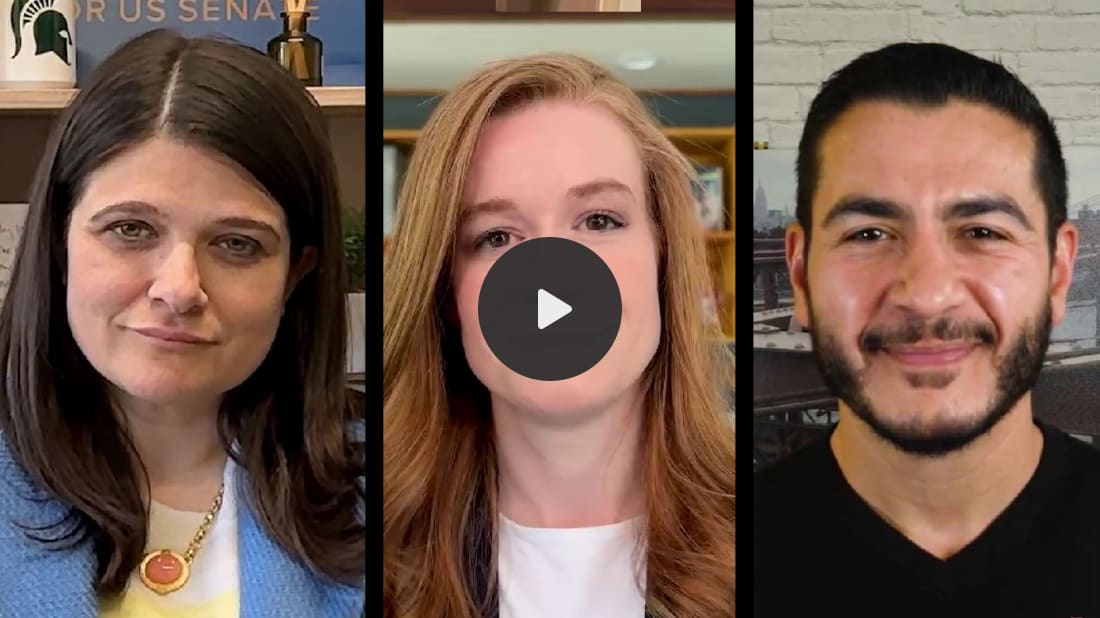
And you can watch the full interviews here: Haley Stevens, Mallory McMorrow, Abdul El-Sayed.
ALL THREE CANDIDATES gave relatively forthright answers, at least by the standards of American politics. And they all showed they could wonk out on their favorite topics (even if I wouldn’t stipulate to all of their claims).
But the more I listened to them, t