| | Iran fires missiles at Israel for the first time since their ceasefire took effect, Saudi Arabia’s N͏ ͏ ͏ ͏ ͏ ͏ |
| |  MUSCAT MUSCAT | NEW DELHI |  CHONGQING CHONGQING |
 | Flagship |  |
| |
|
The World Today | 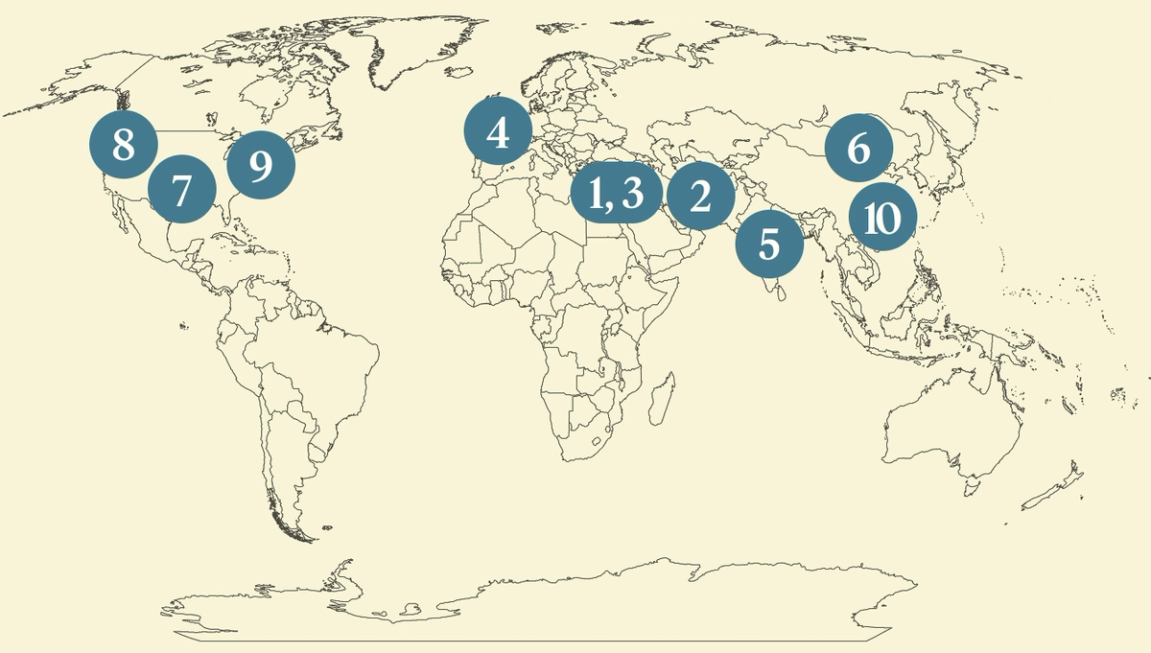 - Iran missile attack on Israel
- US’ plan for Iranian assets
- High NEOM penalty fees
- US-Europe migration tensions
- India’s ‘cockroach’ protest
- More ‘flexible’ jobs in China
- US consumer industry woes
- Amazon’s warehouse robot
- The state of scholarship
- Organ transplants from pig
 A new docu-series exploring the price of pain in Rafael Nadal’s career. |
|
Iran fires first missiles at Israel since truce |
 Mussa Qawasma/Reuters Mussa Qawasma/ReutersTehran on Sunday fired missiles at Israel for the first time since the ceasefire in the Iran war took effect in April, threatening to trigger a new wave of escalation. The attack came after Israel struck the outskirts of Beirut in its campaign against Hezbollah, days after Washington announced a new truce in Lebanon; Tehran has said any peace deal with the US and Israel would require a ceasefire in Lebanon. Israel said it intercepted the missiles — which led Iraq and Syria to close their airspace — and threatened to strike back “with force.” US President Donald Trump told Axios he would tell Prime Minister Benjamin Netanyahu not to retaliate, though Israel’s hard-right national security minister said: “Tehran must burn tonight.” |
|
US eyes plan for Iranian assets |
 Kuwait News Agency/Handout via Reuters Kuwait News Agency/Handout via ReutersWashington is reportedly looking to redirect Iranian assets to Gulf countries to help them rebuild following strikes from Tehran. A recent wave of attacks against Kuwait and Bahrain has damaged infrastructure including energy facilities, military sites, and airports. The initiative from the Trump administration comes as the $24 billion in frozen Iranian assets grows more central to peace talks: Tehran is insisting on their release, and Washington’s plan “risks further chilling negotiations,” Bloomberg wrote. But it could win favor with Gulf allies that have come under bombardment in a war they didn’t start and are wary of US policy unpredictability — concerns that were heightened last week when President Donald Trump lambasted longtime regional mediator Oman. |
|
Saudi’s NEOM faces massive penalty fees |
|
US-European immigration rift grows |
|
India ‘cockroach’ party energizes youth |
 Adnan Abidi/Reuters Adnan Abidi/ReutersAn Indian political movement that began as satire attracted thousands of supporters in a protest Saturday, reflecting real frustration among the country’s youth. The Cockroach Janta Party was started by a recent Boston University graduate after India’s chief justice compared young unemployed Indians to cockroaches. Anger swelled last month after a medical school entrance exam was voided over a leak, setting millions back in their careers. The protesters in New Delhi were “disillusioned with the institutions of the republic itself” amid a tough job market and rising costs, Scroll wrote. The party is demanding India’s education minister resign, and investors are watching to see whether the protest widens to the level of other mass youth-led protest movements in Asia. |
|
Chinese blue-collar wages rise |
 Aly Song/Reuters Aly Song/ReutersWage growth for blue-collar workers in China has outpaced that of their white-collar peers for six consecutive years, in a sign of the country’s booming gig economy. More than 300 million Chinese people are now in “flexible” employment setups, according to a new think tank report. Food delivery drivers were among the highest-paid blue-collar workers, with annual income growth exceeding 10% from 2023 to 2025. The country’s tech-driven delivery sector has mushroomed in recent years, and many drivers work grueling schedules. Stagnating white-collar wages, meanwhile, could compound anxieties in China around AI’s impact on the workforce. Hundreds of people — 10% of whom were recent college graduates — applied to a job listing for shepherds in Inner Mongolia, reflecting China’s labor market strains. |
|
Consumer industries struggle; tech booms |
 David Ryder/Reuters David Ryder/ReutersThe US economy is reliant on tech and rich people, while consumer industries and poorer people are falling behind. The data center boom is driving economic growth, but traditional consumer goods companies are struggling, the Financial Times reported, hobbled by insurgent rivals and flat population growth. Rich people’s wealth has been boosted by the surging stock market, Moody’s chief economist told Bloomberg, and their spending has driven the economy’s resurgence but leaves it vulnerable if the market falters. At the same time, the lower half of earners have barely seen wage growth for a year, and 37% of Americans could not cover an unexpected $400 expense from cash or savings, data showed, up from 32% in 2021. |
|
 Lucia Bell-Epstein for The New York Times/Reuters Lucia Bell-Epstein for The New York Times/ReutersThey have landed interviews with Taylor Swift, A$AP Rocky, Olivia Rodrigo, and Bad Bunny by offering what most celebrity media won’t: no question approval, no topic restrictions, and years of credibility. On this week’s episode of Mixed Signals, the hosts of The New York Times’ Popcast show join Max and Ben to talk about the evolution of their two-decade-old podcast, killing the written review, and whether literacy is over. |
|
Amazon’s robot understands English |
 Amazon AmazonAmazon unveiled a warehouse robot that understands English, a sign both of embodied AI’s progress and the retail giant’s drive to automate its workflow. Progress in smart robotics has always lagged cognitive AI; even in the 1980s, AI pioneers noted that AI could easily do things humans found hard, like chess, but struggled at things humans found easy, like picking up a ball. That may be shifting: “Vision-language-action” models are improving fast, and more than $34 billion was poured into robotics last year. Amazon has long bet automation will be the cheap option: Leaked documents suggest robots could spare it from hiring 600,000 workers by 2033, even as sales double, saving 30 cents per item. |
|
Study probes bias in academia |
 Ryan Murphy/Reuters Ryan Murphy/ReutersA new report on the state of scholarship in the humanities and social sciences rejected the notion that the field has been wholly corrupted by left-leaning political aims — but it found politicization has nevertheless damaged the quality of research across disciplines. The study, commissioned by the chancellors of Vanderbilt University and Washington University in St. Louis, argued there’s nothing wrong with academics having political beliefs. The problem, rather, is “distortion” — when “disciplinary norms” lead to results that serve a predetermined political project. Outside pressure from both sides also contributes: for example, a grant-giving pledge prioritizing social justice, or a Texas professor who was told to drop Plato from his syllabus under a rule barring courses that advocate “ |
|
|


