
|
 |



Guest post by Swaha Bhattacharya
For most of the internet’s history, humans directly interacted with content. We searched, clicked, read, compared, interpreted, and decided what to trust. Websites competed for our attention. Search engines acted as maps that guided us toward information, but humans still visited the original destination.
That relationship is beginning to change.
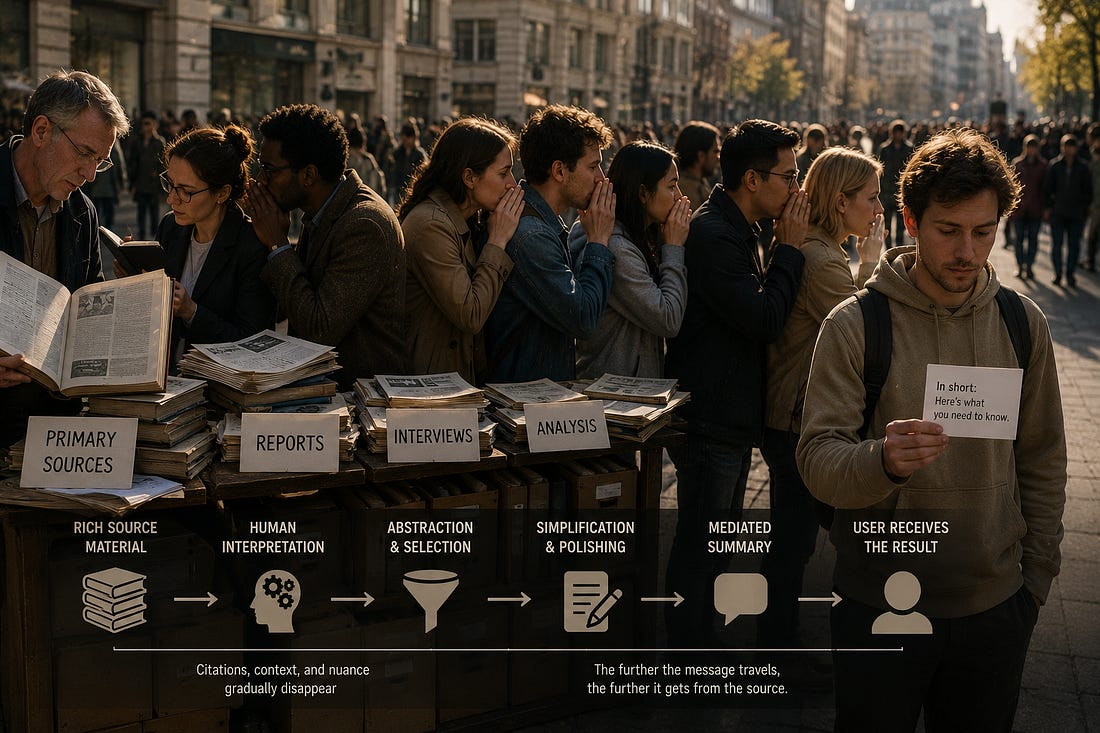
Increasingly, AI is becoming the layer between humans and information. Instead of navigating websites, people are asking questions. Instead of reading ten links, they are receiving one synthesized answer. Instead of evaluating sources themselves, they are trusting systems to interpret the internet on their behalf.
The shift may sound subtle, but it fundamentally changes the role of content online. Content is no longer just something humans consume directly. It is becoming raw material that machines interpret, summarize, rank, and repackage before humans ever see it.
We are entering the era of invisible content.
 |
The Collapse of the Footnote
In many ways, this transformation is already here. Google’s AI Overviews, ChatGPT, Perplexity, Microsoft Copilot, and other conversational systems are changing how people interact with knowledge. Industry analysts at Gartner have projected that traditional search engine volume is on track to decline by 25 percent as users increasingly migrate toward AI driven conversational experiences.
For publishers, media companies, and enterprise organizations built around discoverability, the implications are structural. The internet is shifting from a referral driven network to an ecosystem increasingly shaped by extraction and synthesis.
As Cloudflare CEO Matthew Prince recently observed while discussing the future of AI search:
“People aren’t following the footnotes.”
To understand the scale of this transition, look at the widening gap between machine crawling and human visiting. A decade ago, search engines crawled websites primarily to guide humans back to original sources. Today, AI systems increasingly consume information without returning meaningful traffic to publishers. According to comments shared publicly by Prince, emerging AI platforms appear to generate dramatically higher crawl to referral ratios than traditional search engines, with extraction metrics for major LLM crawlers scaling into the thousands or even tens of thousands of pages scraped for every user redirected back to a source.
The result is already becoming visible across digital publishing ecosystems. Multiple analytics firms and media organizations have documented significant drops in referral traffic as users increasingly receive summarized answers directly within AI interfaces. But traffic loss is only part of the story. The deeper shift is psychological.
The internet is moving from an environment where humans evaluate information themselves to one where AI increasingly mediates reality for them.
That changes how trust works online.
 |
From Source Literacy to Interface Trust
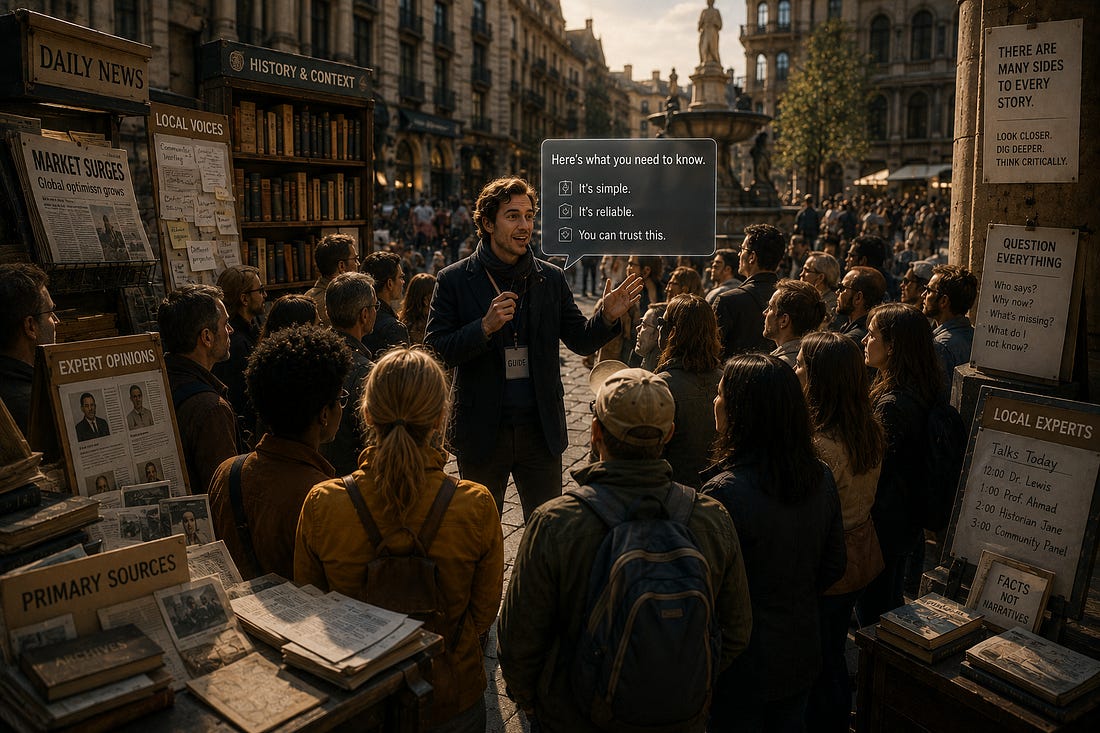
For years, trust on the internet was tied to visible signals. People trusted recognizable publications, established brands, expert authors, or communities they felt aligned with. Even when misinformation existed, users still had some awareness of where information originated.
AI changes that relationship because it compresses many sources into a single confident response. The original context disappears. Nuance fades. Contradictions flatten. In many cases, even the source itself becomes secondary.
The answer becomes the interface.
This compression also amplifies something psychologists have long studied: automation bias. Humans naturally tend to