|
Dear all,
Please find below your weekly update from the UK Health Security Agency (UKHSA).
If you have any questions please get in touch by emailing externalaffairs@ukhsa.gov.uk
As always, you can also follow UKHSA on X, on Instagram, on BlueSky, and on LinkedIn for all the latest updates. You can also find the latest news from UKHSA on our news page on GOV.UK.
Best wishes,
UKHSA External Affairs Team
New stories
- Book your place for the UKHSA Conference 2026 – registration now open!
- Amendment to flu letter 2026/27
- Latest STI data
- New on our blog
- Webinar: Preventing and responding to measles outbreaks in the community
Ongoing issues
- STI rates fall with overall diagnoses down 8.3%
- Salmonella cases in England at a decade high
- Latest information on the hantavirus cruise ship outbreak
- Ebola disease outbreak in the Democratic Republic of the Congo and Uganda
UKHSA communications toolkits
- Information on how to access UKHSA communications toolkits
UKHSA data, analytics and surveillance
- Statistics at UKHSA
- UKSA data dashboard
- Notification of Infectious Diseases report

Registration for the UKHSA Conference 2026 is now open. Taking place on Tuesday 22 and Wednesday 23 September in Manchester, this year's conference theme is 'Securing health together: Partnership, prevention, preparedness' - emphasising collective action whilst highlighting key pillars of effective health security. Delivered in partnership with the Faculty of Public Health, the two-day programme brings together engaging keynotes, dynamic parallel sessions, the latest research through abstract presentations and ePosters, and a visual exhibition space.
To view the programme and book your place, visit the conference website
|

Yesterday, an amendment to the flu letter was published by the UK Health Security Agency (UKHSA), NHS England & Department of Health and Social Care (DHSC) published an amendment to the annual flu letter. Changes to the 2026/27 offer are as follows:
- community pharmacies will be able to offer children flu vaccinations during the 2026 to 2027 flu season (2-3 year olds, children in clinical risk groups and for school aged children who missed the opportunity to be vaccinated by SAIS providers)
- people experiencing homelessness will be offered a flu vaccine for 2026/27.
NHS England will issue further guidance on people experiencing homelessness in due course.
|

Last week we published our 2025 report on sexually transmitted infections (STIs) and screening for chlamydia in England.
The data shows shows a fall in STIs in England, with overall diagnoses down 8.3%. This is a positive development that reflects the hard work of sexual health services and community-based organisations.
While these decreasing trends are cause for optimism, STI cases remain high and these infections continue to particularly affect young people aged 15 to 24 years, gay and bisexual men and people living in deprived areas.
UKHSA is reminding everyone having sex with new or casual partners to use a condom and get tested regularly, whatever their age, gender or sexual orientation.
Last week we also published our provisional quarterly STI data which shows diagnoses of infectious syphilis and gonorrhoea are down from the previous quarter. The data also shows that between August 2025 and December 2025, a total of 36,090 first doses and 13,720 second doses of 4CMenB vaccine for gonorrhoea prevention were provided by sexual health services in England.
You can read more about syphilis in our latest blog post.
|
We produce a range of blog posts to help provide accurate and timely health security information to the public. These often cover common questions people have, including on infectious disease risk, prevalence in the UK, transmission and signs and symptoms.
Latest posts on our blog include:
You can also sign up to subscribe for updates when new blog posts are published.
Join colleagues for the second national online webinar in the series of three which aims to bring together colleagues from the NHS, UKHSA, local authorities, voluntary sector, and community organisations to explore the latest evidence on tackling health inequalities in vaccinations and reducing the burden of vaccine-preventable disease.
This webinar will share practical insights from responding to measles outbreaks in the community and highlight effective approaches to increasing uptake in underserved communities, including approaches to building trust and improving access.
The webinar will take place on Wednesday 17th June, 1pm - 3pm. You can register for the event on the NHS England website. If you have questions or would like further information on the webinar, please contact nicole.crosby-mckenna@nhs.net.
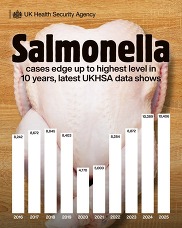
Data published in May shows consistently high levels of Salmonella and Campylobacter cases in England.
Salmonella cases increased slightly from 10,389 in 2024 to 10,406 in 2025 (the highest figure in a decade) but remain broadly comparable to the previous year.
Campylobacter cases in 2025 remained high and comparable to 2024, although they fell slightly from 70,392 in 2024 to 69,394 in 2025.
These infections spread in many ways - through contaminated food or water, contact with an infected person, or contact with infected animals or their environment.
We are reminding the public to take precautions against these bacteria, which are among the most common causes of food poisoning. Young children, older adults, and those with weakened immune systems should take extra care, as they are at higher risk of developing serious illness.
|
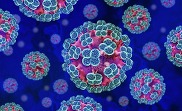
UKHSA is continuing to monitor, respond to and provide public health advice regarding an outbreak of hantavirus linked to the Dutch cruise ship MV Hondius. The risk to the general public remains very low.
Yesterday we confirmed that, following a review of the evidence on Andes hantavirus, the isolation period for contacts in the UK has now been reduced to 42 days in line with World Health Organization (WHO) guidance.
You can find further updates on the public health response:
|
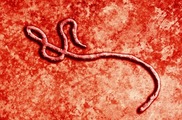
On 17 May, the World Health Organization (WHO) declared that the Ebola disease outbreak in the Democratic Republic of the Congo and Uganda constitutes a public health emergency of international concern (PHEIC).
The current Ebola outbreak poses a low risk to the UK population. Although the outbreak is serious, it is rare for Ebola cases to occur in returning travellers and the NHS has safe procedures in place for any such cases and specialist centres where they can be looked after. We will continue to work closely with international partners.
When a serious outbreak like this is identified overseas, UKHSA works to assess and monitor the situation and provide up to date information and advice to the public, travellers and the NHS. UKHSA also works with the Foreign, Commonwealth & Development Office, Department for Transport and Border Force to ensure travellers returning from affected areas know what to do if they develop symptoms. We also provide testing services to the NHS for anyone who is unwell after travelling to the affected areas and support workers returning from the outbreak area.
As this situation develops, we will continuously update our blog post 'what is Ebola and how does it spread?'.
|
The UKHSA External Affairs Team prepares a range of communications toolkits to support stakeholders to communicate health security messaging to your networks.
Our live toolkits cover a range of issues including outbreak response, vaccination programmes, and resources to help mitigate against the health impacts of adverse weather.
These can all be found on our Google Drive. Our vaccine communications toolkits are also available on the Campaign Resource Centre. If you are experiencing any issues accessing the Drive or the CRC, or have any questions on the toolkits please email externalaffairs@ukhsa.gov.uk.
UKHSA collects and publishes statistics, data and analysis related to planning, preventing and responding to external health threats. This includes official statistical publications on COVID-19, immunisation, healthcare associated infections, other infectious diseases, mortality surveillance and sexual and reproductive health. These can be found on our statistics page on GOV.UK.
The UKHSA data dashboard provides a weekly summary of public health data. It has recently been updated to include Invasive Group A Strep, tick surveillance and hepatitis C data. Over time, the data dashboard will be expanded further to present a wider range of data on public health topics in line with the remit of the UKHSA.
The weekly UKHSA NOIDs publication is currently paused (from 3 April 2025) to make changes, including adding the notifiable diseases which became reportable under the Health Protection (Notification) (Amendment) Regulations from 6 April 2025.
Public health action will continue to be taken on notifications as usual. It will not be impacted by the reporting development work.
For reports already published, please be aware that due to changes in how the data is processed and mapped, including local authority codes that have been updated to the latest geographies, it would be inaccurate to compare data since week 27 to historic reports.
The causative agent reports will continue to be published.
You can unsubscribe from this newsletter at any time by managing your subscriber preferences at the link below. if you are experiencing any issues please email externalaffairs@ukhsa.gov.uk and we can delete you from our subscriber list manually.
|