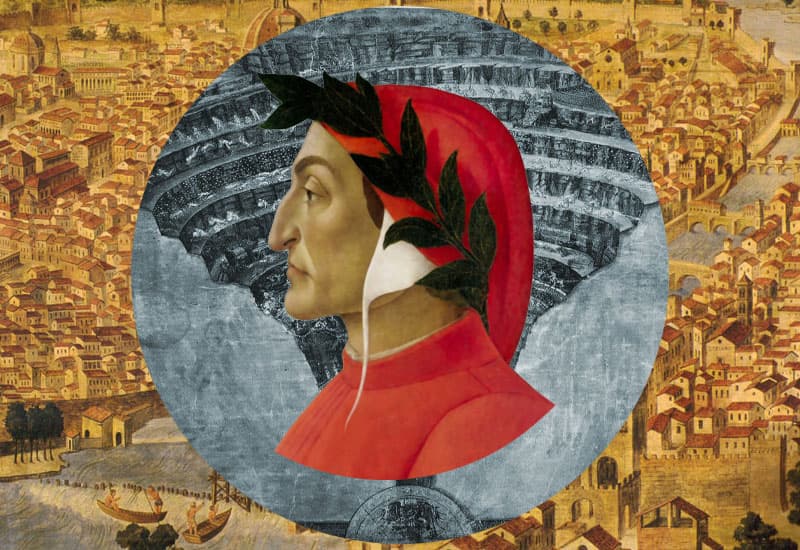
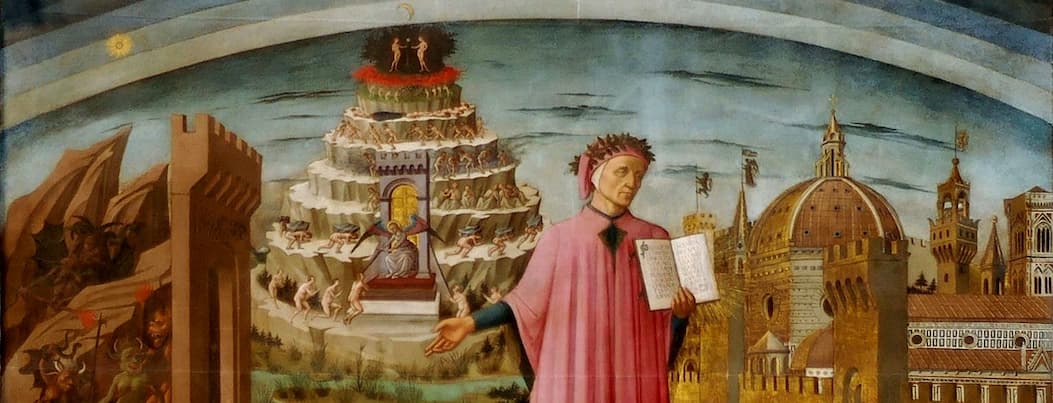
On June 15, 1300, the poet Dante Alighieri was named one of the six priors that formed the Signoria of Florence, the city’s highest office. Dante was a member of the Guild of Physicians and Apothecaries—for reasons much debated, one possibility being that at the time, books were sold out of apothecaries—which allowed him to hold public office in the city. But Dante was also a member of the anti-Papal political faction the White Guelphs, and when the Black Guelphs (the other side, as you may have gathered), seized power in November 1301, Dante was put on trial, despite the fact that he was not in the city at the time. In 1302, writes Robert Pogue Harrison, he was “found guilty of corruption, extortion, and misuse of public funds” during his two months as prior, and was condemned to permanent exile. He would never return to Florence. “The shame and indignation Dante felt at being chased from his nest by his fellow citizens never diminished with time. At the end of his life the wound remained as raw in his psyche as when disaster first struck in 1301,” writes Harrison. However, it was only in exile—and at least in part because of his exile—that he was able to write his most enduring literary work, which would eventually be published in 1321. “The Divine Comedy was conceived and completed within the dark, lacerated depths of a pain that Dante transmuted into a poetic rage against the machine,” writes Harrison, “the defective machine of earthly justice that had unjustly condemned him and that he believed stood in desperate need of rescue, the way his pilgrim needed rescue in the dark wood of Inferno 1.” Bad for Dante, good for us. |