Chequita Surles-Johnson, a Black farmer and school bus driver, couldn’t believe the rumors.
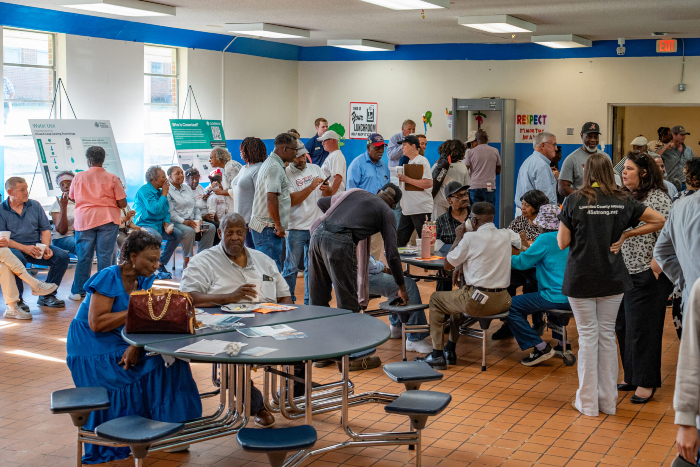
But last week, at a science-fair style open house in a middle-school cafeteria in rural Lowndes County, Alabama, her fears were confirmed. A hyperscale data center that could use as much energy as half the residences in the entire state was being proposed in her community, just a stone’s throw from her 100-acre family farm. The developers were holding this meeting in part to convince residents the project would be a boon for them.
But the more she learned about the plan, the less she thought of it.
Project Red Clay, a power-hungry data center campus of more than 3 million square feet, would be constructed over years on a wooded, rural 800-acre plot of land along Highway 80, the historic road Civil Rights marchers trod on their journey from Selma to Montgomery in 1965.
For Surles-Johnson and the hundreds of other locals who showed up, the pitch was a slap in the face. No amount of promised tax revenue or job creation could outweigh the environmental and health impacts of a data center as large as 16 Walmart Supercenters, they argued.
The biggest insult: The notion of a massive AI infrastructure project coming to Lowndes County—which is majority Black, with about a quarter of families living below the federal poverty line—when the state can't even manage to fix inadequate sewage infrastructure that has plagued locals for years, leaving many unable to flush their toilets.
None of more than a dozen residents I interviewed at the event supported the project. None was even on the fence. Every one of them expressed nearly the same sentiment as Surles-Johnson: “We don’t need this in our community.”
You can read my story at Inside Climate News.
—Lee Hedgepeth