|
What’s the largest living organism on Earth? Blue whales? Think again. They’re hiding out of sight, beneath the ground. Researchers have just mapped networks of living fungal filaments that spread for an astonishing 110 quadrillion kilometres in the world’s topsoil. That is almost one billion times the distance between the Earth and the Sun.
Katie Field, a professor in plant-soil processes at the University of Sheffield, explains how these mycorrhizal filaments play a fundamental role in the planet’s carbon cycle. After sampling topsoil everywhere from Tibet to the Florida everglades, she and her colleagues refer to this fungal network as the “life-support system beneath our feet”.
We also examine the clinical potential of magic mushrooms. Researchers observed how a woman in her 80s with advanced Alzheimer’s disease made certain improvements after she was treated with psilocybin-containing fungi. A neuroscience researcher says the findings are intriguing, but far from proof.
And if you’re not a fan of mushrooms, don’t worry. Eating plenty of apples, berries, plus drinking a strong cuppa boosts your intake of flavanols - a group of bioactive compounds that can reduce your risk of heart disease. A professor of nutrition explains how five-a-day recommendations in the UK could be improved.
|
|
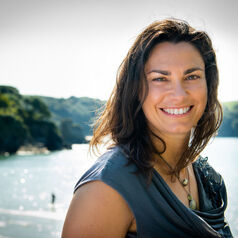
Anna Turns
Senior Environment Editor
|
|
| |

Researchers have mapped vast fungal networks underground and there’s much more to fungi than the mushrooms we see above the surface.
Jan Stria/Shutterstock
Katie Field, University of Sheffield
A new study provides a crucial baseline: the first global map of where these fungal networks are and how much of them exists.
|

CYAM/Shutterstock
Rahul Sidhu, University of Sheffield
A woman with advanced dementia appeared to regain speech and independence after psilocybin. The findings are intriguing, but far from proof.
|

The flavanols found in many fruits and vegetables are beneficial for heart health.
nadianb/ Shutterstock
Gunter Kuhnle, University of Reading
Choosing fruits and vegetables more carefully could help us better get important bioactives from our foods.
|
World
|
-
Andreas Krieg, King's College London
A return to conflict simply would not have been in the interests of the US.
|
|
Politics + Society
|
-
Luke Brunning, University of Leeds
The normalisation of AI to mediate and shape intimacy arguably erodes self-curiosity.
-
Thomas Caygill, Nottingham Trent University
Two defence resignations come at a time of turmoil for the prime minister.
|
|
Arts + Culture
|
-
Pippa Catterall, University of Westminster
The two artists have very different, yet curiously complimentary, responses to nature.
-
Magnus Marsden, University of Sussex
A history of Afghanistan told through the people who stayed and worked at the Kabul Intercontinental.
|
|
Environment
|
-
Laure Leglise, Manchester Metropolitan University; James Scott Vandeventer, Manchester Metropolitan University
New infrastructure planning is putting the future of community-owned energy at risk.
|
|
Health
|
-
Sophie Lovell-Kennedy, Durham University
New research finds that baby slings offer important benefits, but better safety information could help prevent rare deaths and injuries.
-
Rebecca Ellis, Swansea University
A growing term for a familiar feeling: how ‘waiting mode’ captures the difficulty of time and anticipation.
-
Martin Warren, Quadram Institute
A century after liver was found to treat pernicious anaemia, scientists are still uncovering how vitamin B12 helps blood, nerves and cells.
|
|
Science + Technology
|
-
Amani Maalouf, University of Oxford
Technology could help find illegal waste sites faster and increase the chances of tracking down criminals.
-
Arun Dawson, King's College London
The programme got bogged down by disputes over leadership, workshare and intellectual property.
|
|
|
|
| |
|
|
|
|
| |