| | In this edition: DR Congo’s Ebola outbreak could be the ‘worst ever,’ Senegal opens the door to IMF ͏ ͏ ͏ ͏ ͏ ͏ |
| |  | Africa |  |
| |
|
 - Ebola fears intensify
- Senegal’s IMF talks
- Flutterwave’s M&A drive
- Selling citizens’ data
- Renewable projects stall
- Dangote’s fertilizer funding
 Mourning a South African jazz legend. |
|
 When US Federal Reserve Chair Kevin Warsh announces the central bank’s decision on interest rates today — his first meeting at the helm — the impact will reverberate across African capitals already grappling with the fallout from another faraway decision. Policymakers in Washington are expected to hold rates steady, but markets are pricing in at least one rise this year. Increased borrowing costs in the US could make local debt more expensive in many African countries, forcing officials across the continent to raise rates themselves. “If you don’t, the currency would weaken, inflation would go up, and then you’d still have to raise interest rates to stop inflation anyway,” Charlie Robertson, chief economic advisor at Equity Bank, told me. It’s a reminder of the way decisions taken thousands of miles away — in Washington and Tehran — directly impact the way African countries are run. Even if a US-Iran truce set to be signed on Friday holds, the time needed to clear the Strait of Hormuz means disruption to fertilizer supplies are likely to be felt in some nations for months, driving food inflation. The El Niño weather phenomenon also has the potential to exacerbate the impact of food insecurity, Razia Khan, chief economist for Africa at Standard Chartered Bank, warned. Food-related consumption makes up around 40% of household spending in many African countries. The specter of rising living costs could then play a pivotal role in major political decisions over the next year. Senegal, grappling with a balance of payments challenge after spending heavily on fuel-related subsidies, may find it has few options when discussing potential debt restructuring with IMF officials this week. Meanwhile, the cost of living could become a key issue in Nigeria and Kenya, countries in which the incumbents are chasing a second term in elections due next year. In South Africa, which will hold local elections in November, inflation hit a two-year high of 4.5% in May. The central bank, seeking to reduce the impact of fuel price rises, raised its main interest rate by 25 basis points last month — a move policymakers elsewhere may emulate in the coming months. As Khan pointed out, the impact of the Iran war will be felt “one way or the other” for some time. |
|
Africa CDC warns on Ebola outbreak |
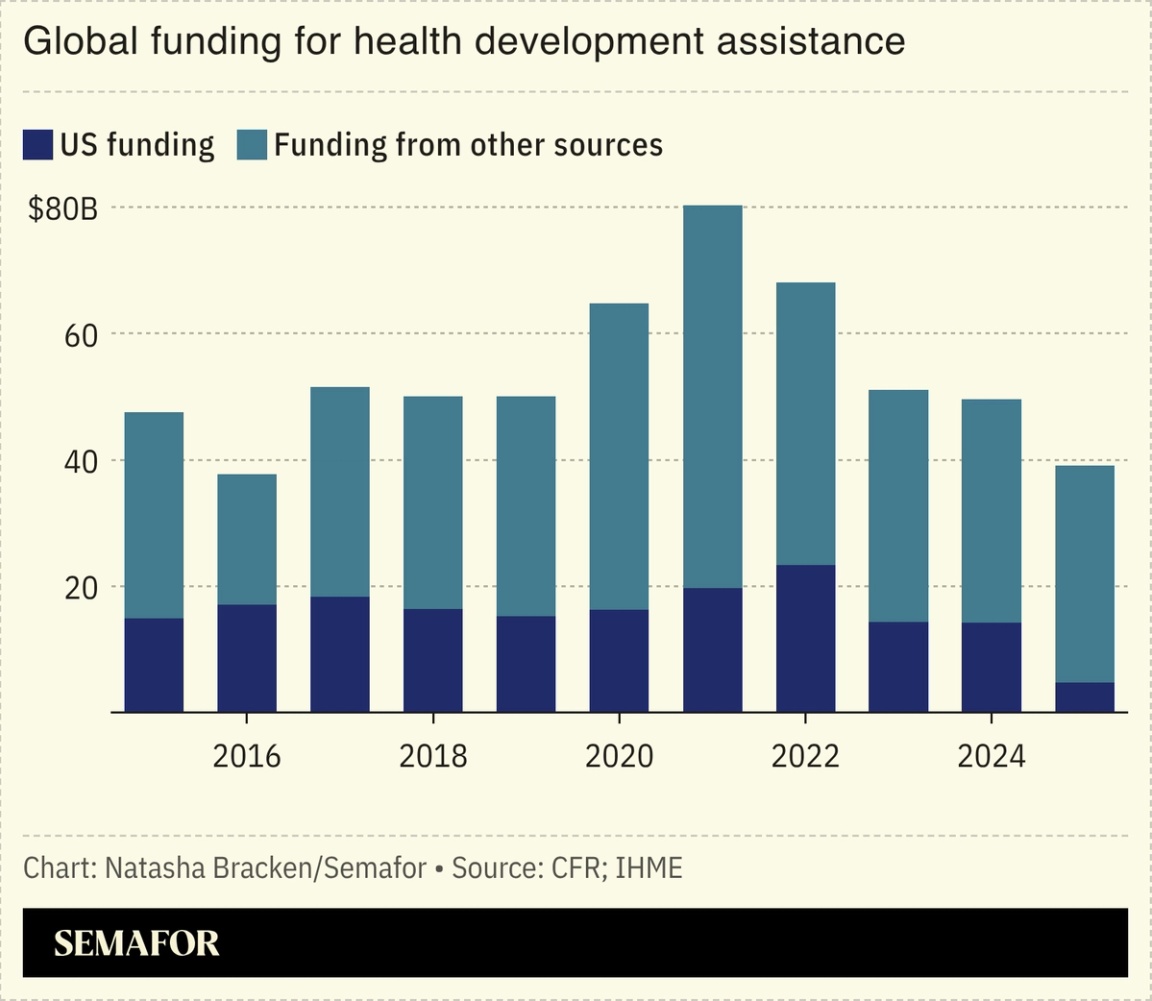 The current Ebola outbreak in the DR Congo could be the worst ever, Jean Kaseya, the head of Africa’s Centres for Disease Control and Prevention warned, saying tens of thousands of people who had contact with those infected have not yet been traced. Authorities have been playing catch-up since the outbreak was first recorded in DR Congo — at least 19 cases have also been confirmed in neighboring Uganda — with misinformation widespread and healthcare workers grappling with a lack of medical equipment stemming from recent Western aid cuts. Bloomberg’s editorial board said this week that “misguided decisions” by the White House to cut international health funding may have helped fuel the current outbreak. Experts fear restrictions to curb the disease’s spread may have a devastating economic impact on some of the world’s poorest regions. “We were waiting for the high season, for holiday travelers,” a Congolese travel agent told The Guardian. “Now nothing.” |
|
Senegal’s Sonko open to IMF talks |
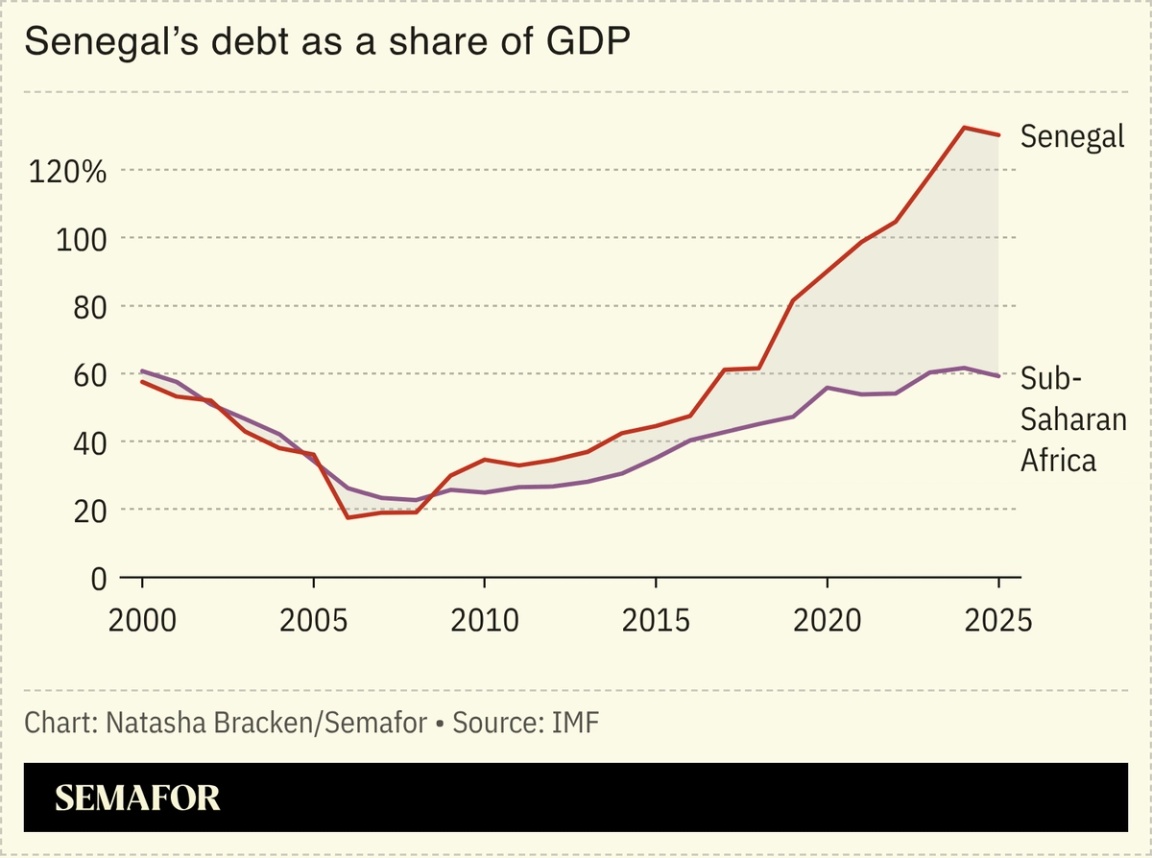 Senegal’s ousted prime minister said he was open to discussing a debt restructuring with the IMF, offering a possible resolution to the crisis plaguing the West African nation. The comments from Ousmane Sonko — who wields significant influence in his new role as parliament’s speaker — come as talks with the IMF are set to resume this week. While premier, Sonko had ruled out negotiating with the international lender, clashing with Senegal’s president in a row that prompted his dismissal. But in an interview aired Monday, Sonko appeared to soften his previous hardline stance, saying “we are not in a rigid position … we believe there is a possibility of reaching an agreement.” Senegal’s economy has come under pressure since the discovery in 2024 of $7 billion worth of loans undisclosed by the previous government. The finding pushed its debt to more than 130% of GDP and prompted the IMF to suspend a $1.8 billion lending program. — Jenny Vaughan |
|
Flutterwave lays out M&A push |
| |  | Alexander Onukwue |
| |
 Afolabi Sotunde/Reuters Afolabi Sotunde/ReutersFintech leader Flutterwave is targeting acquisitions in sectors that bolster its digital payments network, as it seeks to become a one-stop shop for African business and consumers, its chief executive told Semafor. Its latest investment round — which valued the company at $3.3 billion — included an equity stake purchase by the US blockchain firm Ripple that will include integration of its stablecoin, a type of dollar-pegged cryptocurrency. The Nigeria-founded company works in 35 African countries, helping businesses receive digital payments. It has recently expanded to consumer remittances, and in April it secured a Nigerian micro-banking license that allows it to hold customer deposits. “What you will see us start doing is a lot of M&A,” CEO Olugbenga Agboola said. The Ripple tie-up comes amid rising use of stablecoins across Africa. In Nigeria, which accounts for about 60% of stablecoin inflows into sub-Saharan Africa, the tokens have “offered both a hedge against currency risk and a tool for paying overseas suppliers,” IMF officials said this week. Read on for the full interview with Flutterwave’s CEO. |
|
Kenya plans to sell citizens’ data |
| |  | Vivianne Wandera |
| |
 Thomas Mukoya/Reuters Thomas Mukoya/ReutersKenya’s plan to become the first African nation to sell its citizens’ data has sparked privacy concerns, but the government said the strategy will support innovation and insisted personal information will be protected. The policy, which could be rolled out as soon as next month, describes data as a “strategic national asset” that, if properly regulated, can help unlock new economic opportunities. “The value of this data is that we will have new products from innovation, businesses,” John Tanui, the principal secretary in Kenya’s information ministry, told Semafor. But some experts are concerned that promises to keep the data private may not hold when it is sold to third parties, with one calling for a “rigorous anonymization standard” to be adopted. Kenya’s government is trying to boost revenues as it seeks to revive the country’s sluggish economy and plug a gaping fiscal deficit that is expected to reach $8.6 billion in the 2026-2027 financial year. |
|
Africa renewables projects stalled |
 Thomas Mukoya/Reuters Thomas Mukoya/ReutersRenewable energy projects across Africa have stalled because they cannot secure funding due to a rule that ties the creditworthiness of projects to the sovereign rating of the country where they operate, the Associated Press reported. African nations are keen to boost the production of renewables as they pursue energy autonomy, an objective underscored by the de facto closure of the Strait of Hormuz, which highlighted many states’ reliance on oil and gas imports. But a financial rule known as the “sovereign ceiling” is curbing efforts to fund much-needed renewable energy projects, with only two of Africa’s 54 countries — Botswana and Mauritius — currently holding investment-grade ratings. “The sovereign ceiling rule is an outdated credit rule that penalizes commercially viable clean energy projects for sovereign risks,” the Stockholm Environment Institute’s Maria Nkhonjera told AP. Nearly 600 million people in Africa lack access to electricity, according to the International Energy Agency, and achieving universal access will require an estimated $15 billion per year in financing. |
|
Dangote secures fertilizer funding |
 The Dangote Group’s fertilizer arm secured $600 million from the African Finance Corporation to drive the urea producer’s expansion plans. Dangote’s plant in Lagos produces 3 million metric tonnes of fertilizer annually, making it a key supplier for Africa as the continent seeks to wean itself off imports in the wake of the Iran war, which laid bare its reliance on supplies transported through the Strait of Hormuz. AFC’s financing is part of Dangote’s $7 billion expansion plan to triple fertilizer output from its Nigeria plant, and set up a new one in Ethiopia. It is one of several major expansion projects in the Dangote ecosystem: The firm also plans to double production from its Nigerian oil refinery and build a facility in East Africa. |
|
 Business & Macro |
|
|


