|
For local television, political advertising has become the most dependable contradiction in the business.
The long-term outlook for broadcast remains uneasy. Audiences keep fragmenting. Core commercial categories remain under pressure. Streaming keeps pulling attention, and Wall Street’s tolerance for cyclical revenue models seems to thin with every earnings call.
And yet, every election cycle, political advertising rolls in like a financial shock absorber, temporarily reminding everyone that local TV still matters.
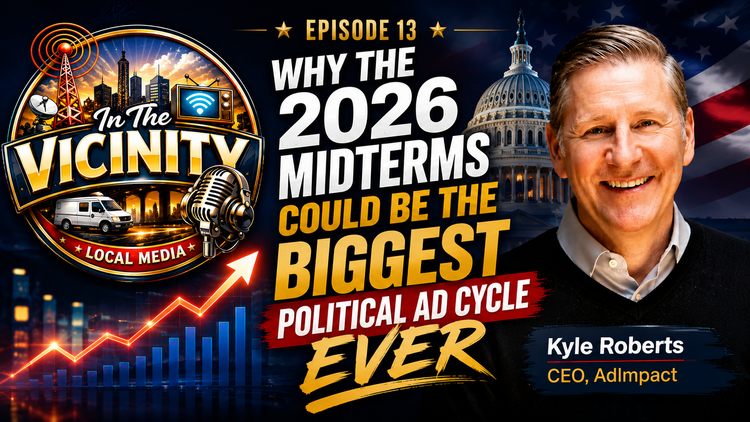
This year, that reminder may be louder than ever. In an updated forecast released last week, AdImpact raised its months-ago projection for the 2025-26 election cycle to $11.6 billion, up from $10.8 billion. Even more striking, the political ad intelligence firm now expects the 2026 midterm cycle to surpass the 2024 presidential cycle in total political spending — a projection that would have seemed highly unlikely even a few cycles ago.
For local broadcasters, one number may matter most: the projected $5.6 billion that AdImpact says will flow to broadcast television, or nearly half of all political ad spending.
That would seem to settle the debate. Local television still commands a central role in political campaigns. But the more useful conclusion is more complicated: political advertising is not just propping up local TV’s economics in the short term. It is also masking some of the industry’s longer-term strategic problems.
Political money is not solving those problems — it is merely postponing them.
|