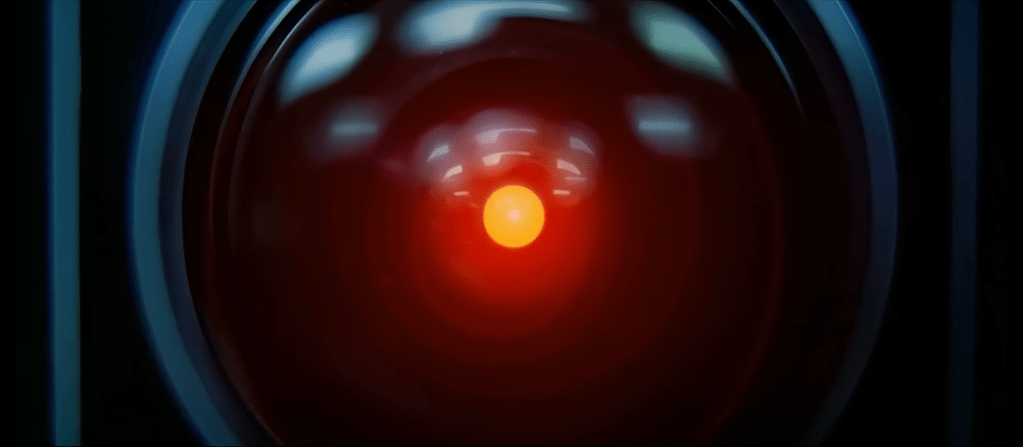
 A frame depicting the rogue, artificially intelligent computer HAL 9000 from the 1968 film, “2001: A Space Odyssey.” MGM
From the Dept. of Keeps You Up at Night: Researchers believe they’ve identified the first example of agentic ransomware in the wild.
Dubbed “JadePuffer,” the operation was conducted entirely by a large language model agent,
according to security firm Sysdig. That’s a big change from a type of attack that has always required a human at a keyboard.
“The most striking characteristic, however, was the LLM's behavior,” wrote threat director Michael Clark in a memo. “Jadepuffer's own payloads were self-narrating. They contained natural language reasoning, target prioritization, and the kind of detailed annotations that human operators don’t often write but LLM-generated code produces reflexively.”
What’s more, Clark added, the agent “adapted in real time, retrying failed steps within refined parameters. In one sequence, it went from a failed login to a working fix in 31 seconds.”
Delightful!
The actual observed attack involved a since-fixed
vulnerability in Langflow, a popular open-source framework used for building LLM applications. But the ramifications are not to be understated, Clark warned.
“Jadepuffer is a warning sign,” he wrote. “It’s a marker of where extortion tradecraft is heading. An autonomous agent reasoned about its targets, harvested and reused credentials, moved laterally, established persistence, and destroyed a database, narrating its own intent the entire way.”
None of the techniques were novel or sophisticated, he added, but the capability to string them together into a complete operation makes ransomware available to anyone who can afford to run an agent.
“Defenders should expect the volume and breadth of such campaigns to rise as agentic tooling matures,” Clark wrote. Suit up, security pros.
—AN