
|
 |
The Pulse: Interesting AI coding stats from Cursor
Power users generate 10x as many lines of code vs the median, most of the AI spend is coming from input tokens not output ones, and almost half of AI changes are accepted without manual reviews (!!)
|

| ||||||||||||


Hi, this is Gergely with a bonus, free issue of the Pragmatic Engineer Newsletter. In every issue, I cover Big Tech and startups through the lens of senior engineers and engineering leaders. Today, we cover one out of four topics from a past The Pulse issue. Full subscribers received the article below five weeks ago. If you’ve been forwarded this email, you can subscribe here.
Cursor has released a new report based on two years of its aggregated usage data, and there are some interesting findings:
Power users generate 10x as many lines of code vs the median
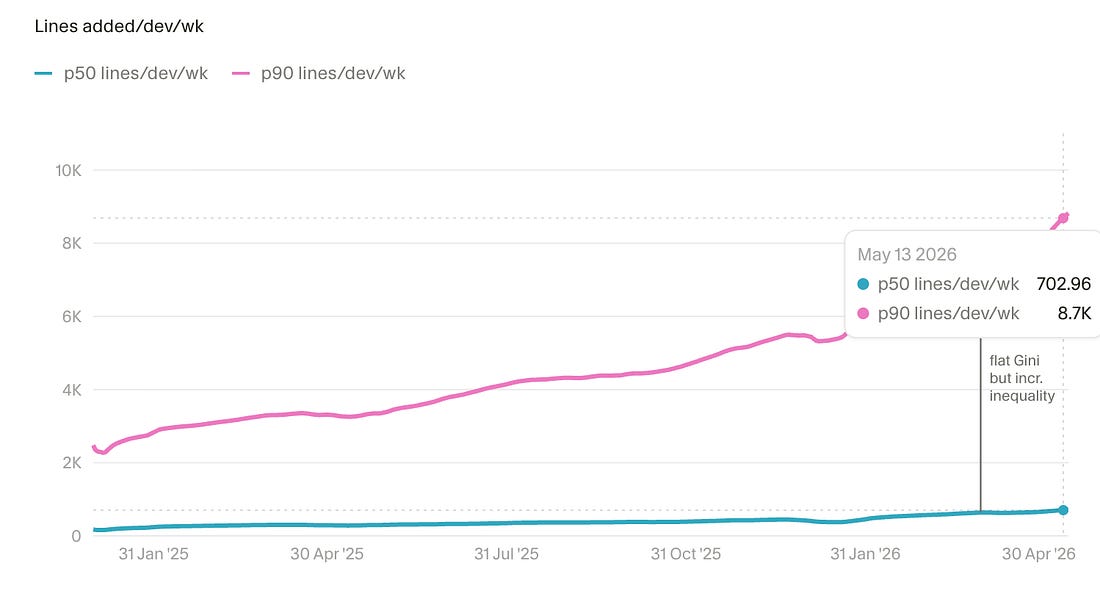 |
The median dev using Cursor (the p50) generates about 700 lines of code per week with it, while for the 90th percentile, it’s closer to 9,000 lines.
Top 1% of users create incredible volume of code
The p99 data is pretty stunning:
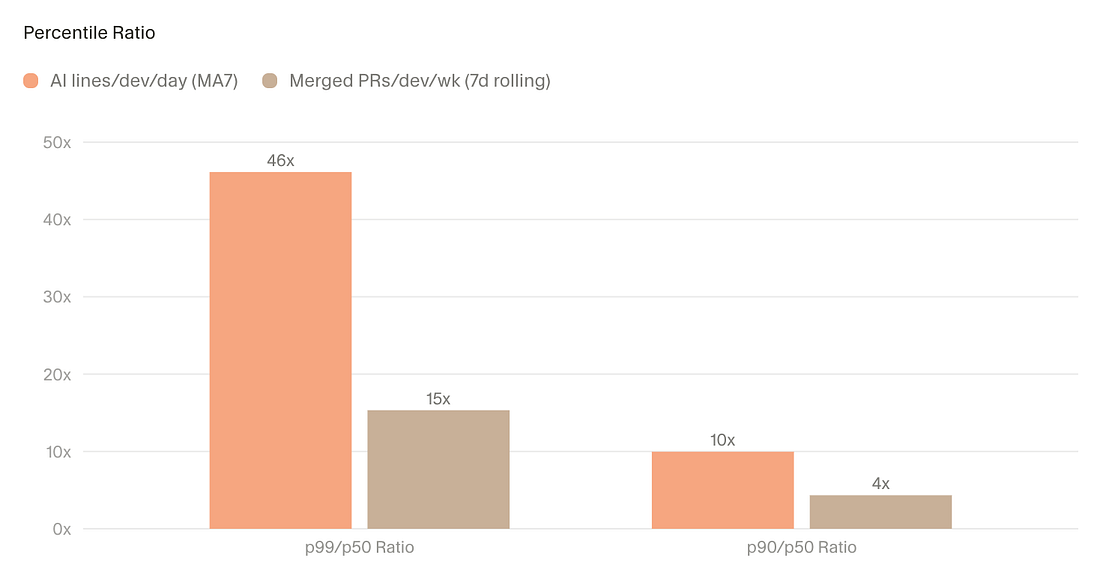 |
The top 1% of users generate around 30-40K lines of code per week! That’s the equivalent of what ~45 “median” devs generate in the same period.
It’s worth asking how these top 1% of users are different. Are they writing a lot more greenfield code, do they have a bias for not using libraries, are they tokenmaxxing to get to the top of leaderboards? Do they generate 45x as many bugs, and importantly: are they adding a lot of business value with the software they ship?
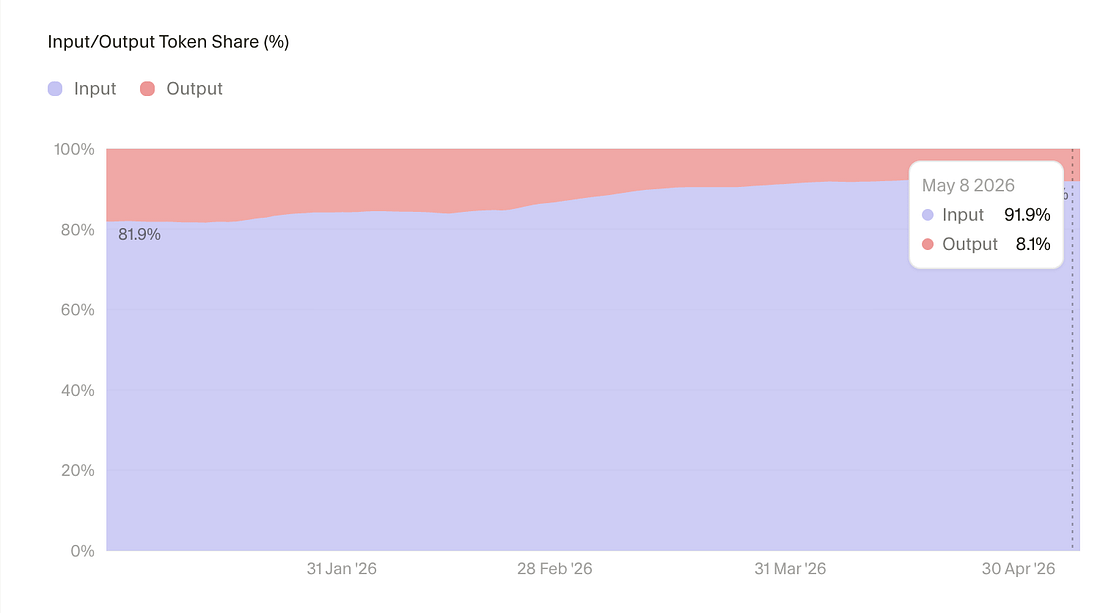
Cursor consumes 10x more input tokens than it generates in output tokens
This is surprising: 90% of Cursor’s token usage is input tokens! This means that most of the tokens used are for reading the existing codebase and documentation. Outputting of code is a minority usage:
 |
In some ways, this usage makes sense: as devs, we always spent far more time on reading the code, compared to lines of code we typed out. The “10:1 read-to-write” ratio is a classic. Here’s Robert. C. Martin (aka “uncle Bob”) sharing this observation in 2008, in his book, Clean Code:
“Indeed, the ratio of time spent reading versus writing is well over 10 to 1. We are constantly reading old code as part of the effort to write new code… [Therefore] making it easy to read, makes it easier to write.”
I find it amusing that we’re now seeing this 10:1 read / write ratio for token usage with AI agents!
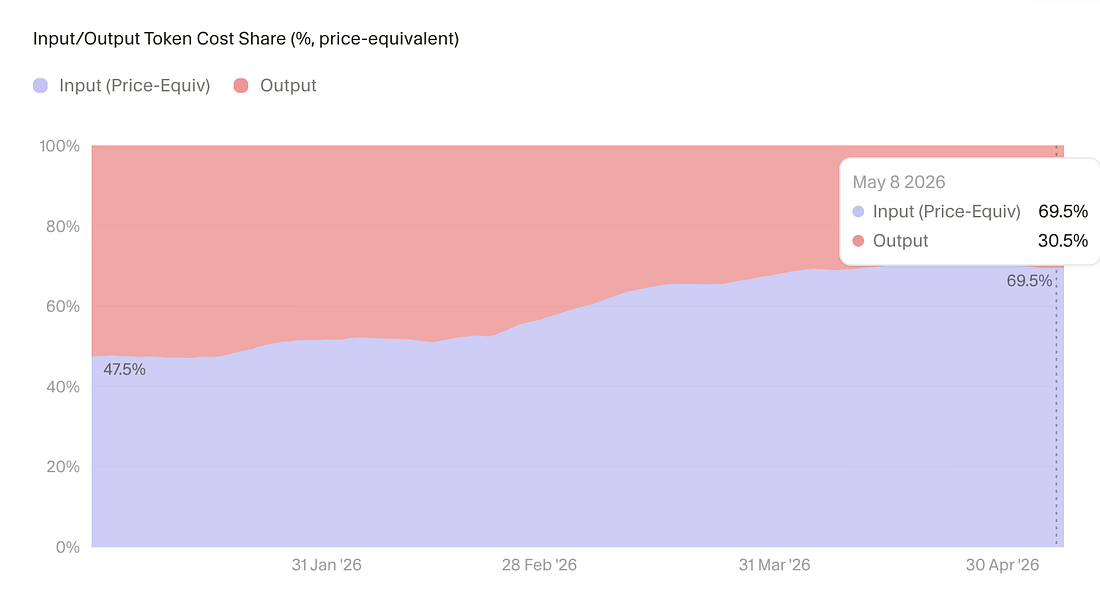
Input tokens become the main AI token cost
Input tokens are priced at a fraction of output tokens: for example, Opus 4.7 charges 5x more for output tokens than for input tokens ($5 per 1 million input tokens and $25 per 1 million output tokens). Still, thanks to input tokens dominating token usage, Cursor is seeing input tokens account for closer to 70% of the cost of AI coding agents:
 |
Without caching context, token cost would be 10x higher
Cursor does smart caching of context, to avoid re-generating old context with more new input tokens. When taking cache usage into account, Cursor only spends 0.6% of tokens on output tokens. The remaining 99% is split between cache read (90%), cache write (2.5%), and input tokens (7%):