Policy changes, but facts endure. AP delivers accurate, fact-based journalism to keep the world informed in every administration. Support independent reporting today. Donate. |
|
|
By Holly Meyer and David Crary |
|
| |
|
By Holly Meyer and David Crary |
|
| |
|
Hello, World of Faith readers.
This week, we have a deep dive into the findings of AP's new poll about Jewish Americans, coverage of the funeral for Iran's supreme leader and a look back at the big moves Pope Leo XIV's has been making as he settles into his papacy. |
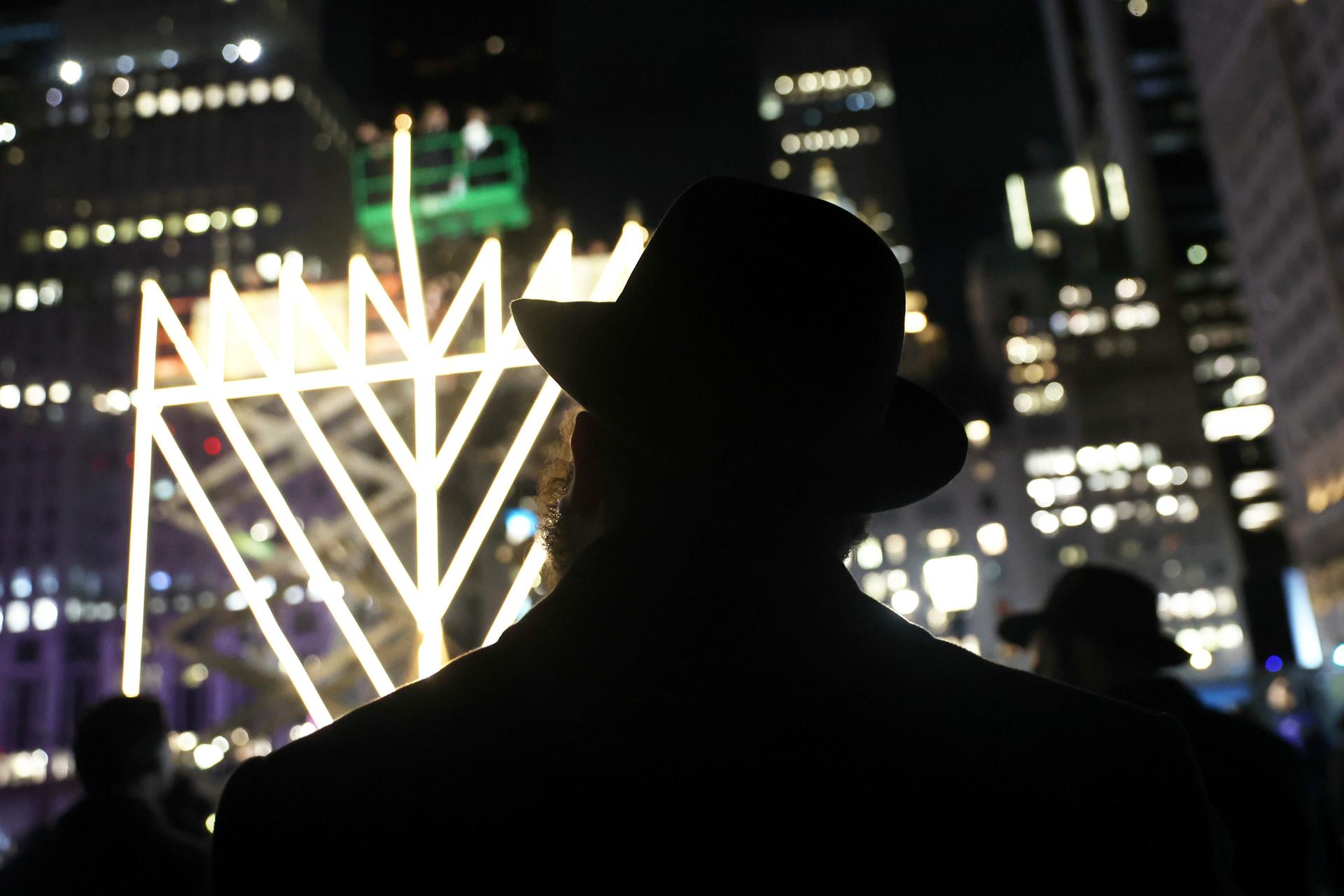
People watch the lighting of the world's largest menorah on Fifth Avenue by Central Park for the seventh night of Hanukkah, Dec. 31, 2024, in New York. (AP Photo/Heather Khalifa) |
AP-NORC poll details the issues fueling worries and divisions among U.S. Jews |
The AP ran several stories this week based on its first full-scale poll focusing on Jewish adults in the U.S., a key demographic at the heart of many of the country's current debates. This survey is an important window into how they are feeling about Israel and Gaza, U.S. politics, antisemitism, and their own Jewish identity and religious practice. The survey was crafted with a sample of more than 1,000 Jewish adults, allowing for a detailed look at subgroups, including breakdowns by religious affiliation and age. Read more.
|
|
|
-
The poll found that about 3 in 10 Jewish adults believe Israel has committed genocide against Palestinians during the war in Gaza, an accusation that’s been leveled by some human rights organizations and vehemently denied by Israel and the U.S. government.
-
Another finding: Religiously affiliated Jews often see support for Israel as central to their identity, while those who are religiously unaffiliated are more critical of Israel's actions in Gaza.
- According to the poll, most Jewish adults in the U.S. don’t feel well represented by political leaders at a troubling moment for many in their community.
|
|
|
A bitterly divided Iran grapples with Khamenei's legacy as he is laid to rest |
The funeral for Iran's supreme leader, Ayatollah Ali Khamenei, was designed to showcase unity in a country that is bitterly split over his decades-long rule. Supporters have thronged the streets for a leader they view as a martyr who defied the West and Israel. But Khamenei's long rule left large sectors of Iranian society disillusioned as he oversaw increasingly bloody crackdowns, economic stagnation and the empowerment of the Revolutionary Guard. Read more.
|
|
|
-
The supreme leader, who ruled Iran for over three decades, was laid to rest early Friday after being killed at the start of the war launched by Israel and the U.S.
- Processions of his coffin in Tehran and other cities brought out gigantic crowds of supporters in a show of strength by the hard-liners at the core of the Islamic Republic.
-
But underneath run deep veins of discontent that have grown over decades of repression, international sanctions and economic mismanagement, and have widened since authorities killed thousands of anti-government protesters in January.
|
|
|
Pope begins his summer break after decisive flexing of muscle on international and church stage |
Pope Leo XIV has gone on summer vacation after a whirlwind finale to the first half of 2026. Leo is spending the rest of July at the papal retreat in Castel Gandolfo, which he’s used as a getaway for swimming and tennis. His vacation follows a particularly intense period in which he emerged as a powerful global statesman on issues from artificial intelligence to war and flexed decisive papal muscle to govern internal church problems. Read more.
|
|
| -
The vacation follows a remarkable run of papal decision-making that left Vatican watchers dizzy. After Leo acknowledged early on that he had a big learning curve, recent weeks have shown a decisive governing style where Leo has set the agenda, rather than merely fulfill priorities set by his predecessor.
-
The American-born pope spent July 4 — the 250th anniversary of U.S. Independence — on the Sicilian island of Lampedusa, praying at a migrant cemetery to honor the thousands of migrants who died trying to reach Europe to find freedom and prosperity.
-
On another front, the Vatican — with Leo’s clear approval — declared a traditionalist group of Catholics in formal rupture from the Catholic Church for having consecrated four bishops without papal consent. Key participants in that ceremony were excommunicated.
|
|
|
|