
|



WorkOS MCP: Manage your auth platform from any AI agent (Sponsored)
 |
Debugging SSO, managing users, adjusting auth policies, configuring branding: every configuration task has lived behind a UI that only a human can drive.
The WorkOS MCP server gives agents the same access as your dashboard login. Hundreds of operations, discoverable at runtime. Connect in one command via OAuth, with scoped tokens instead of a master API key. Pass a screenshot of your marketing site and ask your agent to match the login page. If a human had to do it before, an agent can do it now.
Microsoft operates at an enormous scale. More than 80,000 enterprises now build on Microsoft Foundry, the company’s platform for building, deploying, and running AI agents and applications. Microsoft’s own copilots run on the same platform, including Microsoft 365 Copilot, which alone serves over 20 million users and has a monthly active usage of first-party agents growing 6x year-to-date.
To understand what it actually takes to ship agents at that scale, we spoke with Marco Casalaina, VP of Products for Microsoft Core AI. He walked us through what his team has learned from running these systems in production, the engineering challenges that come with it, and where he thinks enterprise AI is headed next.
In this article, you’ll learn:
Why a prototype agent doesn’t survive in production
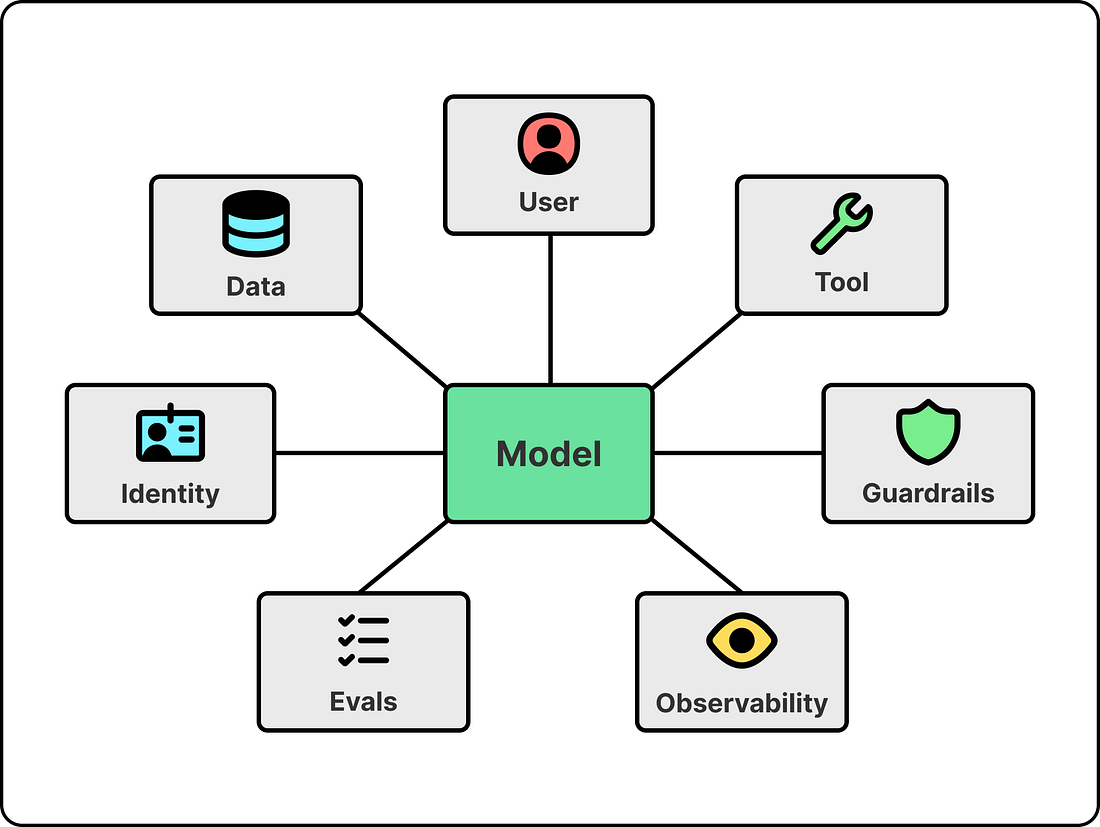
What’s in a production agent harness, and why Microsoft believes context is the key
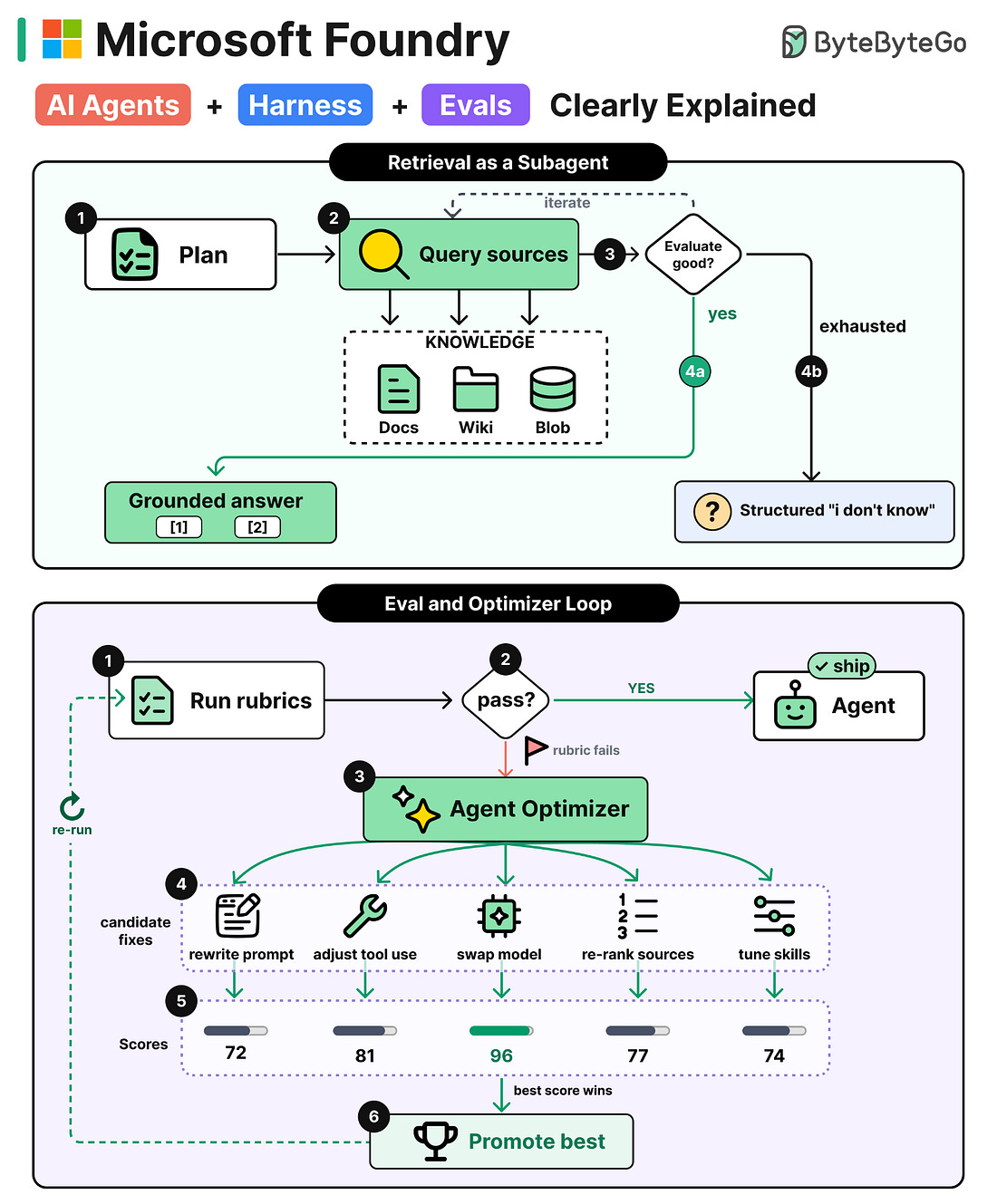
Two engineering ideas behind Foundry: retrieval-as-a-subagent, and giving agents their own identity and a place to act
How Microsoft evaluates production agents with rubric-based evals and an auto-improvement loop
Lessons for other teams, and what’s next
 |
What Breaks When Agents Hit Production
Production agents fail for reasons that aren’t visible in a prototype. The model is rarely the problem. What breaks is everything around the model, including the data the agent retrieves, the tools it calls, the way it handles real users, and the way quality drifts as the world around it changes. Enterprises trying to ship agents this year are running into a different engineering problem than the one they were solving last year.
 |
To see why, it helps to start with what’s actually changed about what enterprises are trying to build. Marco framed the shift this way:
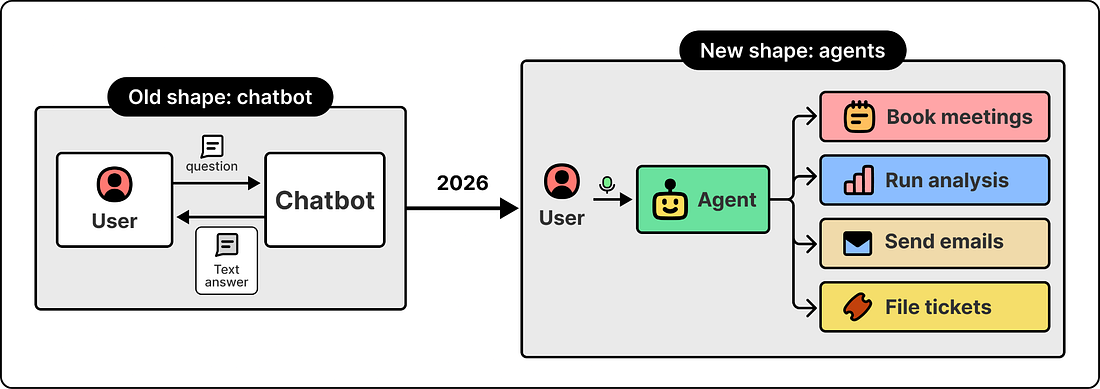
We are leaving the question-answering phase of AI. In 2026, we are seeing a huge increase in the number of our customers that are using voice as a front-end, so we’re also leaving the chatbot era of AI.
The old shape was a chatbot. The user types, the agent types back, and it can only answer questions. The new shape is an agent that does meaningful work on the user’s behalf. It books the meeting, runs the analysis, sends the email, files the ticket. The user might not type at all because the front end can be voice. For example, Foundry’s Voice Live lets a team turn an existing text agent into a voice agent without rebuilding it.
 |
This shift is what makes the engineering problem different. A chatbot returning a wrong answer is a bad experience. An agent taking the wrong action is a business incident. The bar for what’s good enough to ship has moved.
That’s where the gap between a prototype and a production agent opens up. The first prototype is easy. You can vibe-code one in an afternoon. The model is smart, your test prompts work, the demo is impressive, and the pilot ships in a week.