Partner Updates
The Guam Extreme Cleanup Crew Featured on Korean National Television
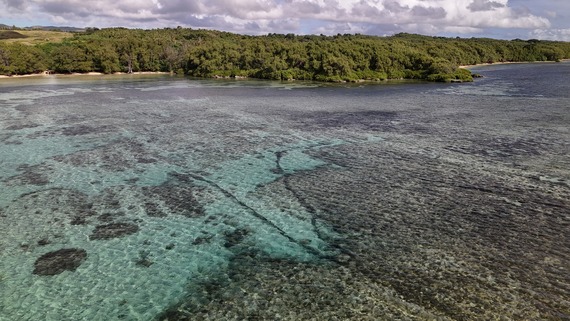 A fouled gillnet is visible from the air. (Photo Credit: @theguamguy)
Farron “theguamguy” Taijeron led a film crew from EBS (Educational Broadcasting System) Korea for a day out to showcase the work and purpose of the Guam Extreme Cleanup Crew (GECC). The day started with a cliff-face rappelling cleanup at Oka Point as sharks and turtles swam below. After that, the crew drove south to the village of Inalåhan to recover an abandoned tekken or “gillnet.” A fisherman reported encountering the tekken but was not prepared to remove it. GECC first confirmed the location by scouting with a drone and then recovered it with several volunteers, two kayaks, other equipment, and of course, the film crew. GECC recently submitted a proposal to remove more tekken and marine debris—fingers crossed!
Watch the GECC portion of the episode.
Making Waves for Hawaiʻi’s Shores
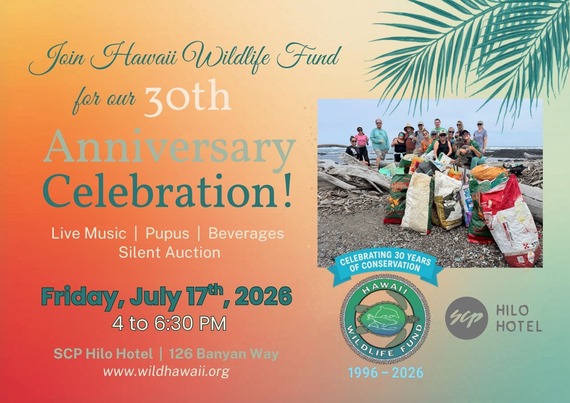 Join Hawai‘i Wildlife Fund for their anniversary celebration. (Photo Credit: Hawai‘i Wildlife Fund)
Since 1996, Hawaiʻi Wildlife Fund (HWF) has been on the front lines of marine debris removal—and the results speak for themselves.
As of March 2026, HWF hit the 400-ton milestone for marine debris removal on Hawaiʻi Island alone, made possible by many thousands of dedicated volunteers. That same month, HWF celebrated their 30th anniversary of protecting native wildlife in Hawaiʻi. Thanks to private funding and an Ocean Conservancy grant, HWF is continuing their cleanup efforts—net recovery patrols, marine debris surveys, and community coastal cleanups—through the end of 2026 while seeking funding to carry on beyond. Every pound removed means safer shores for Hawaiian monk seals, sea turtles, and the communities that call these islands home.
Join HWF to celebrate 30 years and over 450 tons of marine debris removed statewide at one of their anniversary events. The first is happening at the SCP Hilo Hotel on July 17, 2026.
MINA Continues Typhoon Debris Recovery Following Super Typhoon Sinlaku
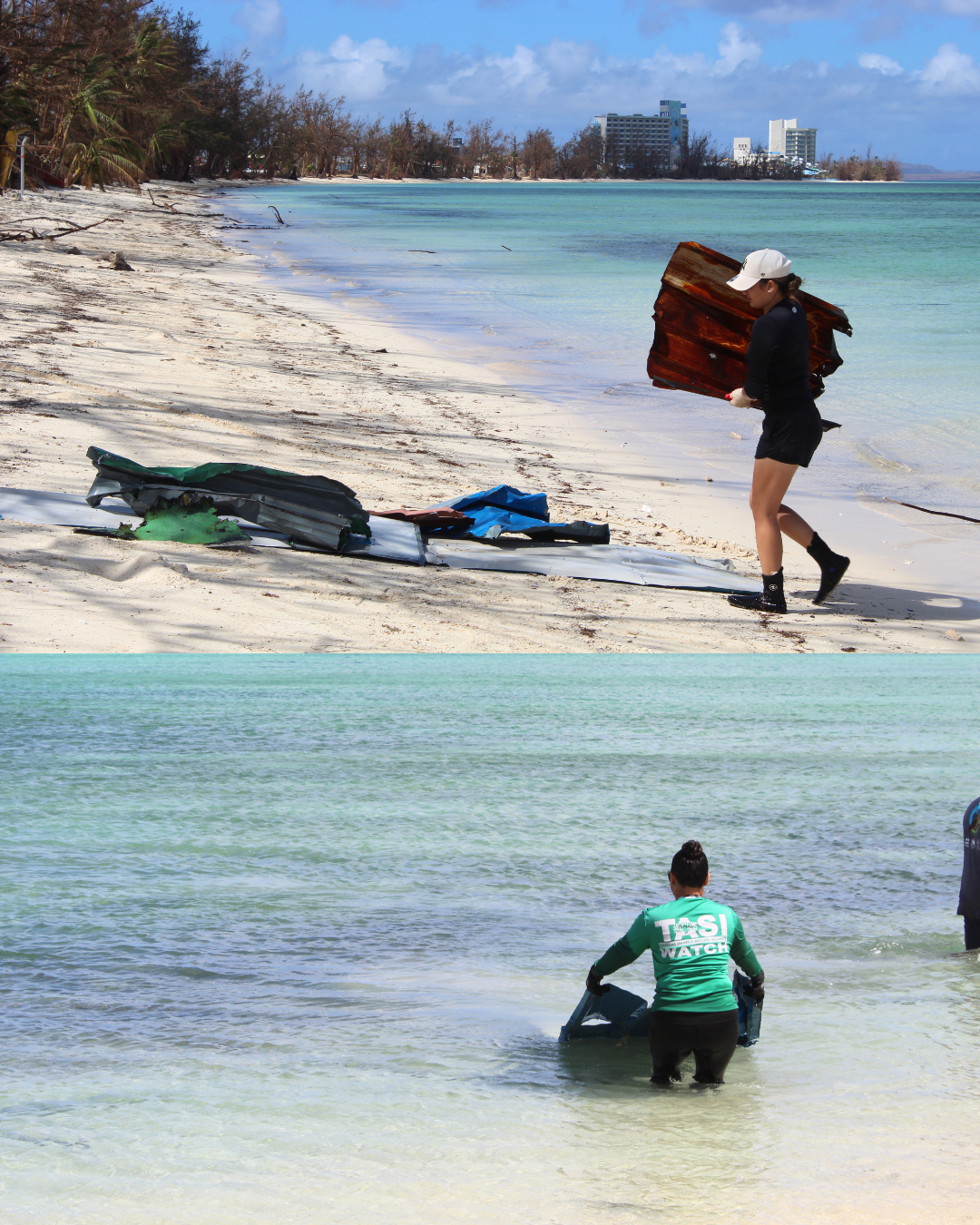 MINA Tasi Watch Community Rangers removing marine debris from Kilili Beach in Susupe, Saipan. (Photo Credit: Mariana Islands Nature Alliance)
Following the impacts of Super Typhoon Sinlaku, the Mariana Islands Nature Alliance (MINA) launched typhoon debris cleanup efforts across Saipan to remove storm-generated debris from nearshore and coastal habitats. Initial response activities were supported through MINA’s unrestricted organizational funds and the Office of Insular Affairs’ Coral Reef and Natural Resources Program, allowing crews to respond immediately after the storm. With support from the National Marine Sanctuary Foundation and the NOAA Marine Debris Program, MINA continues to expand debris removal efforts through December 2026, helping to protect marine ecosystems, improve community safety, and support the long-term recovery of Saipan’s coastal environments.
For more information about MINA’s efforts, visit: minapacific.org.
Pacific Whale Foundation Reef Cleanup Dives Tops 6,500 Pounds and Counting
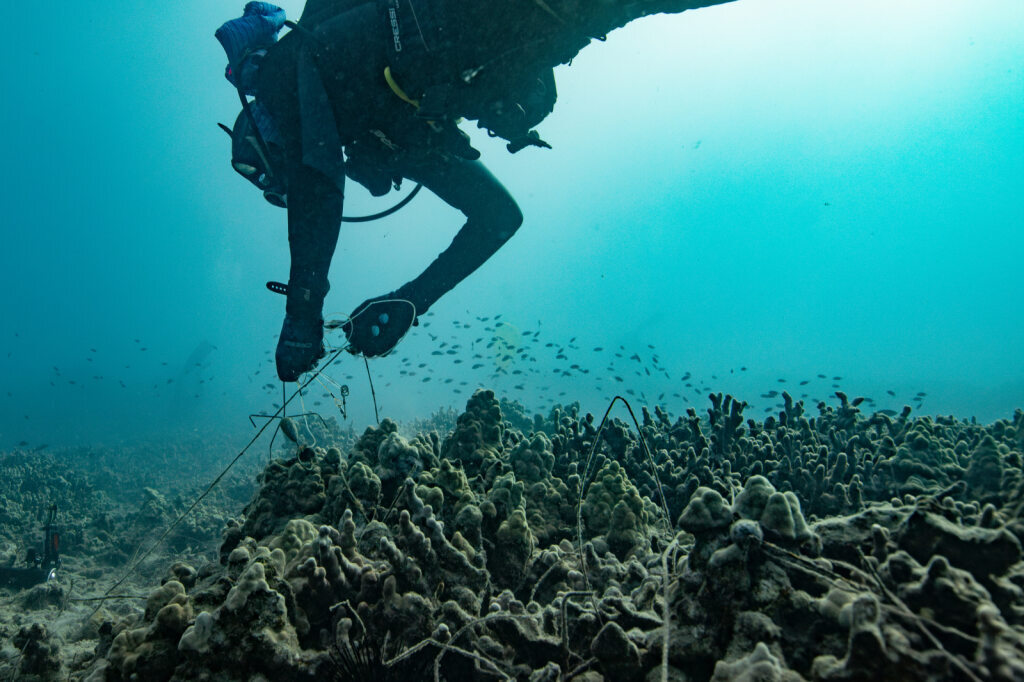 Diver removing recreational fishing gear off a reef in Maui (Photo Credit: Pacific Whale Foundation)
Pacific Whale Foundation's reef cleanup dive program surpassed over 6,500 pounds of marine debris removed from Maui and Lānaʻi waters since launching in February 2024. What began as targeted dives at Keoneʻōʻio (La Perouse Bay)—one of Maui's most in-water, debris-dense nearshore sites—has expanded into a multi-site effort spanning high-concentration areas across both islands. Pacific Whale Foundation dive teams primarily recover derelict recreational fishing gear, including monofilament, hooks, weights, and terminal tackle lost through shoreline fishing activity. Each dive includes systematic documentation of gear types recovered, contributing to a growing dataset on recreational fishing gear distribution and loss patterns across the Maui Nui region, data that can inform prevention and outreach efforts.
Learn more about this project on the Pacific Whale Foundation website.
200,000 Pounds Of ALDFG Removed From the Ocean Through CMDR’s DFG Bounty Project
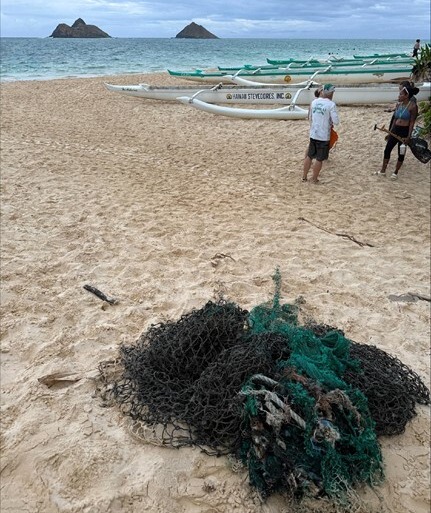 A recent bounty project derelict fishing gear event removed and reported to CMDR by the Lanikai Canoe Club Novice Women’s team. (Photo Credit: HPU CMDR)
The Hawai‘i Pacific University (HPU) Center for Marine Debris Research (CMDR)’s Derelict Fishing Gear (DFG) Bounty Project has hit the milestone of 200,000 pounds of abandoned, lost, or otherwise discarded fishing gear (ALDFG) removed from the ocean! The DFG Bounty Project started in November 2022 with funding from a NOAA Marine Debris Program Removal grant. The project works with the longline fleet that fish far out in the Pacific Ocean in the North Pacific Garbage Patch region, as well as with non-longline commercial fishers who fish around O‘ahu. Fishers are paid between $1–$3 per pound for ALDFG removed and have been paid over $207,000 for their removal efforts! Unfortunately, current funding for the project comes to an end this fall, and CMDR is working hard to secure more funding to continue the project for the long term.
Learn more about this project on the CMDR Bounty Project webpage.
|