Thanks for reading The Briefing, our nightly column where we break down the day’s news. If you like what you see, I encourage you to subscribe to our reporting here.
Greetings!
Busy day. Uber unveiled its biggest-ever acquisition, the roughly $14 billion purchase of Delivery Hero, a German-based food-delivery giant with operations around the world. Netflix reported slower growth for the second quarter, as it had telegraphed, sending the stock down 8% to a two-year low. And SpaceX stock closed below its $135 a share IPO price for the first time, finishing the day at $131.11. Eek!
We can get to Uber and Netflix in a minute, but we should acknowledge that SpaceX stock’s drop coincided with a broader market sell-off that seems to afflict anyone with AI exposure. In other words, it’s not necessarily a loss of confidence in Elon Musk’s rocket ship firm. (The company is still valued at $1.7 trillion, which is a lot). The Nasdaq-100 index fell 1.6% on Thursday, with most major names losing ground. One way you can tell AI was the common theme—and we’re only half-joking—is that Microsoft stock rose.
Microsoft shares have been beaten up all year, thanks to worries about how its software side will cope as AI competition grows. Apple shares, which have been on a tear lately, also rose. Apple, as we know, is relying on Google to supply AI tech for its newly empowered Siri virtual assistant, coming in a software update soon. And given that Apple isn’t participating in tech’s AI spending binge, you can see why investors would exempt it from the AI sell-off.
Investors are pulling back from AI for understandable reasons, given all the risks and uncertainties. They’ll switch back soon.
Netflix’s Cash Machine
There’s little drama in Netflix’s quarterly results these days, as the video-streaming behemoth reports steadily slowing growth. That’s no surprise—the company has more than 325 million subscribers globally, a big number that makes the rapid ascent of past years much harder to achieve.
That scale has made Netflix an absolute monster in terms of cash production. This year, for instance, it expects free cash flow—cash from operations less capital expenditures—of $12.5 billion. That’s 32% higher than last year and 81% higher than in 2024. It’s also significantly greater than the number for traditional entertainment giant Walt Disney Co., which is expected to generate $10 billion in its 2026 fiscal year, according to S&P Global Market Intelligence.
Netflix is mostly using the money to buy back stock—repurchases rose 46% last year to $9.1 billion and are on track to exceed that this year. Are acquisitions on the horizon? Not if you listen to company executives. On a call with analysts tonight, Co-CEO Ted Sarandos asserted, “Our track record is clear that we have a very high bar to do any big M&A.”
Track record? Just a few months ago Netflix was planning to spend a fortune buying Warner Bros. Discovery, until David Ellison’s Paramount Skydance outbid it. Sarandos may have learned the lesson that shareholders don’t like costly deals, but his denial isn’t likely to dampen speculation.
Uber Delivers a Big Deal
Uber CEO Dara Khosrowshahi is famously a onetime investment banker, and since taking the helm of the ride-hailing and food-delivery firm nearly a decade ago, he’s tinkered a lot with its portfolio. He’s bought a few companies—Middle Eastern ride-hailing firm Careem, drink-delivery business Drizly, food-delivery operation Postmates and logistics network manager Transplace, among them. He’s also sold a few.
But none of the acquisitions compare with Thursday’s deal for global food-delivery firm Delivery Hero, whose price of around $14 billion is bigger than for all the others put together. Though it’s based in Germany, its operations are far-flung, spanning Africa, Latin America, the Middle East, Asia and Europe.
Uber’s strategy is to operate both ride hailing and food delivery in its markets: Consumers who use both tend to spend three to four times as much as those who use only one, Khosrowshahi said on an analyst call. Uber stock rose 1.9%, suggesting investors liked the deal.
In Other News
• Taiwan Semiconductor Manufacturing Co. said on Thursday it will invest an additional $100 billion in the U.S., deepening its pledge to manufacture the world’s most advanced chips in Arizona as demand for AI infrastructure surges.
• Nvidia is working with a recently established Japanese tech consortium to help the country build new computing facilities, equipped with its most advanced Rubin chips, for developing homegrown AI models.
• Humanoid raised $150 million in the first tranche of a Series A round that values the London-based robotics company at $1.2 billion, excluding the new funds, according to someone with knowledge of the funding.
• Chinese AI startup Moonshot AI unveiled what it called its “most capable model,” Kimi K3, which it said outperformed many U.S. AI models.
Today on The Information’s TITV
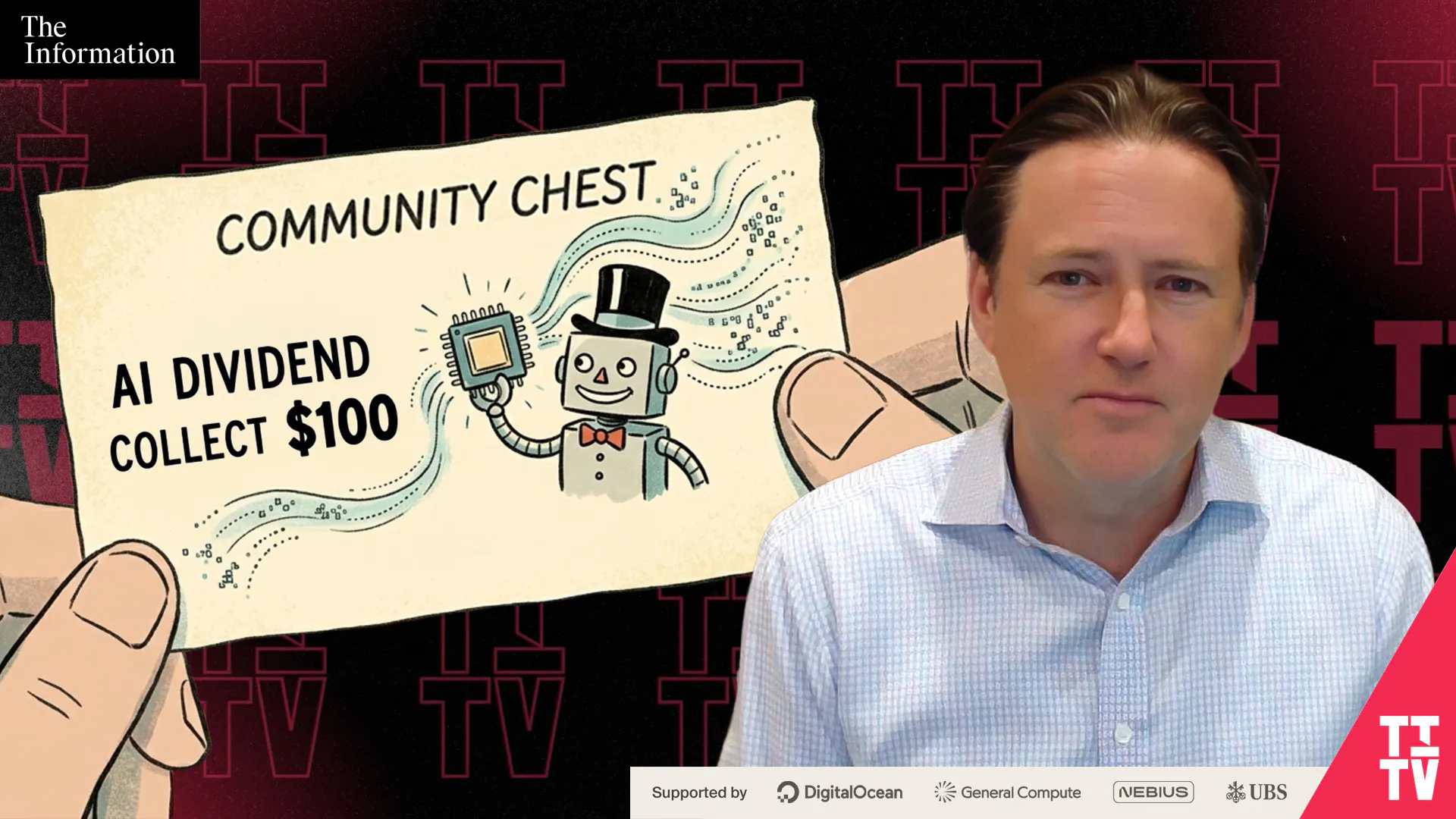
Check out today's episode of TITV. We unpack our latest Op-Ed in which a venture capitalist argues for giving Americans an AI dividend.
Recommended Newsletter
Start your day with Applied AI, the newsletter from The Information that uncovers how leading businesses are leveraging AI to automate tasks across the board. Subscribe now for free to get it delivered straight to your inbox twice a week.
Don't miss The Information's Dakin Campbell moderating an exclusive conversation on financing the AI infrastructure boom. Join leaders from Goldman Sachs, Blue Owl, and Skadden to unpack how Wall Street funds global computing.
Request an invitation to join The Information and EY for an exclusive dinner bringing together senior leaders for candid conversation on closing the trust gap in enterprise AI.
Get ahead of the story. Purchase your ticket to AI Agenda Live, where The Information's reporting team convenes the leaders driving the next era of AI. Early Access pricing available now.
Tickets on sale now: The Information returns to Napa Valley October 27–28 to convene senior women across tech, media, and finance. Join us for two days of intimate, candid conversations with the leaders navigating today’s global shifts.