Oil refining on the brink

Follow energy market shifts and the forces driving the transition to clean power. Subscribe to Reuters.com for $1/week.


Power Up

Power Up

A Reuters Open Interest newsletter

By Ron Bousso, ROI Energy Columnist


Data refreshes every time you open this email. For more energy news, click here. Please send any feedback to powerup@thomsonreuters.com.

Hello Power Up readers,

With the World Cup behind us (congratulations Spain!), we might expect to look forward to a quiet summer. But not this year. The energy market is flashing red everywhere you look.

In the Middle East, the escalatory cycle has deepened after U.S. forces hit Iran for a ninth consecutive day on Monday while Iran targeted U.S. military assets and equipment as well as civilian infrastructure across the region.

Oil and gas transits through the Strait of Hormuz have dropped to a trickle over the past week, and Iran continues to target vessels trying to cross the narrow waterway through the Omani route. The Iranian Revolutionary Guards said the strait would remain unsafe as long as what it called U.S. "aggression" in the region continued, warning that "this passage will not be safe for the transit of petrochemical products, nor even a single drop of oil and gas."

Four vessels made the transit through Hormuz on Sunday, down from eight the previous day, and nearly 50 daily transits before the conflict, LSEG data showed.

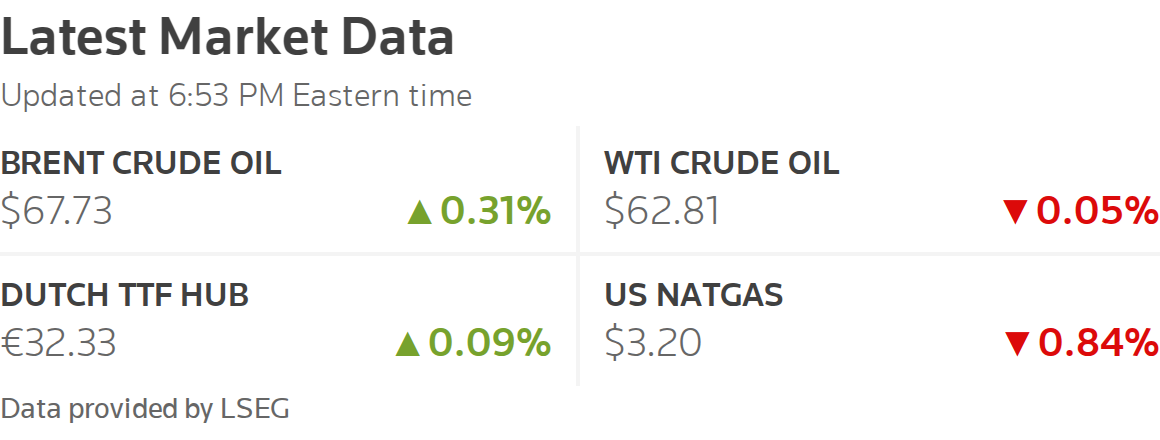
Brent crude oil prices rose above $90 a barrel on Monday, their highest level in over a month, before paring some of the gains after Iran's foreign ‌ministry said negotiations with the U.S. could be pursued based on national interests.

Putting further pressure on the crude market, oil exports from the Caspian Pipeline Consortium (CPC) terminal off Russia's Black Sea coast were suspended on Monday following drone attacks on two tankers. The CPC terminal in the port of Novorossiysk, though in Russian territory, is the main export hub for Kazakhstan’s 2 million barrels per day of oil.

But forget crude oil. It’s the world’s refining complex that is coming under massive pressure as the conflicts in the Middle East and Russia ripple through the energy complex. More on this below.

Here are a few more headlines:

  • Congestion on the U.S. electricity grid is becoming an increasingly costly bottleneck, driving up power prices, delaying new generation projects and undermining reliability, ROI Energy Transition Columnist Gavin Maguire writes.
  • Next, ROI Asia Commodities Columnist Clyde Russell wrote that if there is a surprise to China's response to the Iran conflict, it's not that the world's biggest crude importer cut back on oil imports and refinery processing, it's the extent to which it did.

As always, don’t hesitate to contact me at ron.bousso@thomsonreuters.com or follow me on LinkedIn with any questions or thoughts.


Top energy headlines

  • US pump prices cross $4 again on renewed Middle East fighting
  • Oil steadies as hopes of renewed US-Iran negotiations offset Houthi threat
  • Why oil prices haven't gone crazy despite 5 months of US-Iran war
  • USA Rare Earth CEO Humpton to retire, Serra Verde's Moraitis to succeed
  • Iran to restore 100 million cubic metres of lost gas output in coming months, official says


Refining on the brink

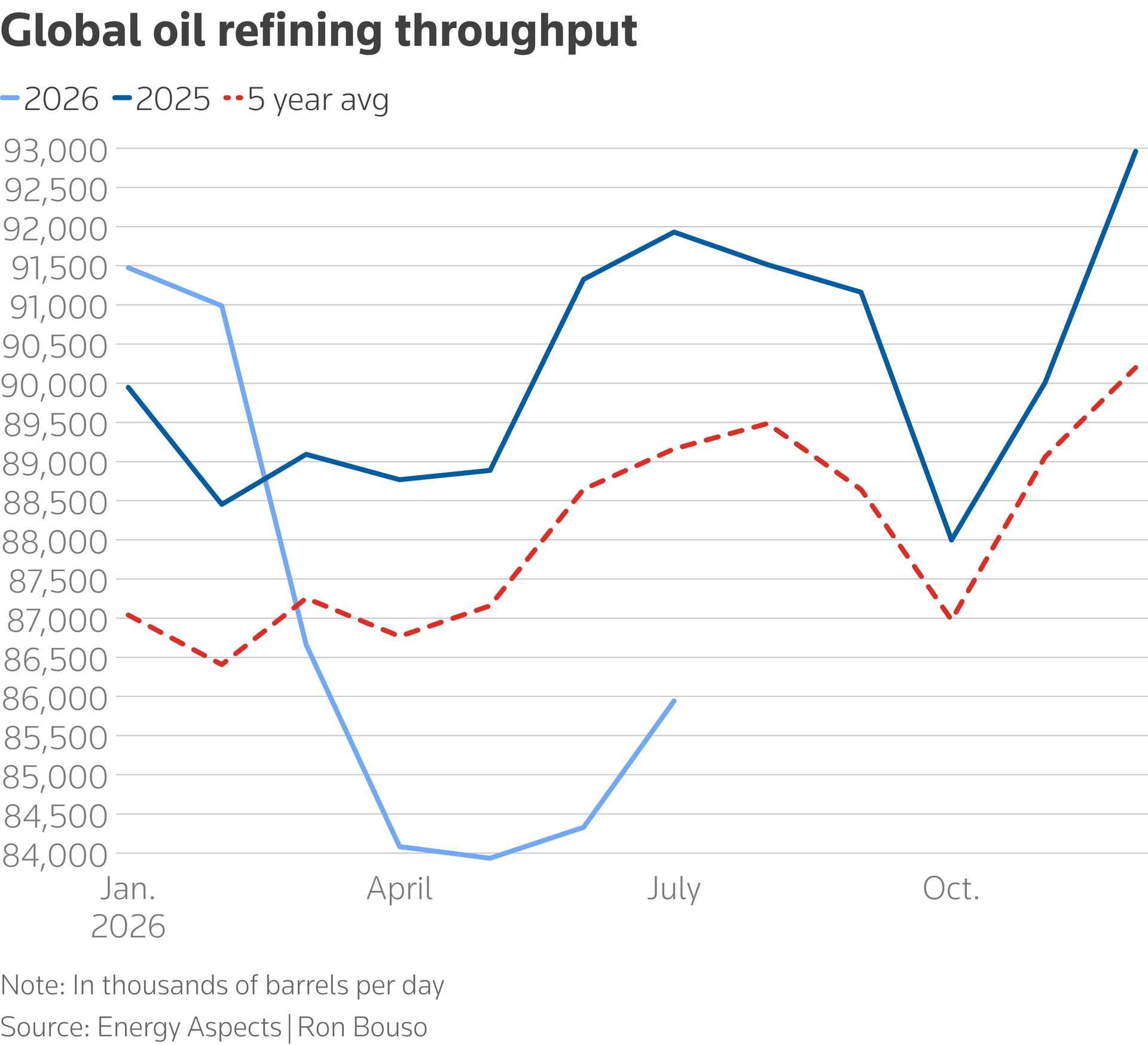
While crude supplies around the world have partially recovered in recent weeks, the system that converts crude into fuels is still struggling ‌after months of disruption from conflicts in Russia and the Middle East.

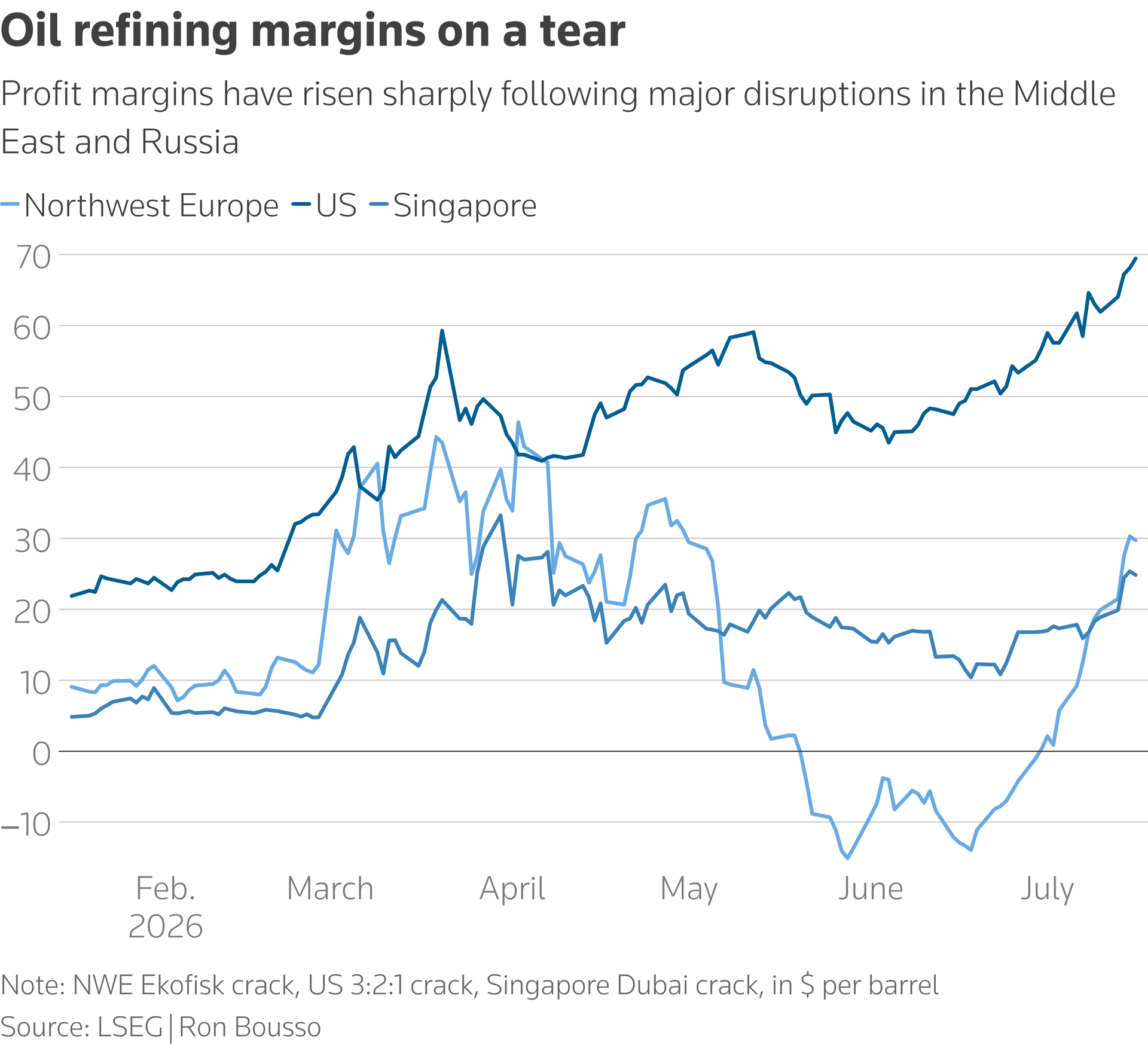
Gasoline and diesel inventories sit near multi-year lows, refining margins have surged to record levels, and refinery throughput remains severely curtailed across key producing regions.

Households and industry consume refined products, not crude, so this is the stress they should be monitoring.

As the Iran crisis enters its fifth month, traders have become increasingly convinced that U.S. President Donald Trump will do almost anything to avoid a politically damaging spike in U.S. fuel prices.

But the bright flashing warning signs coming out of the refining system suggest the U.S. president may struggle to prevent one.

Read the full column
 

Sponsors are not involved in the creation of newsletters or other Reuters news content. Advertise in this newsletter or on Reuters' website

LiveIntent Logo
AdChoices Logo