|
MAIN FEATURE
THE $1 TRILLION SECRET THE GOVERNMENT DOESN’T WANT YOU TO KNOW
Every 100 days, the US government adds another $1 trillion to the national debt.
That's $10 billion per day. $416 million per hour. $6.9 million per minute.
The Congressional Budget Office, the people who actually set the government budget, admitted the federal budget is on an "unsustainable path."
Social Security goes insolvent in 8 years.
And yet the S&P 500 is still hitting new all-time highs.
How is that possible? If you don't understand the answer to that question, you're flying blind with your money.
Here's what changed.
Since COVID, we stopped living in economic cycles and started living in liquidity cycles.
The old playbook, where stock prices followed corporate earnings, where recessions cleared out weak companies, where business cycles drove markets, is dead.
It doesn't work anymore.
Here's what most people miss: liquidity isn't just about what the Federal Reserve does.
Money flows across borders. When China's central bank prints yuan, that money finds its way into US real estate, US stocks, US bonds.
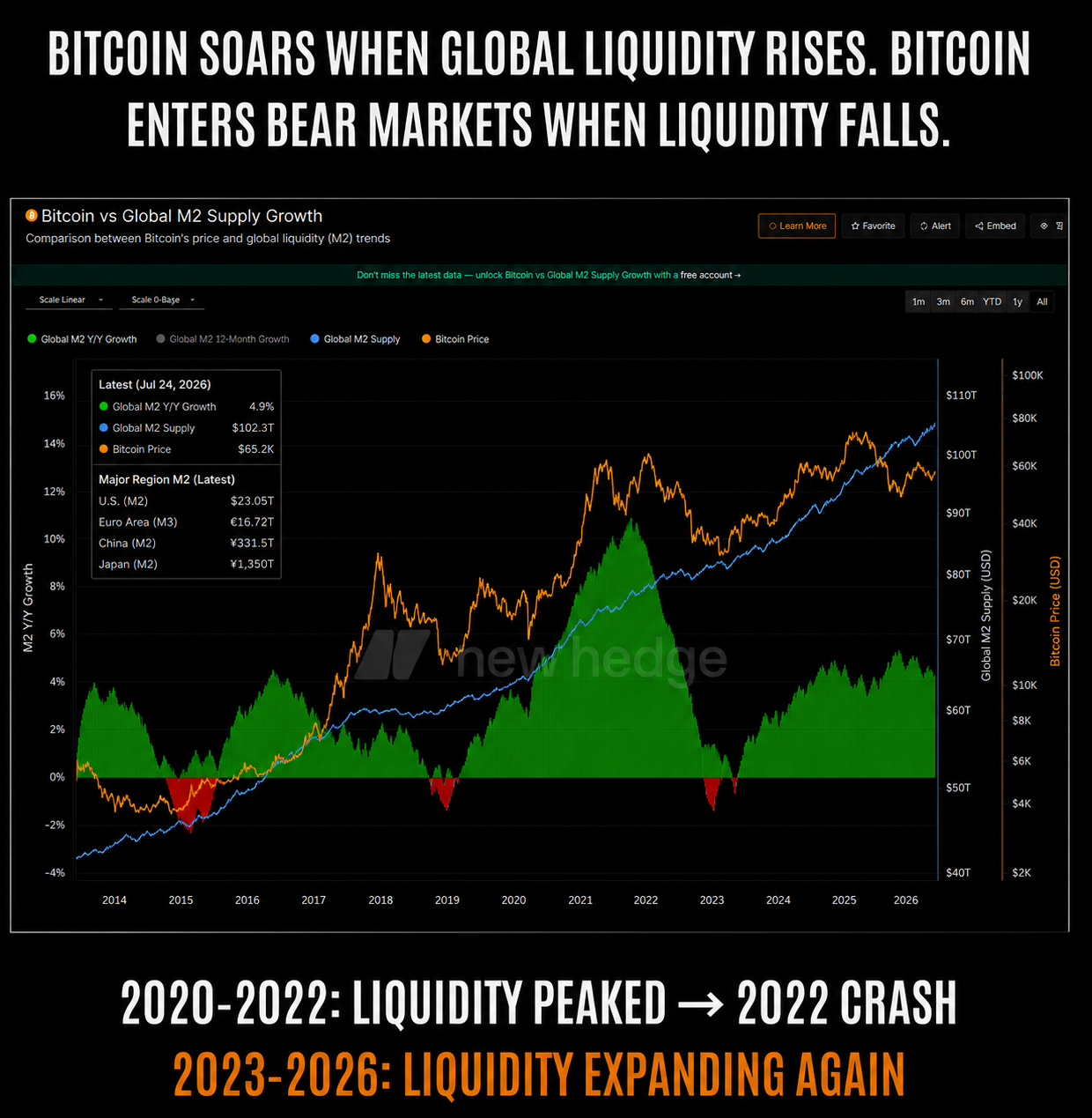
Global liquidity is at all-time highs right now. Even though the Fed kept rates high, money from around the world has been flooding our markets.
That's why your neighbor's house sold for 20% above asking price. That's why Bitcoin keeps setting records. The money has to go somewhere.
But there's a problem the government doesn't want you thinking about too hard.
They need people to keep buying Treasury bonds to fund all this debt. If bond markets get too volatile, if people get scared and stop buying government debt, the whole system breaks.
So they've created what I call a volatility trap. They pump just enough liquidity to keep things stable, but not so much that inflation explodes. It's like walking a tightrope over Niagara Falls.
Here's the most important thing to understand about where we are: recessions are no longer natural market corrections. They're policy decisions.
The government can't afford a recession because it would slash tax revenues when they're already drowning in debt, force them to spend even more on unemployment benefits, and make their debt crisis exponentially worse.
So they'll do whatever it takes. Print more money, inject more liquidity, buy their own debt. Anything to avoid economic contraction.
This means the old recession indicators don't work anymore. The rules changed.
So what are the new rules?
Focus on assets with inelastic supply. Assets that can't be printed, created, or diluted by government policy. Bitcoin. Gold. Prime real estate.
These assets track global liquidity. When money printing accelerates, they go up. When liquidity tightens, they go down temporarily. But over time, as governments keep printing more money to service their debts, these assets preserve and grow wealth.
Those who understand the new liquidity-driven system will be on the right side of the greatest wealth transfer ever recorded.
Those who don't will keep doing the math wrong and wondering why it never adds up.
|