Lumina Foundation is working to increase the share of adults in the U.S. labor force with college degrees or other credentials of value leading to economic prosperity.
The United States has one of the richest education and workforce ecosystems in the world. Whether someone wants a bachelor’s degree, a short-term certificate, an apprenticeship, or specialized workforce training, there are thousands of opportunities to build new skills, advance a career, or simply pursue a passion.
Yet finding these opportunities can be surprisingly difficult because of the fragmented way in which education and workforce data systems collect their information. A new report from Lumina Foundation and Intentional Futures lays out a practical fix to this fragmentation: the creation of one trusted national list of education and training providers, programs, and credentials.
Thirty-one colleges recently made explicit commitments to supporting Black students—at a time when the Trump administration has targeted higher education’s diversity efforts and slashed millions in funding for institutions with large minority populations.
This month, Royel Johnson, an associate professor of higher education at the University of Southern California, launched a public dashboard to monitor enrollment and retention trends at the first Black-Serving Institutions. In this interview, he discusses the dashboard, the bill that established the designation, and the future of minority-focused efforts under the Trump administration’s sweeping attacks on diversity, equity, and inclusion.
For years, Compton College has been a forerunner in the push for basic needs support for its students. The community college in Los Angeles offers students one free meal per day, in addition to transit passes, food pantry access, and weekly $20 vouchers for its on-campus farmers market. It also has a unique data-sharing agreement with the Los Angeles Department of Public and Social Services to help students sign up for food benefits, and the college plans to open the first community college student housing in L.A. next summer.
But starting in fall 2027, students will need to meet a set of academic requirements to get free meals, housing help, and other supports. College leaders say the move will increase completion rates. But basic needs experts are worried.
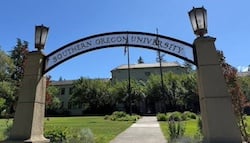
Across the country, financial pressures have battered many colleges, forcing some small private institutions and for-profit schools to close. Public colleges have also faced challenges, and some large systems have closed branch campuses or merged with other institutions. But Southern Oregon University is one of the first public regional universities to face serious risk of closure.
For now, Southern Oregon’s doors remain open thanks to emergency, one-time funding from the state. Before sending the money, however, the state required that university leaders balance the budget. To achieve that, they had to find a way to cut $20 million—about one-fifth of the roughly $100 million annual budget.
Some colleges in Massachusetts will soon be letting students graduate in three years. Pilot programs for three-year applied bachelor's degrees will start in the fall of 2027 at Merrimack College and Suffolk University. But not everyone likes the idea, with some professors calling the accelerated degrees a watered-down college experience.
Massachusetts Commissioner of Higher Education Noé Ortega weighs in with his thoughts on why he approved these programs, how the effort will be monitored and assessed, and why he believes it will fundamentally change how students engage with postsecondary learning.
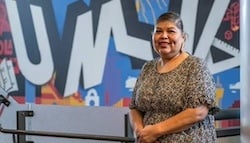
Ronica Spute always wanted to go back to college to get her bachelor's degree, but life kept getting in the way. Two years ago, her path was finally cleared thanks to a Nevada program that allows certain Native American students to attend college virtually for free.
As a member of the Moapa Band of Paiutes, the waiver, along with a scholarship from her tribe, allowed Spute, 57, to pursue a criminal justice degree at the University of Nevada, Las Vegas, and graduate in two years. It was one year less than it took her to get an associate's degree from the College of Southern Nevada when she could only afford to take a few classes at a time. Yet, despite the program's success, its future is in question.

.jpg?width=500&upscale=true&name=istockphoto-2212032956-612x612%20(1).jpg)
.jpg?width=500&upscale=true&name=istockphoto-2227767639-612x612%20(3).jpg)
.jpg?width=500&upscale=true&name=istockphoto-1464578106-612x612%20(3).jpg)
.jpg?width=500&upscale=true&name=istockphoto-172176379-612x612%20(1).jpg)