|
|
|
|
Morning. The price of hosting a barbecue is getting steeper every summer – and our beef isn’t just with the burgers. In focus today: Why we’re holding the cheese and pivoting to BYOB. |
|
|
|
|
|
|
|
|
|
|
|
|
|
|
|
|
|
|
|
|
|
|
|
|
|
|
|
|
|
|
|
|
|
|
|
|
|
|
|
|
|
|
|
|
|
|
|
|
|
|
|
"Grey Poupon?" Getty Images
|
|
|
|
|
|
|
|
|
|
|
|
|
|
|
|
|
|
|
|
|
If you’ve hosted a backyard get-together recently, you might have experienced a little heartburn even before supper was served. The burgers, buns and booze you bought to serve your guests have set you back much more than they did before the pandemic. |
|
|
|
|
Barbecue staples – among grocery prices more broadly – have outpaced overall inflation for 17 consecutive months. In June, the price of “food purchased from stores” rose 3.9 per cent on an annual basis, compared with the headline rate of 2.8 per cent, Statistics Canada reported. |
|
|
|
|
While inflation has cooled from its peak, years of supply-chain disruptions, geopolitical tensions and rising costs throughout the economy have left many pre-pandemic prices firmly in the rear-view mirror. Most every staple of backyard cookery, in other words, is more expensive. |
|
|
|
|
|
|
|
|
|
|
|
|
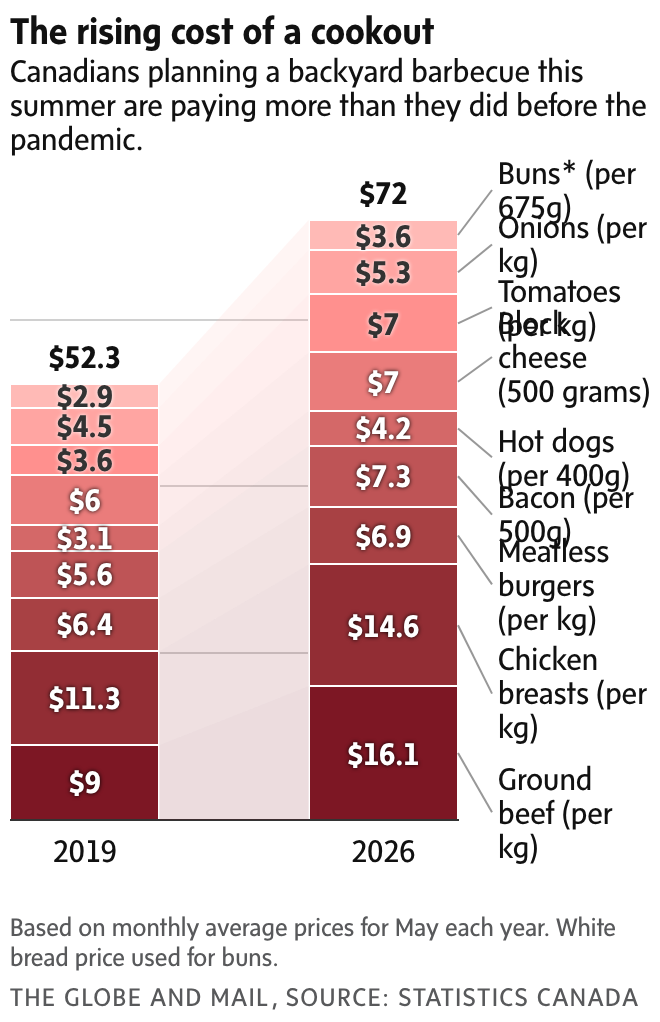
- Ground beef, which cost about $9 per kilogram before the pandemic, is now about $16. That’s a rise nearing 80 per cent.
- If you bought one unit of each item listed, the cost of the basket would have risen from $52.35 to $72.96, an increase of almost 40 per cent.
- Vegetarians seem to be the only winners here, seeing meatless burgers rise a mere 8 per cent from the Before Times.
- Tomatoes? In this economy? Up about 95 per cent.
|
|
|
|
|
|
|
|
|
|
|
If you’re hoping to cool down after a shift at the grill, the price of a drink might come as little relief. |
|
|
|
|
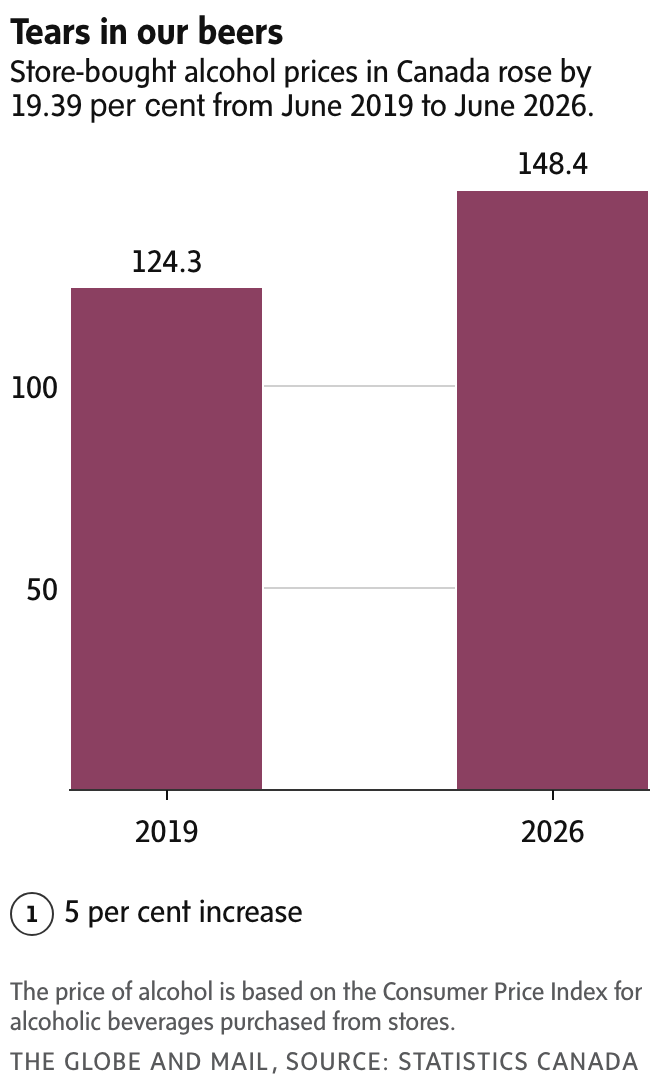
The index below uses 2002 as a benchmark of 100. In June, 2019, it stood at 124.3, meaning alcohol that cost $100 in 2002 would have cost $124.30. By June, 2026, the index had risen to 148.4. |
|
|
|
|
A 19-per-cent hike is about half the rate of that overall basket of barbecue staples, but it’s enough to convert a get-together into a BYOB. |
|
|
|
|
|
|
Propane: ‘The least of the problems’ |
|
|
|
|
Then there’s the cost of filling up a tank. Here, too, prices have risen over the years – just not as dramatically as the food we’re cooking. |
|
|
|
|
Tracking the price of propane in Canada was trickier than I expected – historical retail propane price data are not as readily available as other consumer products, including propane that gets used as auto fuel. |
|
|
|
|
Because propane is produced during natural gas processing and crude oil refining, its price tends to follow broader energy markets. What consumers see at the checkout counter, however, varies by region, retailer markups and local supply conditions — in Canada, an abundance of propane created mainly through natural gas processing helps cushion the blow. |
|
|
|
|
Rob Euper, who works at Gandy’s Home Hardware in Vancouver, told me customers have had bigger concerns. “The propane’s been the least of the problems in the barbecue world,” he said in a phone interview. Refill prices have risen over the five years he’s worked at the store, but consumers are more worried about food. “The big thing with barbecuing is the price of protein, that’s for sure.” |
|
|
|
|
Global conflicts and trade tensions with the U.S. certainly aren’t helping with food or fuel prices. Some barbecue staples have been caught up in tariffs and retaliatory tariffs since last April. There’s also the matter of an insatiable demand for protein. |
|
|
|
|
Food inflation is expected to remain elevated because of Iran war‑related pressures on fuel, fertilizer and “other agricultural input costs,” the Bank of Canada said in its July Monetary Policy Report. |
|
|
|
|
That isn’t great news for outdoor cooking enthusiasts. It’s certainly unwelcome news for businesses that sell barbecues. |
|
|
|
|
“There was the COVID moment, and everybody ran out and bought barbecues, because they were stuck at home,” Euper said. “Now, nobody’s buying a barbecue because you take care of them and they last decades or more.” |
|
|
|
|
Especially if we aren’t using them as much. |
|
|
|
|
|
|
|
|
|
|
|
|
|
|
|
|
|