Lumina Foundation is working to increase the share of adults in the U.S. labor force with college degrees or other credentials of value leading to economic prosperity.
For decades, higher education has largely been built around a traditional one-size-fits-all model: Enroll in college, complete courses, earn a degree, and enter the workforce. But that route does not reflect the way many students actually navigate their college journeys today.
As students transfer between institutions, balance work and school, pursue workforce training, and earn credentials in different ways, colleges are trying to redesign the systems around them rather than force students to travel disconnected routes on their own. Here are four things colleges are doing to rebuild pathways from learning to opportunity.
David Marchick, American University’s business-school dean, planned a once-in-a-lifetime bicycling trip for the beginning of July. There was just one problem: He got the job as interim president of the university … starting July 1.
Rather than cancel his plans to ride Tour de France routes, Marchick turned them into a “Summit for Scholarships” fund-raising campaign. His goal: climb the height of Mount Everest, roughly 29,000 feet, over six days. Marchick reflects on the experience—and the money his campaign raised for students—in this interview.
Across the country, community colleges are running civic experiments—finding innovative ways to foster nonpartisan participation on their campuses and in their broader neighborhoods.
The Center for Government and Civic Service leads this mission at Austin Community College, where the goal is to train and empower students to be effective civic leaders. What sets the CGCS apart is the scale and ambition of the student-led initiatives. Students pitch ideas, manage operations, and build relationships with senior leaders inside and outside academia. Through the center, they can also earn free badges and microcredentials on topics like technology and society.
Direct admission programs are clearing the way to college instead of hoping students will choose to apply and figure out the complicated process. It’s clear that the economy is increasingly demanding more skilled workers, and bachelor’s degrees remain the strongest engine for helping people achieve good jobs and good lives.
Direct admission is one solution among many for the challenges facing higher education. But it points toward an important philosophy: Design systems that help people succeed rather than testing how well they navigate bureaucracy. That’s one step in delivering the value people expect and deserve from higher education, says Lumina Foundation's Jamie Merisotis in his latest column for Forbes.
Three dozen colleges and universities have backed Harvard University in its lawsuit against the Trump administration over federal grant cancellations and freezes that followed the Ivy League institution’s rejection of sweeping policy demands.
In a joint amicus brief filed last week, Harvard’s peers decried the funding disruption at the institution, arguing that “wholesale termination of federal research funding at just one leading university can have devastating effects on scientific progress and the public welfare.”
For institutions already squeezed by enrollment declines and shrinking state appropriations, retention is no longer a student affairs talking point. It is a budget line.
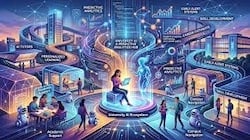
That pressure is why campuses from flagship research universities to regional comprehensives have spent the past several years building, buying, or bolting on AI-powered early alert systems. These platforms pull data from learning management systems, student information systems, attendance logs, and financial aid records, then score each student for risk of stopping out. When a name crosses a threshold, an advisor gets a flag, often days or weeks before a professor would have noticed a student sliding.