Policy changes, but facts endure. AP delivers accurate, fact-based journalism to keep the world informed in every administration. Support independent reporting today. Donate. |
|
|
By Holly Meyer and David Crary |
|
| |
|
By Holly Meyer and David Crary |
|
| |
|
Greetings, World of Faith readers.
This week, we talk to Israelis about how views of their country are shifting among younger Jewish Americans. There’s also a deep dive into how political progressives are turning to religion for answers in addressing economic inequality. And we offer a rare look inside Tibet today. |
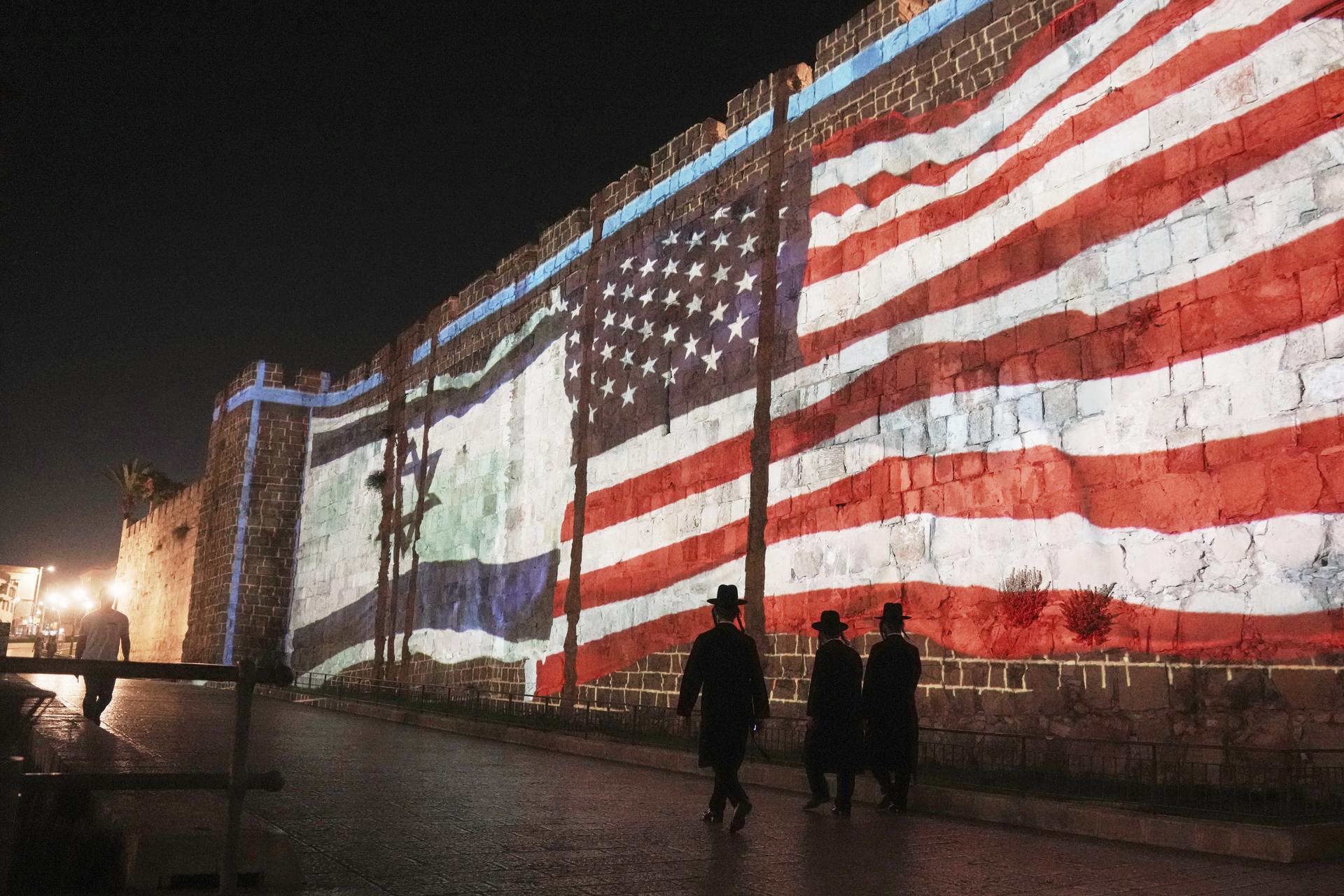
An image of the U.S. and Israeli flags is projected on the walls of Jerusalem's Old City. (AP Photo/Mahmoud Illean) |
Israelis worry about weakening connection with younger Jewish Americans |
Israelis across political and religious lines are worried about the weakening connection with younger Jewish Americans. A recent AP poll showed American Jews under 45 tend to consider support for Israel less crucial to their identity than older adults. Government officials, faith leaders and those working on exchange programs between the two countries consider a close relationship with diaspora Jews a “strategic asset” for both Israel and Jews worldwide. Read more.
|
|
|
Programs like Taglit-Birthright Israel aim to strengthen these bonds by offering free trips to Israel for young Jewish adults in the U.S. However, political tensions and military actions, such as the recent conflict with Hamas, have complicated perceptions.
Efforts by Israelis are underway to engage secular and liberal Jews in North America, emphasizing shared values and cultural connections.
Amid diplomatic tensions, the role of Jewish Americans who historically lobbied for political, military and financial support for Israel gains new prominence. That deepens concerns in Israel that many young progressive Americans, including Jews, now see supporting Israel as irreconcilable with their worldview.
|
|
|
As progressives seek to take on inequality, some cite religion as a motivating factor |
Progressive Democratic politicians have won major electoral victories across the country in recent months amid growing frustrations surrounding inequality, affordability and potential threats to job security posed by artificial intelligence. As the economy becomes a flashpoint for the November midterms, many of these candidates and voters who support them are citing religion as a justification for their positions. Read more.
|
|
|
Among these candidates is Dr. Abdul El-Sayed, who is running as a Democrat for U.S. Senate in Michigan. He has been speaking about how his Muslim faith informs his progressive views.
Though there are more Democrats unaffiliated with religion than Republicans, many people of faith do not see progressive ideologies like socialism as contradictory to their beliefs.
They cite Black religious activists who were outspoken critics of capitalism, including Martin Luther King Jr., Malcolm X and W. E. B. Du Bois, as models for how they think about the relationship between religion and politics.
|
|
|
A rare look inside Tibet, 75 years after what China calls a 'peaceful liberation' |
This year marks the 75th anniversary of what China calls the “peaceful liberation” of Tibet in 1951, which critics describe as an invasion that has widely curtailed the rights and culture of Tibetans. The Associated Press last week joined a government-organized trip to the autonomous region, where journalists visited palaces, temples, tourist sites, an eldercare center and local businesses. Read more.
|
|
|
Foreigners face tight restrictions on traveling to Tibet, a remote, high-altitude region also known for its Buddhist faith and snow-capped mountains.
Government officials accompanied AP journalists during the media trip to sites that authorities selected in advance. AP journalists were not free to move around or conduct reporting independently. The AP retained full editorial control of its content.
The visit offered a glimpse into daily lives of Tibetans and the growing number of Han Chinese residents. In the capital, Lhasa, visitors flock to the Potala Palace and the Jokhang Temple, some to sightsee and others to pray.
|
|
|
|