F. Scott Fitzgerald famously wrote that “the test of a first-rate intelligence is the ability to hold two opposed ideas in the mind at the same time, and still retain the ability to function.”
These days, it feels like we are all living with a fair amount of confusion and ambiguity. That is especially true here in the Commonwealth, where some of the biggest stories of the summer can leave you feeling mystified — or even gloomy.
I’m thinking in particular about two seemingly unrelated stories we’ve been covering at MassLive: one about bigotry, the other about energy.
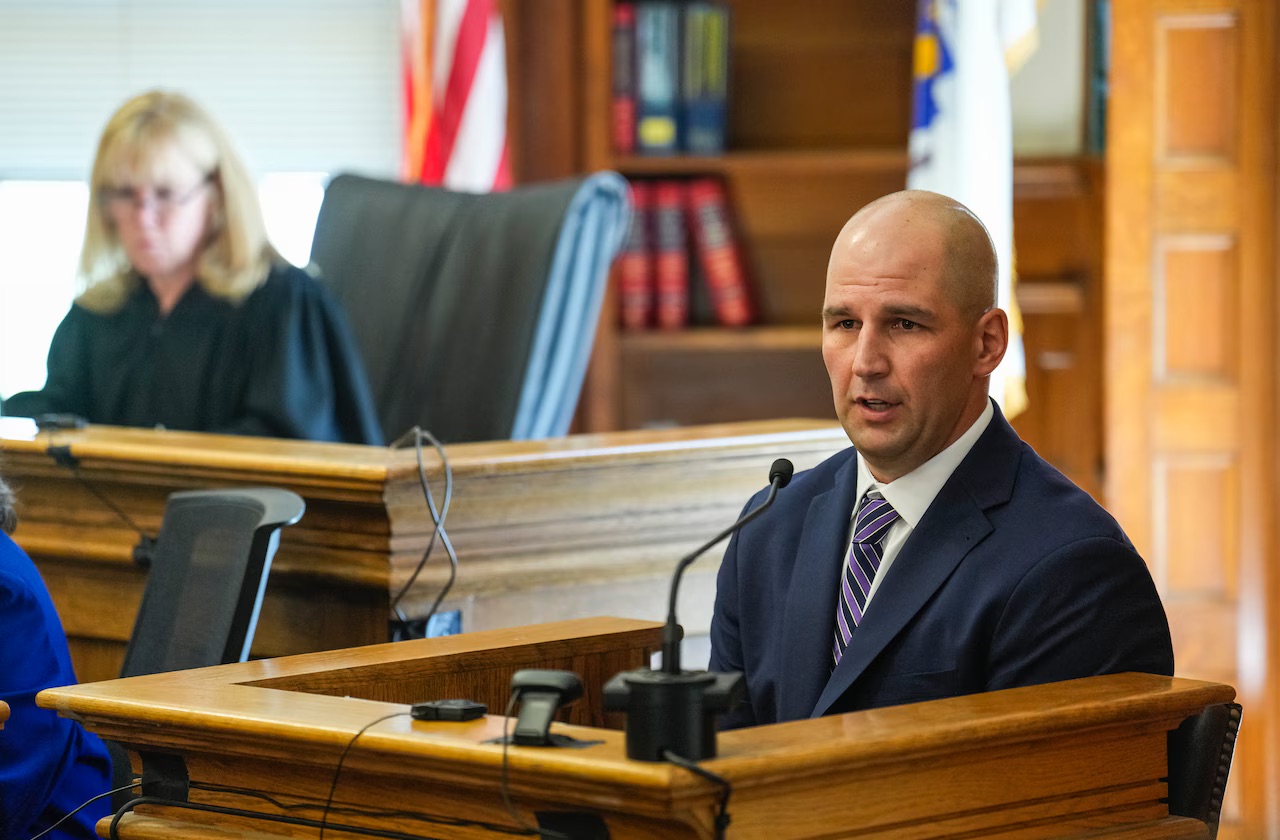
The first is the story of former Massachusetts State Trooper Michael Proctor, whose bigoted text messages shocked us when they came to light in early June. It made me wonder: How can a state as well educated and progressive as Massachusetts still be home to that kind of hatred? How does it take root? And how do we keep it from flourishing again?
The second is the energy story in Massachusetts. It may not feel as frightening or repugnant as the Proctor story, but it raises its own confounding question. We live with some of the highest energy bills in the country, largely because we consume far more energy than the state produces. How does a state with some of the brightest minds in the country fail to solve its own energy crisis?
Part of the answer can be found in a well-reported MassLive story by Tréa Lavery, who explored the ripple effects we are feeling as offshore wind projects stall. Those projects are languishing largely because of permit delays emanating from the Trump administration. Her story offers a deeper look at the broader economic impact of the slowdown.
Our job at MassLive is to bring awareness and understanding to the issues that matter. That’s the goal: building stronger communities by helping people understand important issues. It is not an easy job in a world inundated with information but often lacking understanding. We seem to know everything and nothing all at once — which reminds me of another writer, the poet Samuel Taylor Coleridge, who wrote in “The Rime of the Ancient Mariner”: “Water, water everywhere … nor any drop to drink.”
I think the antidote to feeling dismayed by all this contradiction and confusion is to come together and talk honestly about how we move forward. That is another role MassLive can play: not just reporting on the issues, but also convening people to discuss what comes next.
This is the idea behind our recent Neighborhood Visits, which we are piloting in Boston. Our reporters work from a local coffee shop or library, let people know where and when they will be there and invite conversations that can inform our coverage.
It is the same impulse that led us to create the Vineyard Forum, an annual event designed to bring a range of voices to issues that are critical to our future as a state and a nation.
At this year’s Forum on July 9, Congressman Jamie Raskin left the crowd with words that felt both timely and uplifting. I’ll end with them here, because they are a useful reminder when the confusion of everyday life starts to feel overwhelming:
“The whole trajectory of our development has been towards greater, deeper, more meaningful democracy,” he said. “It is definitely democracy’s moment for renewal, expansion, renovation, reconstruction, reconstitution. Democracy is not a status-quo system of rules and institutions. Democracy is a project. It always has been a project, and if you see it as a stationary thing, you’re losing.”