
|
 |



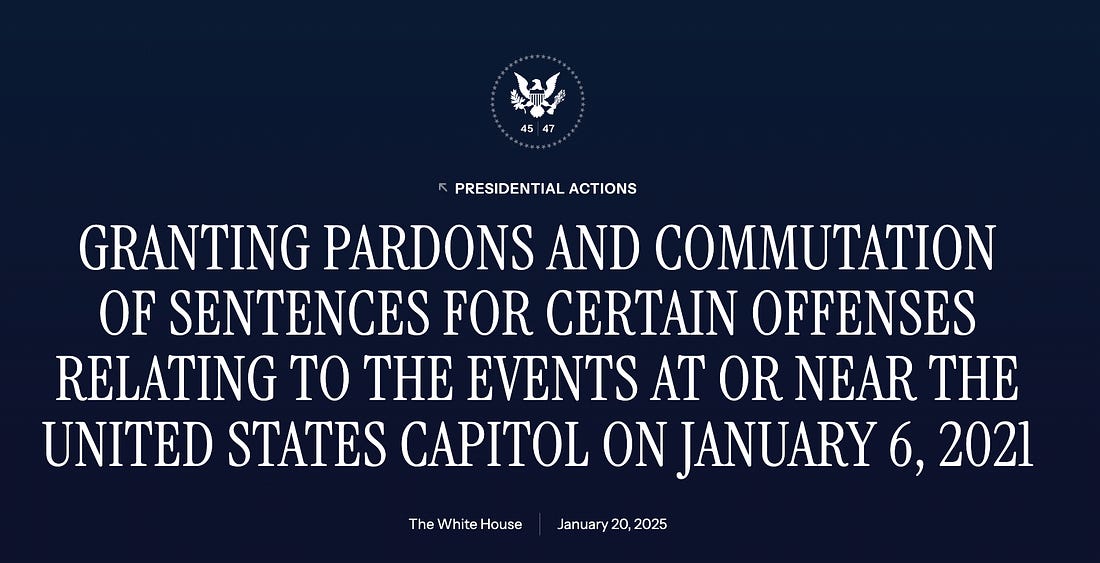
Before there was the 1776 slush fund and Donald Trump's efforts to reward January 6 rioters, there were pardons. Pardons that erased criminal convictions for people who stormed the Capitol, who defaced it, who fought with and injured law enforcement. On January 20, 2025, shortly after he was inaugurated for the second time, Donald Trump issued a “presidential action” titled “Granting Pardons and Commutation of Sentences for Certain Offenses Relating to the Events at or Near the United States Capitol on January 6, 2021.”
 |
But in the first flush of power at the start of Trump’s second term in office, there were some participants in January 6 deemed too far off the rails for even Trump to pardon: the insurrectionists, Proud Boys, and Oath Keepers. Even Donald Trump shied away from pardoning them outright, commuting their sentences so they could be freed from prison, but letting their convictions stand.
Trump got more comfortable with his ability, during his first months in office, to get away with doing the previously unthinkable—DOGE, ignoring a judge’s order to turn planes around that were sending deported people to a notorious torture prison in El Salvador without due process, imposing worldwide tariffs. No one, meaning Congress or the courts, effectively stopped him. And somewhere along the way, he decided he could do more for the insurrectionists. On April 14, 2026, the Justice Department filed a motion to vacate those defendants’ convictions and remand the case back to the trial judge “so that the government may move to dismiss the indictment with prejudice.”
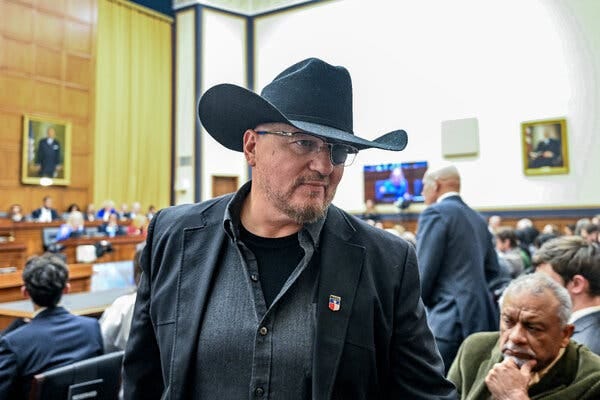
One of those defendants was Steward Rhodes, the Yale-educated lawyer who led the Oath Keepers and received an 18-year sentence after being convicted. Prosecutors offered evidence, including Rhodes’ encrypted chat logs, audio recordings, and video statements, to establish that he organized an armed "quick-reaction force,” stationed it across the river from the White House in Virginia, and exhorted Oath Keepers to use force to block the transfer of presidential power. In other words, inciting insurrection.
 |
The government succeeded in vacating the convictions. But that, apparently, wasn’t enough.
The case went back before federal district Judge Amit Mehta in the District of Columbia, who had tried the case. The government moved to dismiss. Judge Mehta seemed skeptical of their motives. As he explained when he issued his order yesterday, “The government’s two-page filing said little more than that ‘[t]he government has determined in its prosecutorial discretion that dismissal of this criminal case is in the interests of justice.’”
Ultimately, Judge Mehta ruled in the government’s favor and dismissed the indictments. But not before he took the unusual step—indictments are typically dismissed if a government lawyer asks a judge to do so—of asking the government to provide him with more information so he could better evaluate the request. He wrote that he was not “content with a mere conclusory statement by the prosecutor that dismissal is in the public interest, but will require a statement of reasons and underlying factual basis.”
When he ruled in the Trump administration’s favor, it was with open regret and only because he felt obligated by the law to do so, even though he disagreed with the Justice Department’s assessment of what the right thing to do here was.
Judge Mehta started his opinion with two key points:
All the things the government didn’t argue. None of the factors the government usually points to when asking a court to dismiss an indictment are present here. “Before turning to the government’s proffered justifications for dismissal, it is important to note the reasons it has not offered. The government does not say that the charges were legally deficient or that the evidence presented is insufficient to sustain Defendants’ convictions … It confesses to no prosecutorial misconduct, nor does it assert any denial or compromise of a defendant’s rights. And it does not identify any legal error that resulted in an unfair trial or a wrongful conviction (except perhaps as to the obstruction of an official proceeding counts). Remarkably, then, the government does not maintain that dismissal is in the public interest to rectify a fundamental error or a grave injustice.”
The evidence used to convict the defendants at trial was very strong. One of the defendants, tattoo shop owner Roberto Minuta, filed his own response with the court, trying to characterize the insurrectionists as heroes. The government did not try that same approach, and Judge Mehta had this to say about it: “The government engages in none of Minuta’s efforts to recast the evidence in Defendants’ favor … And for good reason. Two juries heard those very same arguments at trial and flatly rejected them.”
The administration made three arguments to support its request. Judge Mehta takes each one of them apart in his opinion, eviscerating the position that there is any justification for wiping the slate clean for the insurrectionists:
Dismissal is appropriate to protect Defendants from harassment. The government argued that retrying the defendants after prior trials and where they were not subject to further punishment because Trump commuted their sentences would be harassment. Judge Mehta wrote, “that is a strange argument. This is not a case of ‘charging, dismissing, and recharging’ to which the ‘prosecutorial harassment’ rationale ordinarily applies … After all, the government has given no indication that it will recharge these Defendants, in the District or elsewhere. To the contrary, it bestows upon them unearned grace by wiping their records clean. The harassment rationale has no place here.”
The “dismissal ‘effectuates the President’s January 20, 2025, proclamation.’” Judge Mehta doesn’t buy this one either, and for the obvious reason we started with—Trump chose clemency, not pardons, and certainly not erasure of the indictments, as the mercy he would bestow upon these defendants. He could have done anything he wanted to do—he chose commutation. Judge Mehta wrote, “The government’s argument relating to the Proclamation is a head-scratcher. The President’s decree expressly carves these Defendants out from the greater clemencies of pardons and dismissals it affords others. The President could have pardoned them, too, but elected not to.”
The “public’s interest in a trial of these defendants has already fully vested.” The Justice Department had the audacity to claim that erasure of the charges would not wipe out the public records created by the insurrectionists’ trials. Judge Mehta commented, “That position is surprising. The government is ordinarily of the view that accountability, not mere publicity, is what is in the public interest.” He continued, “The government is right that dismissal will not erase the public record; it will, however, erase the legal judgments that these Defendants broke the criminal law … The government thus asks to absolve these Defendants of crimes against the United States itself. In this court’s view, that is not in the public interest.”
After expressing his outrage, though, the Judge does what he believes he must do. He explains it fully:
“Ultimately, though, this judicial officer’s mere difference of opinion is of no moment. Courts lack the authority ‘to deny a prosecutor’s Rule 48(a) motion to dismiss charges based on a disagreement with the prosecution’s exercise of its charging authority.’ … This court does strongly disagree. But that alone is not a valid basis to deny the motion. The court must give way to the primacy of the Executive Branch in making charging decisions.”
In essence, he is saying that dismissal of an indictment is the prosecutors’ call, whether the Judge likes it or not. And he respects the rule of law, even as he criticizes the government’s conduct.
His words are historic. Judge Mehta could have just granted the motion and said nothing. Instead, he chose to speak truth to power.
“This is the last of the prosecutions seeking to hold accountable those responsible for the events of January 6. That book is now closed. Today’s epilogue diminishes the gravity of that day, denigrates the work of the prosecutors and law enforcement officers who secured these convictions, and excuses criminal acts that caused a centuries-long pillar of our democracy—the peaceful transfer of presidential power—to buckle.” Sadly, he concludes, “The court cannot write a different ending.”