(Justin Sullivan/Getty Images) |
|
|
|
It can be hard to get negative feedback. We’ve all been there. But what’s important isn’t letting that get you down in the dumps, but rather accepting the note, owning it, and finding a way to move forward effectively. Take, for instance, the New Bedford Whaling Museum in Massachusetts, an esteemed institution that curates the history of the whaling industry in New England. In 2020, it got some negative feedback, specifically a one-star review reading “worst aquarium ever.” The gift shop put it on a T-shirt and hoodie and it’s been an immediate viral hit and overnight bestseller.
Stocks fell softly on Thursday, with the S&P 500 dropping 0.2% and the Nasdaq 100 losing 0.4% as the international benchmark for oil rose just under 4%. |
|
|
|
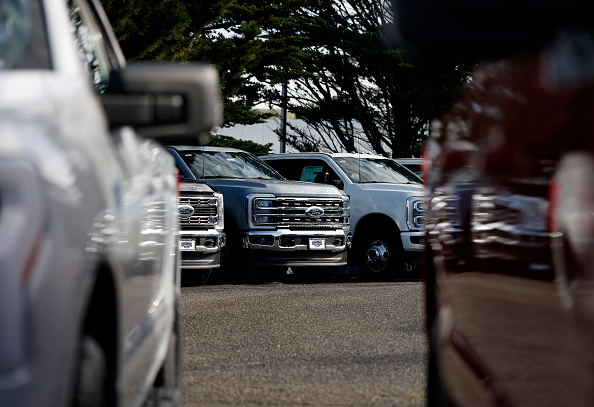
Ford’s losing the very customers that made Ford into Ford. Can they reinvent the assembly line fast enough to win them back? |
The pickup truck has fundamentally shifted in American car culture. Once an effective workhorse primarily marketed to businesses and trades for its utility, the trucks have mutated, from hyper-functional, stripped down vehicles to aspirational purchases priced at levels attainable only for the upper middle class, stuffed with sophisticated technology and creature comforts. That’s what people are buying, so that’s what automakers are selling.
That said, a growing set of evidence indicates that this auto niche is leaving behind a lot of possible customers. This thesis has been borne out in a number of emerging competitors to the flagship Ford pickup truck, the F-150, including but not limited to: |
Ford’s first attempt to address some of these competitors, the F-150 Lightning, missed the mark and led to a $19.5 billion charge in December.
Beset on all sides, Ford’s not going to have a lot more chances to win. That’s one reason the company has been preparing the Universal Electric Vehicle platform, which will allow the company to build EVs more efficiently on the same production lines, in a strategic shift that the company describes as essentially turning the assembly line into an “assembly tree.”
Ford has announced the first vehicle built on that platform will be its new electric pickup truck, dubbed the Fathom, that will hit the market starting at $28,350. That list price is nearly half the cost of the average US sales price of a new vehicle in June, and is only slightly more expensive than the average used car. |
|
|
|
This comes at a financial inflection point for the automobile business in general and the EV business in particular. Used EV prices have been increasing in 2026, defying the gravity that usually hangs on used car prices amid high gasoline prices from the Iran war.
The sticker shock from high auto prices has had some significant reverberations around the economy as well; the average MSRP of a new vehicle in June 2026 was $51,394. With interest rates still well above their post-pandemic lows, car loan terms that were once unthinkable — well past the standard four years, stretching even as high as eight years — have become downright common. That’s why the sub-$30,000 price point is so compelling: Ford’s either got to find a way to sell cars to the middle class again, or the likes of China and Slate Auto are going to do it for them.
|
|
|
|
The non-profit Värmlands Vikingacenter in Sweden rented one of their replica Viking ships, the Glad av Gillberga, to a movie project from Universal called Charlie’s Tale. According to the center, the ship was returned damaged, requiring $41,000 in repairs that the studio has not paid. This is an issue, because Charlie’s Tale was in fact the code name for The Odyssey, which has grossed $988 million worldwide.
|
|
|
|
Sherwood Media, LLC produces fresh and unique perspectives on topical financial news and is a fully owned subsidiary of Robinhood Markets, Inc., and any views expressed here do not necessarily reflect the views of any other Robinhood affiliate... See more |
|
|
|
SHERWOOD MEDIA, LLC, 85 Willow Road, Menlo Park, CA 94025 |
|
|
|
|