
|
 |


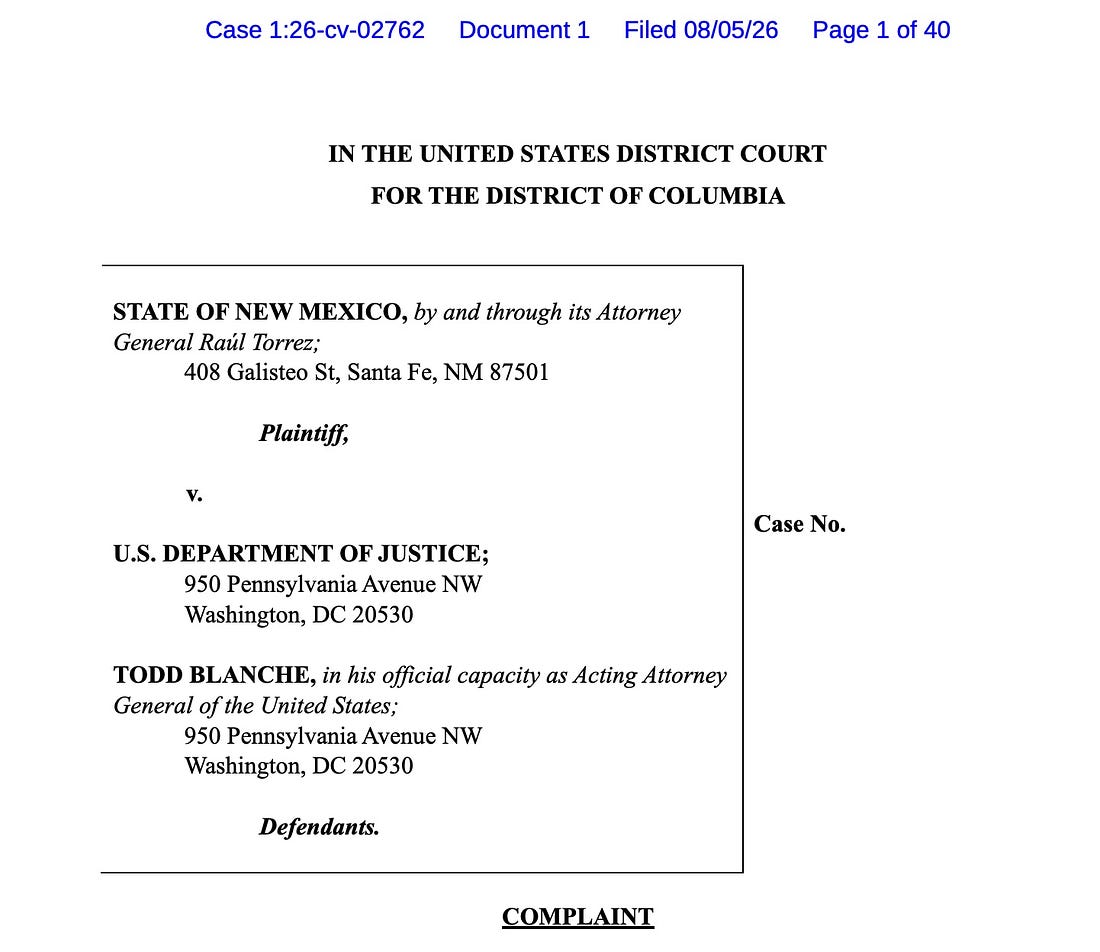
Last week, New Mexico’s Attorney General Raúl Torrez sued DOJ for access to unredacted Epstein-related investigative files that he says the Justice Department has been withholding. He alleges in his lawsuit that in 2019, the Department “directed” the state to pause an initial criminal investigation into Epstein’s activities at Zorro Ranch outside of Santa Fe, and promised “to share relevant information when their work concluded.” That would have been during the first Trump administration.
The lawsuit accuses DOJ of “refusing to facilitate the investigation of state law crimes by hiding information about Epstein and his co-conspirators from Attorney General Torrez and state law enforcement, when New Mexico is one of few jurisdictions that still may have an opportunity to hold Epstein’s associates accountable or otherwise provide some sense of justice to survivors.
 |
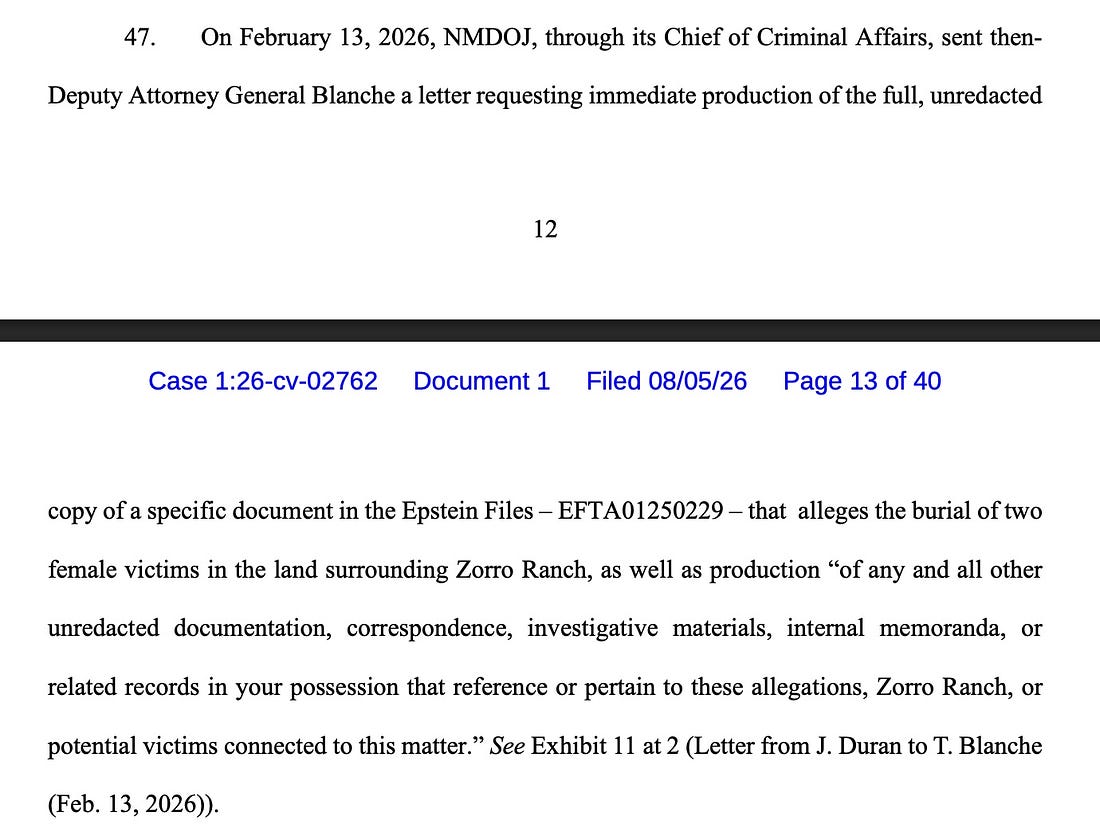
Victims—more than 10 girls and young women—have come forward publicly and said they were trafficked and abused at the Ranch. The complaint alleges that Epstein used Zorro Ranch regularly for more than 25 years and that publicly released Epstein files contain thousands of references to New Mexico and the ranch. It also alleges that federal records include evidence of grooming, trafficking, sexual abuse, and other misconduct tied to the property and to individuals associated with Epstein and Ghislaine Maxwell. But DOJ has claimed it can’t provide the state with unredacted documents because of court ordered protection of victims’ identities.
 |
You can read the Attorney General’s complaint here.
Allegations about Zorro include “an unsubstantiated anonymous claim that two ‘foreign girls’ died during sex and were secretly buried on the property.” In addition to the criminal case being conducted by the New Mexico Department of Justice, the state legislature has an ongoing “truth commission” process.
 |
Attorney General Torrez accused “Todd Blanche and other Justice Department leaders of ‘stonewalling’ New Mexico’s inquiry into Mr. Epstein’s possible crimes in the state,” according to the Times. NBC News reported that victims “overcame paralyzing fear to share their ordeals again and again. And yet authorities have never fully investigated what happened at the ranch.” Torrez says the federal government lacks “adequate legal justification” for withholding the records and that they “could help investigators identify witnesses, corroborate evidence, and determine the full scope of crimes that occurred in New Mexico.” He accuses DOJ of obstructing the state’s “ability to fully investigate crimes within its own jurisdiction.”
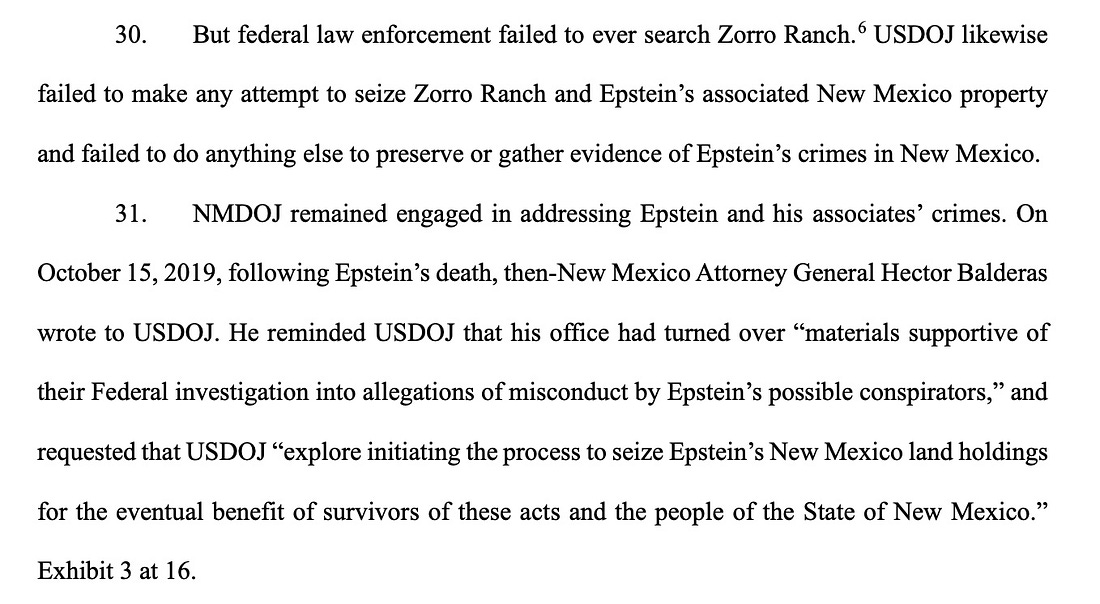
Epstein was first indicted by a Florida state grand jury for solicitation in July of 2006, in lieu of federal charges. After federal prosecutors in the Southern District of New York concluded they were not bound by an agreement in that case that purported to prevent any additional charges, a federal grand jury indicted Epstein in New York in July of 2019 during Attorney General Bill Barr’s tenure. Although “[a]cts that formed the basis of Maxwell’s grand jury indictment included those that occurred in New Mexico,” the Ranch itself was not searched until state authorities did so earlier this year.
It’s routine for any number of reasons, including better resources, the ability to investigate conduct that occurs across state and international lines, and quicker timelines to getting to trial, for state officials to defer to federal officials to investigate first when both governments have jurisdiction over the same or related criminal conduct. When a federal case concludes, prosecutors routinely share information with their state counterparts if there are remaining charges for the state to consider bringing. The process for turning over information is usually informal, although a court order can be obtained to “cover” prosecutors for sharing grand jury information if the original disclosure provisions for that material don’t specifically reference state law enforcement partners. But regardless, this sort of sharing is normal. Withholding information, which DOJ has done here, is exceptional.
 |
We’ve been discussing how this Justice Department has obliterated the presumption of regularity that DOJ officials acted appropriately and with integrity. The New Mexico complaint offers a new spin on that, explaining that “New Mexico gave up timely access to witnesses, victims, and other evidence. The state’s reliance was reasonable given decades of successful state-federal cooperation that has included the sharing of confidential investigative files, evidence, and reports in similar criminal investigations. New Mexico had no reason in 2019 to believe federal law enforcement officials would breach their express assurances and deviate from historical practice just to block their state counterparts from successfully investigating child sexual abuse under state law.” It’s hard for state prosecutors to investigate a case, particularly an older one, when DOJ is obscuring the identities of victims and witnesses they need to interview to develop their case.
DOJ maintains that a court order prevents it from disclosing victim information. But while an order like that might prevent public disclosure, it would neither prohibit the release of information about witnesses and perpetrators, nor would prosecutors be prohibited from sharing information about victims with other prosecutors. Transferring investigative information is nothing like public disclosure. Here, the complaint suggests DOJ repeatedly stonewalled their state counterparts in New Mexico, asking for filings they had never before requested and ultimately declining to turn over unredacted material during this second Trump administration.