Will Courses Survive With AI? - LifterLMS Weekly
Why Courses Aren't Dead in the Age of AI
 ‌ ‌ ‌ ‌ ‌ ‌ ‌ ‌ ‌ ‌ ‌ ‌ ‌ ‌ ‌ ‌ ‌ ‌ ‌ ‌ ‌ ‌ ‌ ‌ ‌ ‌ ‌ ‌ ‌ ‌ ‌ ‌ ‌ ‌ ‌ ‌ ‌ ‌ ‌ ‌ ‌ ‌ ‌ ‌ ‌ ‌ ‌ ‌ ‌ ‌ ‌ ‌ ‌ ‌ ‌ ‌ ‌ ‌ ‌ ‌ ‌ ‌ ‌ ‌ ‌ ‌ ‌ ‌ ‌ ‌ ‌ ‌ ‌ ‌ ‌ ‌ ‌ ‌ ‌ ‌ ‌ ‌ ‌ ‌ ‌ ‌ ‌ ‌ ‌ ‌ ‌ ‌ ‌ ‌ ‌ ‌ ‌ ‌ ‌ ‌ ‌ ‌ ‌ ‌ ‌ ‌ ‌ ‌ ‌ ‌ ‌ ‌ ‌ ‌ ‌ ‌ ‌ ‌ ‌ ‌ ‌ ‌ ‌ ‌ ‌ ‌
LifterLMS Logo

Hi There,


I sat down with Josh Hall for a great conversation on his podcast & to talk through a question I keep hearing from course creators:


If learners can ask an AI anything, do they still need a course?


My answer is yes. But the bar has gone up.

The fully passive info product, the one where you record a course once and sell it on autopilot, is on life support.


What's working instead is a richer offer stack:


Courses bundled with coaching, community, live events, templates, software access, or accountability. The course is still the backbone, but it's surrounded by human connection and ongoing support.


We also dig into why authenticity and story-driven teaching matter more than ever. People don't want to learn from a faceless AI. They want real humans who make mistakes, share lived experience, and bring judgment to situations that AI can't fully understand. That's why podcasts and YouTube remain strongholds for education: learners want to watch, listen to, and learn from actual people.


The conversation also covers category creation (the Blue Ocean Strategy for course creators), why community is the sticky advantage that AI can't replicate, and how to use AI tools to build better courses without losing the human element.


If you're a course creator feeling pressure from AI, I think you'll find this one grounding and useful.


Listen to the full episode →


And with that in mind, let's get into this week's LifterLMS news, ideas, updates, and resources.

⚡ QUICK TIP

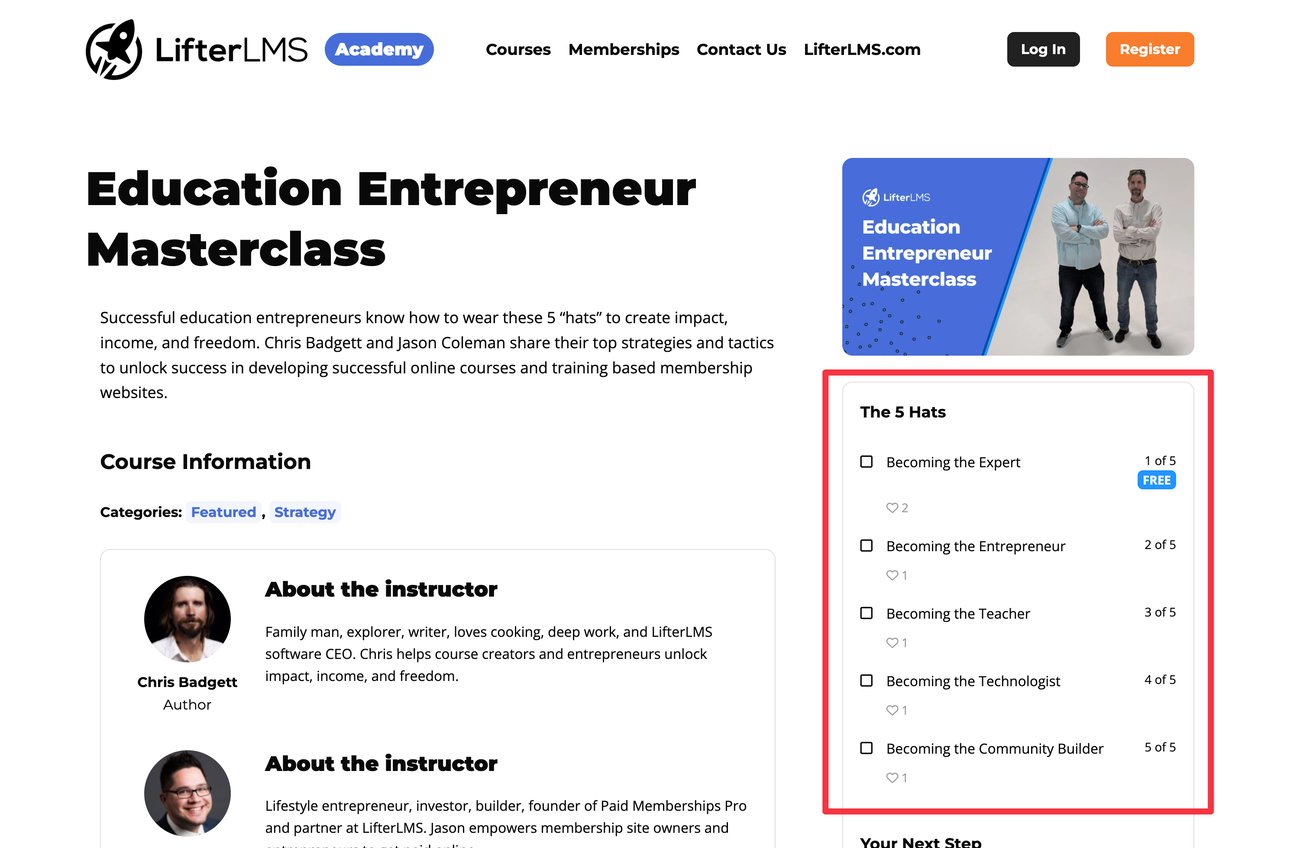
Use the Course Syllabus as a "Before You Enroll" Preview

Your course syllabus doesn't have to be useful only after someone enrolls. Used well, it can also help prospective students understand what they are about to join.


Before someone buys or signs up, they may be asking quiet questions such as:

  1. Is this course at the right level for me?

  2. Does it cover the thing I actually need?

  3. How much is involved?

  4. Does the structure feel manageable?

  5. Will I like this instructor's teaching style?

A clear course syllabus can answer some of those questions before the learner reaches the checkout page.


You don't need to give everything away. But showing the section structure, lesson flow, and a few carefully named lessons can make the course feel more concrete and easier to trust.


You can also make one introductory lesson free, so visitors can sample your teaching style before enrolling. That first lesson needn't contain your most valuable material. It just needs to help the right learner think, "Yes, this is for me."


For example, a free preview lesson might include:

  • What the course will help you achieve

  • Who the course is designed for

  • What students should know before starting

  • How the lessons are structured

  • What to do first after enrolling

The goal isn't to make your entire course a public resource, but to give learners enough clarity to make a confident decision.