Thanks for reading The Briefing, our nightly column where we break down the day’s news. If you like what you see, I encourage you to subscribe to our reporting here.
Greetings!
The business of running a fast-growing but young cloud computing firm in the age of AI is not necessarily a profitable one. Take CoreWeave, perhaps the best known of a crop of neoclouds trying to take on the well-established cloud firms. On Tuesday it reported second-quarter earnings showing that revenue rose 112% to $2.575 billion while cash burn rose by about the same percentage to $5.7 billion. Oops.
Investors didn’t seem to care: CoreWeave stock jumped 13% in after-hours trading. In CoreWeave’s case, Wall Street may be more focused on other profitability metrics, such as the widely used earnings before interest, taxes, depreciation and amortization, which the company adjusted to exclude stock compensation. On that measure, CoreWeave is looking healthy! Its “adjusted Ebitda” doubled to $1.5 billion. But while Ebitda can be a useful metric for some companies, it’s a nonsensical metric for analyzing CoreWeave.
The company is both borrowing huge amounts to finance its business and having to record ever-increasing amounts of depreciation expense from the deployment of more and more chips, servers and data centers. As a result, its depreciation and amortization expenses more than doubled to $1.39 billion, while interest costs on its debt rose 140% to $640 million. Excluding those expenses from an assessment of CoreWeave’s performance makes no sense. It’s like measuring profits by excluding all of a company’s expenses.
Sure, free cash flow—the measure that shows a cash burn of $5.7 billion—isn’t a perfect way to evaluate a company at CoreWeave’s state of expansion either. The cash burn mostly reflects the enormous capital expenditures CoreWeave is investing in building out its network of data centers. That spending should decline at some point, once CoreWeave has built all the data centers it needs, although it will never disappear entirely given the costs of maintenance and regular chip upgrades.
On a call on Tuesday, CoreWeave executives presented a very bullish outlook for the company. But until we get an idea of how much cash the business will throw off after taking into account interest costs, as well as how much capex will be necessary on an ongoing basis, it’s tough to say how profitable a business CoreWeave will be.
Kalshi’s Good Bet
Speaking of profits and losses, The Information on Tuesday scooped the news that prediction market Kalshi’s annualized revenue rate doubled to more than $4 billion in July from $2 billion two months earlier. In other words, monthly revenue doubled to $333 million.
But our story also reported that Kalshi’s operating expenses totaled $300 million in June, thanks to spending on marketing. And Kalshi is looking to raise money again in what would be its third fundraising in eight months. It raised $1 billion in May and a similar amount last December. While Kalshi’s valuation rockets every time, the fact that it has to keep raising money suggests it’s either not yet profitable or barely making money.
Kalshi’s soaring annualized revenue rate and valuation are both positive signs. But the company’s outlook would be even more positive if it could stop raising money!
In Other News
• Anton Levy, former co-president and chair of the global technology group at General Atlantic, has raised more than $1.1 billion for his inaugural fund, a sign that he has been able to compete with some of the biggest names in venture and growth equity during a challenging environment for first-time fund managers.
• AI startup Manus said on Tuesday that it will “soon return to operating as an independent company,” implying it is close to finalizing the reversal of its acquisition by Meta Platforms. The Chinese government in April ordered the unwinding of the deal.
• Brad Lightcap, who most recently led OpenAI’s special projects division and formerly was its chief operating officer, told staff on Tuesday that he is leaving the company, according to a copy of the memo viewed by The Information and a post from Lightcap on X.
• SpaceXAI announced it had released an AI agent product called Grok Bot on Tuesday. The company jointly developed the product with Cursor as part of their larger partnership for AI development, according to people familiar with the project.
Today on The Information’s TITV
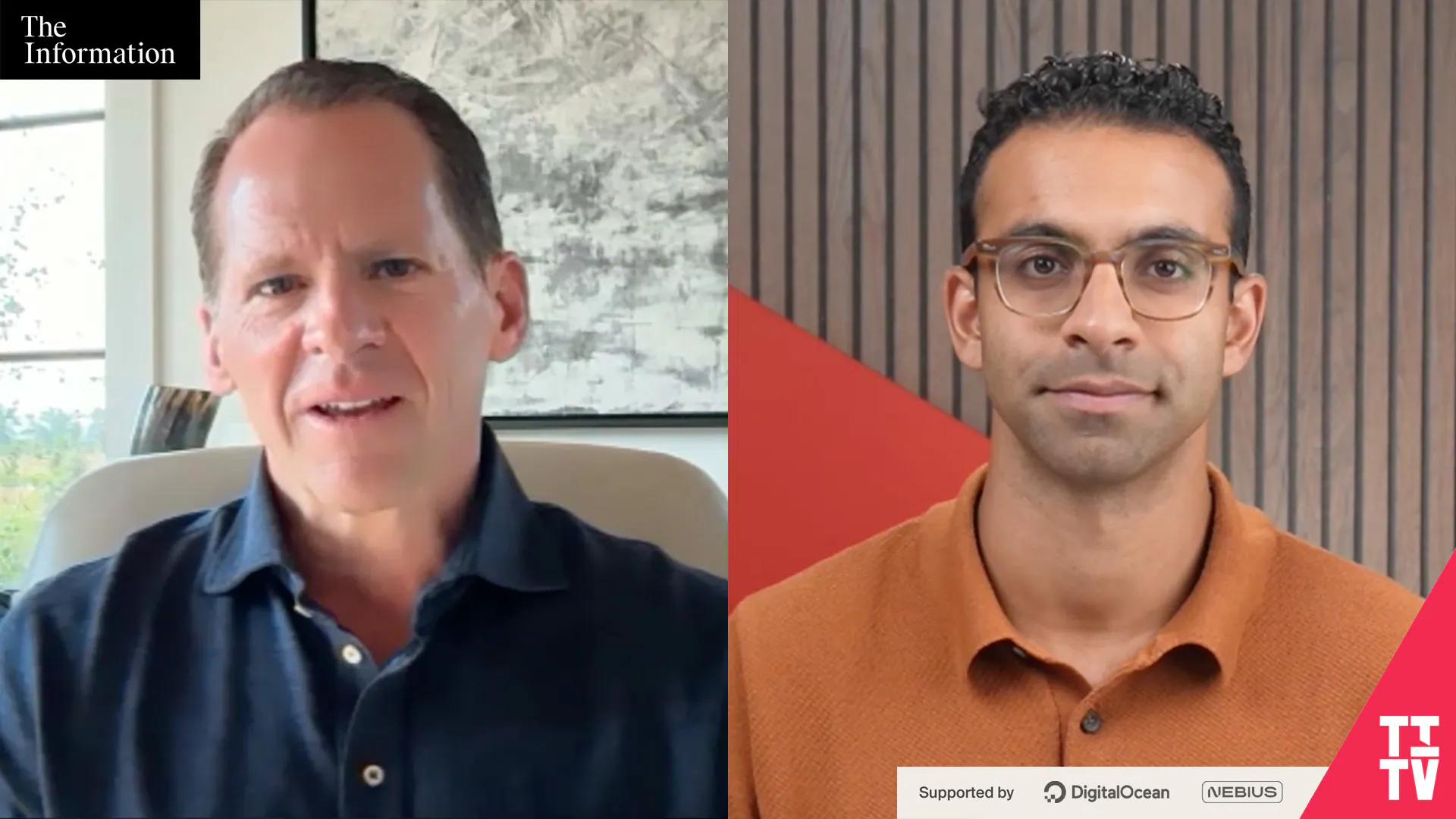
Check out today’s episode of TITV in which we speak with Menlo Ventures partner Matt Murphy about the open-source AI models landscape.
Recommended Newsletter
Start your day with Applied AI, the newsletter from The Information that uncovers how leading businesses are leveraging AI to automate tasks across the board. Subscribe now for free to get it delivered straight to your inbox twice a week.
Join us to explore the real-world shifts, new architectures, and enterprise strategies defining the next era of AI. Secure your spot today to hear directly from top minds at Google DeepMind, OpenAI, Atlassian, and more.
Tickets on sale now: The Information returns to Napa Valley October 27–28 to convene senior women across tech, media, and finance. Join us for two days of intimate, candid conversations with the leaders navigating today’s global shifts.