| | In today’s edition: Key takeaways from a big Democratic primary night, and Trump downplays reports o͏ ͏ ͏ ͏ ͏ ͏ |
| |  | Washington, DC |  |
| |
|
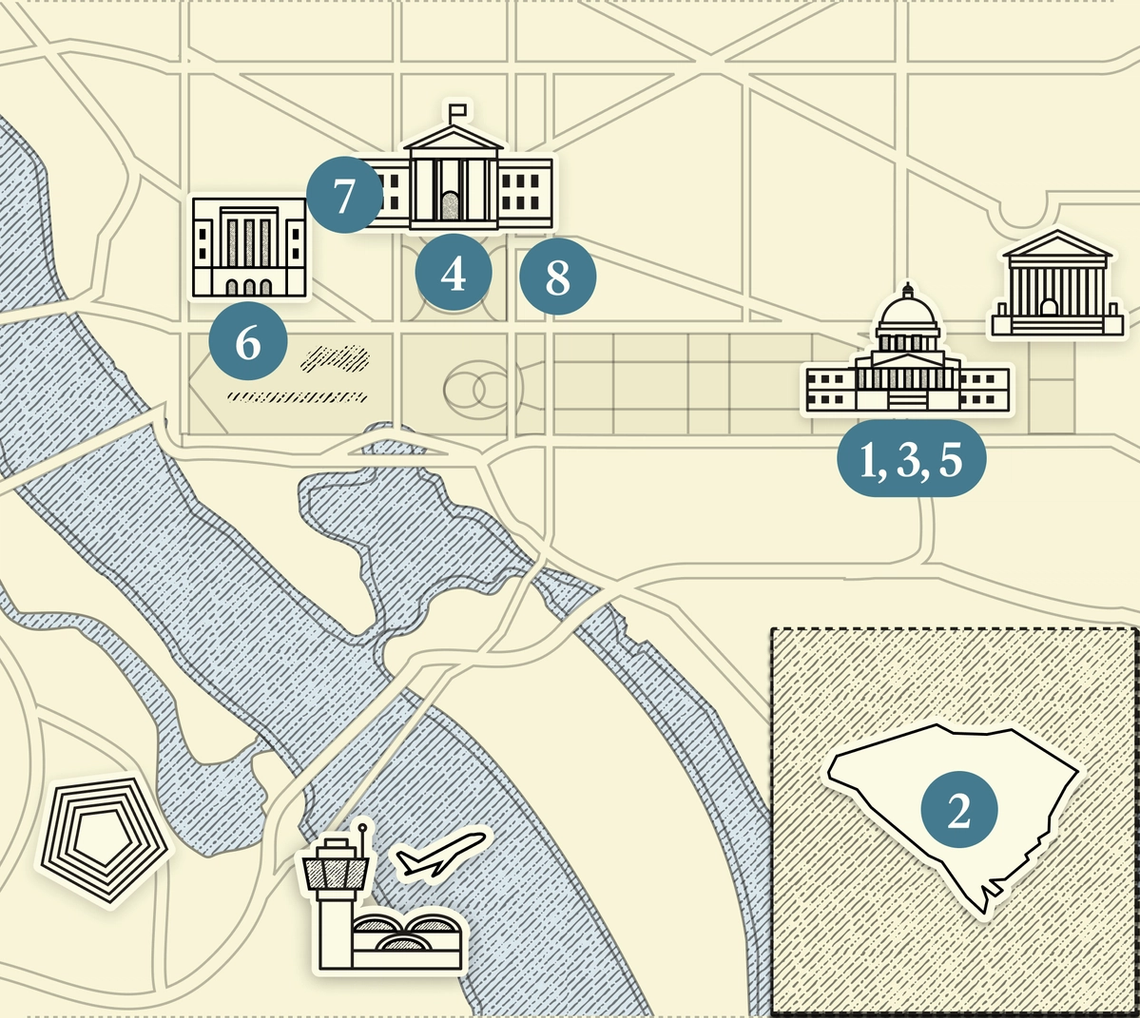 - Primary aftermath
- Graham vs. Norman
- Maine ad deluge
- Trump’s split with Bibi
- Progressives’ AI push
- Inflation moment of truth
- AGOA to be renewed?
- US-China competition
PDB: Treasury repeals Biden-era reporting requirement for US firms  Trump greets law enforcement officials, service members … Houthi militants attack cargo ship in the Red Sea … Europe prepares for solar eclipse |
|
Four takeaways from Tuesday’s primaries |
 Tim Evans/Reuters Tim Evans/ReutersNot every one of Tuesday’s primaries can be called yet, but the big trends across South Carolina, Wisconsin, Minnesota, and beyond are clear, Semafor’s David Weigel writes. Democratic turnout in these races is smashing through records — and not always to the benefit of the left, as David Crowley’s surprise win over democratic socialist Francesca Hong in the Wisconsin gubernatorial primary shows. Elderly Democrats, like the now-ousted Rep. John Larson in Connecticut, are struggling to convince voters that they’ll successfully fight President Donald Trump if they get two more years in office. Trump himself can help almost any Republican get through a primary, unless they’ve stumbled as much as failed GOP gubernatorial nominee Mike Lindell has. And in blue states where electability is a non-issue, progressives like Minnesota Lt. Gov. Peggy Flanagan, who bested Rep. Angie Craig in the Democratic Senate primary after Craig voted for a Trump immigration bill, can still glide to victory. |
|
S. Carolina becomes MAGA food fight |
 Eric Lee/Reuters; Jonathan Ernst/Reuters Eric Lee/Reuters; Jonathan Ernst/ReutersSouth Carolina will host one of the last intra-MAGA clashes of the 2026 cycle, as Sen. Darline Graham advances to take on Rep. Ralph Norman for the GOP nomination to succeed the late Sen. Lindsey Graham. Darline Graham has Trump’s endorsement and used it to climb atop the crowded field in yesterday’s first round, but she will have to consolidate support from voters who backed other candidates after earning roughly a third of the vote. Norman’s conservative reputation earned him the backing of Trump-aligned Sens. Mike Lee of Utah and Rick Scott of Florida, but his endorsement of Nikki Haley in the 2024 primary could prove an anchor when it comes to taming Trump’s endorsement of Graham. The path to the runoff will be a two-week sprint during the dog days of August — but nonetheless serves as a crucial barometer of Trump’s influence. — Burgess Everett |
|
Conservative groups’ ad deluge in Maine |
 Screenshot/YouTube/Senate Leadership Fund Screenshot/YouTube/Senate Leadership FundConservatives are going big in Maine, according to details shared first with Semafor. The Senate Leadership Fund is launching its first ad today — part of a $42 million fall campaign — hitting Democratic Senate nominee Troy Jackson as “just another dirty politician” because of his son’s lobbying while Jackson served in the statehouse. This is just the start of the deluge: SLF will be on the air assisting GOP Sen. Susan Collins’ reelection campaign through Election Day. And the group’s nonprofit sister organization, One Nation, is increasing its spending in Maine to $30 million from $25 million. That group’s latest ad highlights Collins’ work on veterans’ housing and mental health funding. Voters will see plenty of content focused on this race: The Democratic Senate Majority PAC has reserved $33 million in TV ads and allied nonprofits have been running ads for months. — Burgess Everett |
|
Trump downplays break with Netanyahu |
 Elizabeth Frantz/Reuters Elizabeth Frantz/ReutersTrump is staying uncharacteristically quiet after Israeli Prime Minister Benjamin Netanyahu publicly broke with him over the Gaza peace deal. The US-backed plan, which Netanyahu labeled unacceptable while insisting Israel will not withdraw troops from Gaza until Hamas meets various requirements, has been a key focus of the president’s foreign policy efforts. And securing a political win on Gaza has become particularly crucial as the midterms near — and the Iran war drags down Trump’s approval ratings. But the president maintains that his relationship with Netanyahu “is very good.” While there’s certainly been strain in the friendship, those familiar with the dynamic are downplaying the Israeli leader’s public remarks as well — particularly given his own looming, difficult election season. — Shelby Talcott |
|
Progressives prepare AI regulation push |
 Elizabeth Frantz/Reuters Elizabeth Frantz/ReutersCongressional progressives are starting to pitch a multi-pronged artificial intelligence and Big Tech regulation plan, and they hope to find common ground with civil libertarian-minded lawmakers on the right. “The foundational idea here is that you shouldn’t lose your freedoms because of the development of AI,” Progressive Caucus Chair Rep. Greg Casar, D-Texas, told Semafor. He’s focusing on increasing data privacy protections and restricting the use of AI for surveillance, including by denying the renewal of certain warrantless surveillance powers without reforms (a debate that has previously fueled collaboration between progressives and hardline conservatives). Preventing the government from purchasing data on consumers could also be an area for bipartisan collaboration, he argued: “We should push to go further than that and block the data broker loophole that allows for the government to work through corporations to get data from you.” — Nicholas Wu |
|
Fed braces for a pivotal inflation report |
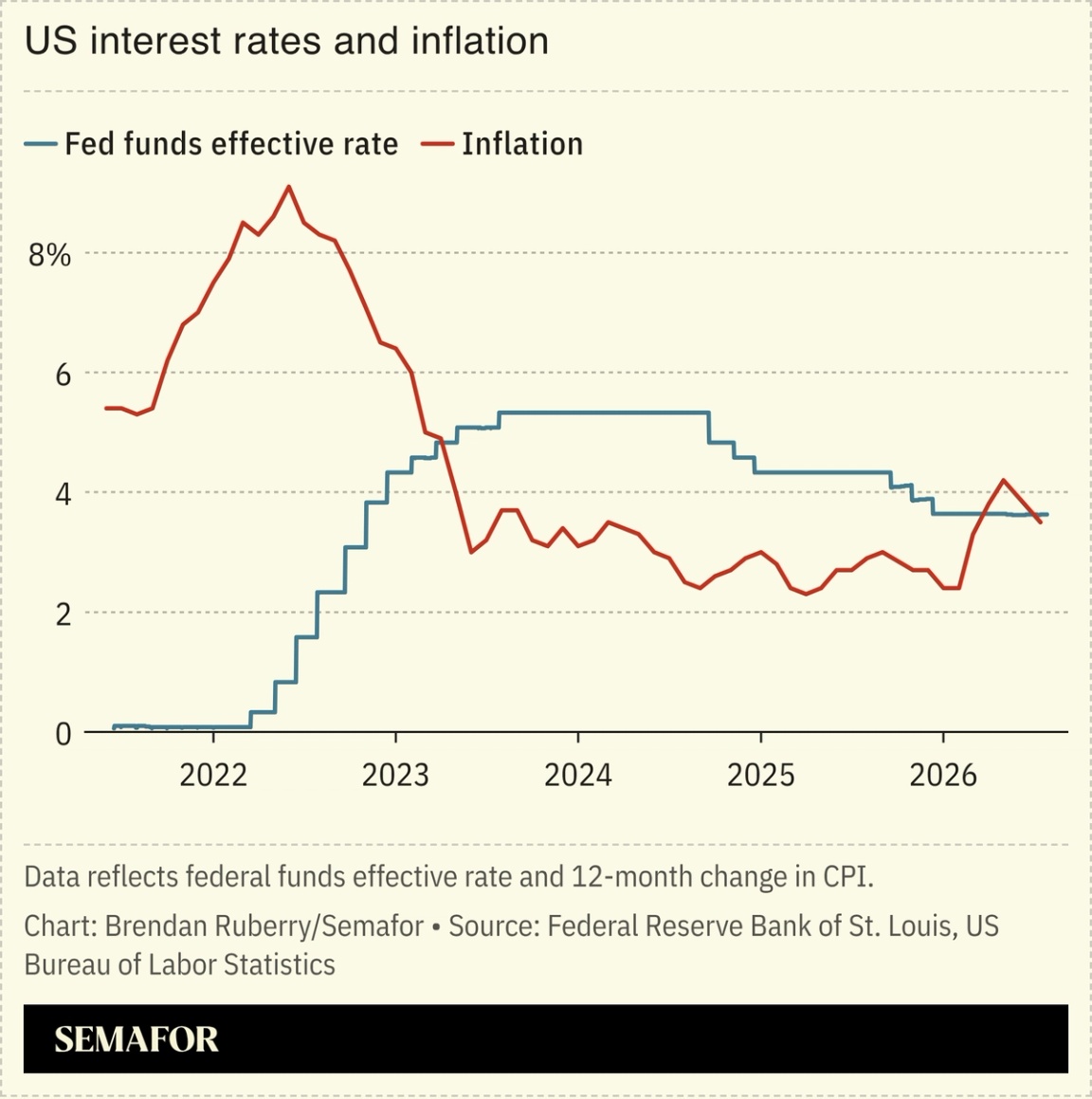 The Federal Reserve will get two key insights into inflation before it must decide next month whether to raise interest rates — and the first one lands this morning. Economists expect the federal government to say its consumer price index, which feeds into the Fed’s preferred measure of inflation, rose 0.2% in July for costs that weren’t food or energy. Anything hotter than that would amp up the pressure for Fed Chairman Kevin Warsh to act on his hawkish rhetoric and demonstrate his independence from Trump by supporting a rate hike, particularly after recent comments left investors uncertain about his intentions. Though tariffs’ effects on prices appear to be fading, the Iran war and AI boom continue to keep oil and tech prices high. Still, traders on prediction market platform Kalshi believe CPI will come in cooler than experts predict. — Eleanor Mueller |
|
House mulls extending Africa trade program |
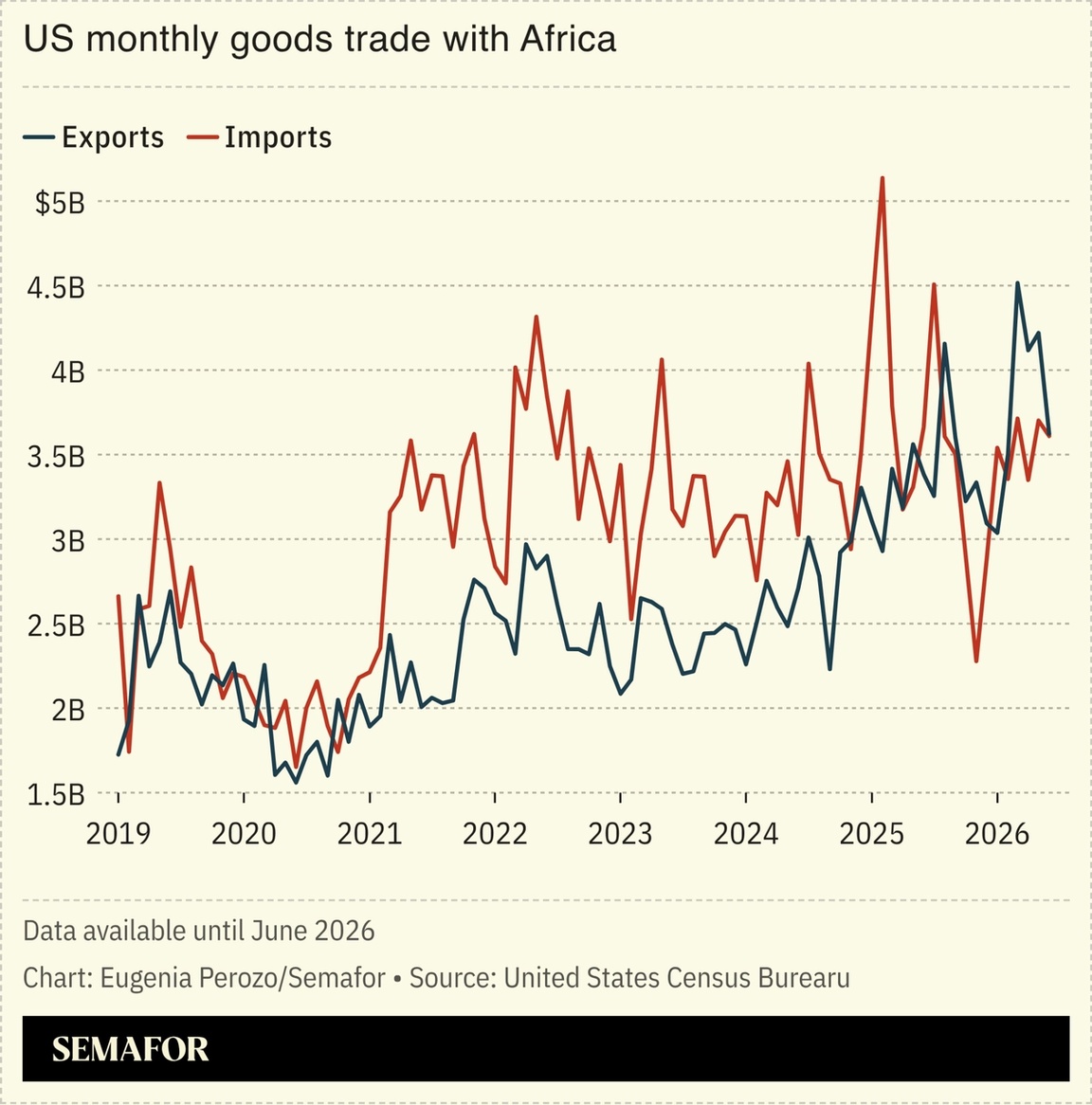 The US-Africa trade program is on track for a two-year renewal after the Senate passed a funding bill over the weekend extending the African Growth and Opportunity Act. Now it’s up to the House to decide its fate. The Senate-passed bill would extend the program, which is set to lapse at the end of the year without action, until 2028 with no modifications. But there’s hardly a guarantee that the funding bill will pass the House, which could ultimately strip the AGOA bill out or adjust it, as one former Hill staffer predicted. “I think they want a process where the final result is something that matches with the [Trump] administration’s trade agenda and also gives industry the regulatory runway … to make predictable investments,” the staffer said, doubting that the House would accept the “two-year clean extension … at face value as a solution.” — Adrian Elimian |
|
US, China driven by their own insecurities |
| |  | Andy Browne |
| |
 Evan Vucci/Reuters Evan Vucci/ReutersIn the run-up to next month’s US-China presidential summit, another tit-for-tat trade spat is brewing. This time, the US has added advanced robotics — humanoid robots, quadruped robots, and robot lawn mowers — to an already long list of banned tech products dominated by China. Simmering in the background is a rancorous debate over whether to restrict Chinese AI models. Beijing has vowed retaliation, condemning the bans as “discriminatory and suppressive.” None of this is serious enough to derail next month’s meeting in Washington between Trump and Chinese leader Xi Jinping. The two worked out a truce after the last round of hostilities and it’s possible that, as before, the latest measures get wound back. However, the deeper story here is growing domestic insecurity — inside both China and the US — that’s shaping diplomatic efforts and pulling both countries deeper into their own corners. |
|
 Semafor has announced the Semafor Innovation Atlas, a new global editorial initiative spotlighting the most effective real-world applications of AI, robotics, and emerging technology. The editorial project will identify proven initiatives already delivering measurable results across healthcare, workforce development, education, responsible AI, and climate and energy. Selected projects will debut at Semafor’s Silicon Valley & The World this November, where leaders will examine what is working and what others can learn from initiatives with the potential to scale. Organizations, governments, universities, schools, nonprofits, and companies are invited to submit active projects for consideration by Friday, August 28, 2026. If your team is using technology to solve real problems and create scalable impact, submit your project for consideration here. |
|
Blindspot: Crime and podcasts |
 Stories that are being largely ignored by either left-leaning or right-leaning outlets, curated with help from our partners at Ground News. What the Left isn’t reading: The Trump administration said that its DC crime task force made more than 16,000 arrests in its first year. What the Right isn’t reading: Former President Barack Obama is launching a book podcast in September. |
|
|


