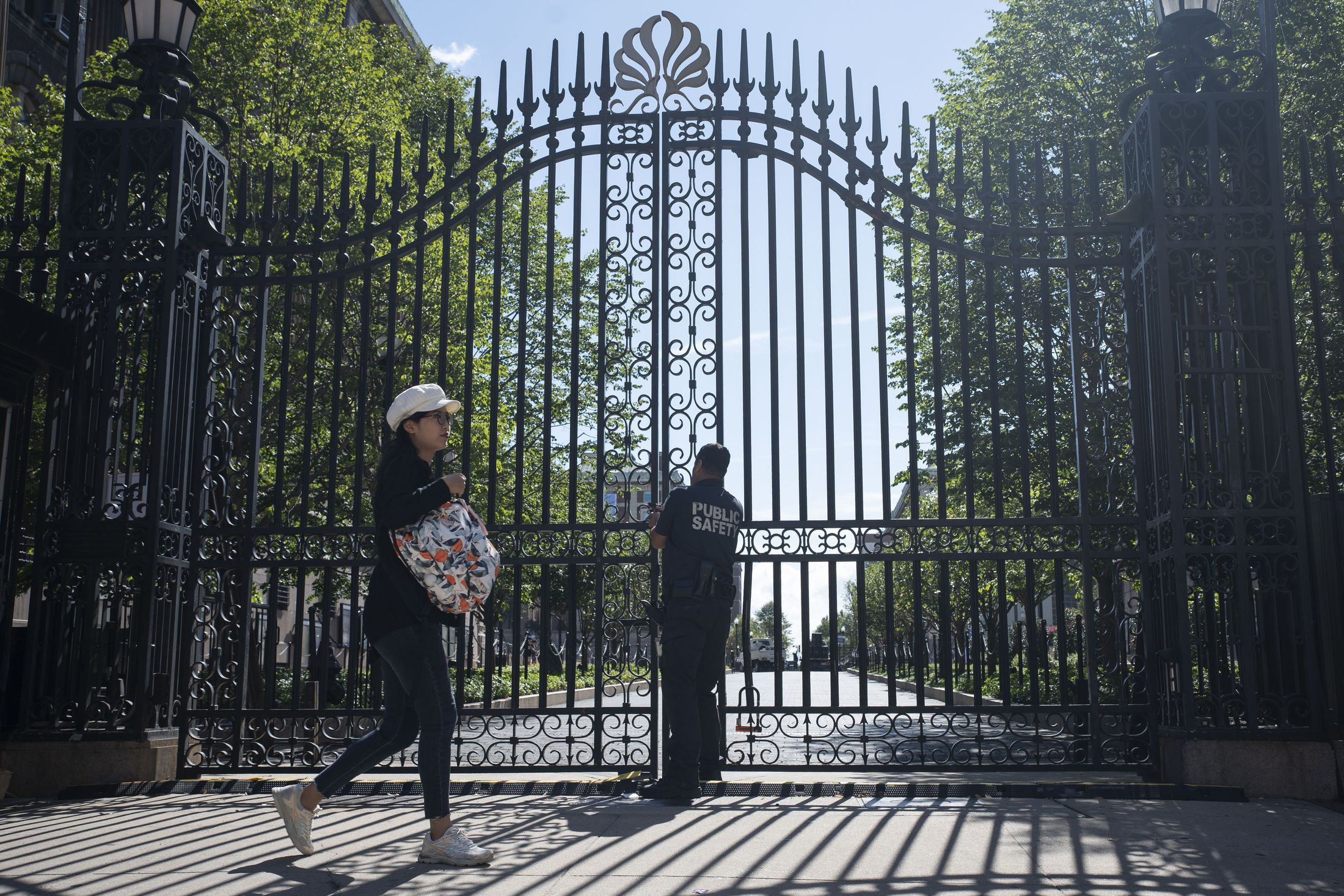
Getting onto the Columbia University campus these days is easy, as long as you’ve already gotten into Columbia (or landed a job there). With the right card, you’re free to swipe in at one of the few functioning gates and stroll down College Walk, sprawl and kibitz on the Low Library steps, eat lunch on a granite bench, play Frisbee on a plush lawn, and engage in erudite (or wannabe erudite) chatter. Everyone else: Keep away.
This arrangement might seem obvious and inoffensive in our day of restricted access, secure perimeters, hardened schools, and retinal scans — we are used to being told where we can’t go. But college campuses have always been different. They’ve been beacons of free speech and free access, treating their private landscaped grounds as space that is morally, if not legally, public. Columbia is not just an enclave but a neighborhood within a neighborhood, a 36-acre concentration of urban activity — activity that has always included regular doses of protest, speechifying, electioneering, and petition waving. Complaining about the government, the environment, the powerful, or the university’s policies is a fundamental part of higher education.