| | In this edition, bruised software names are having their Regina George moment, and Carlyle returns t͏ ͏ ͏ ͏ ͏ ͏ |
| |  | Business |  |
| |
|
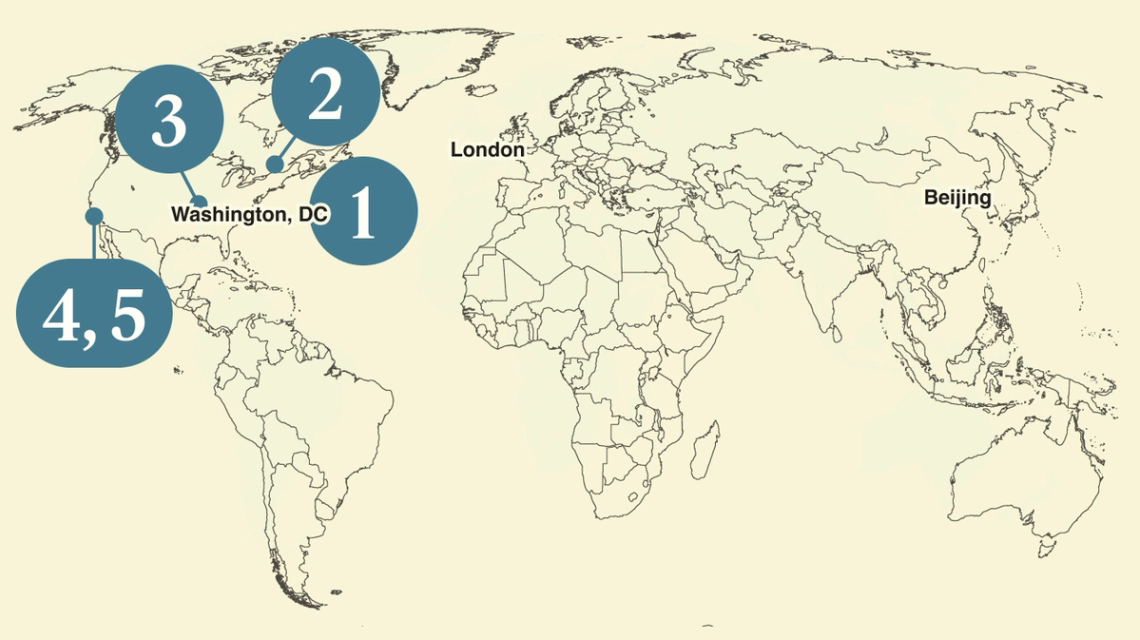 - Carlyle returns to its roots
- Walmart’s wobbles
- Canada trade truce nears
- OpenAI plays catch-up
- A well timed piece of M&A
|
|
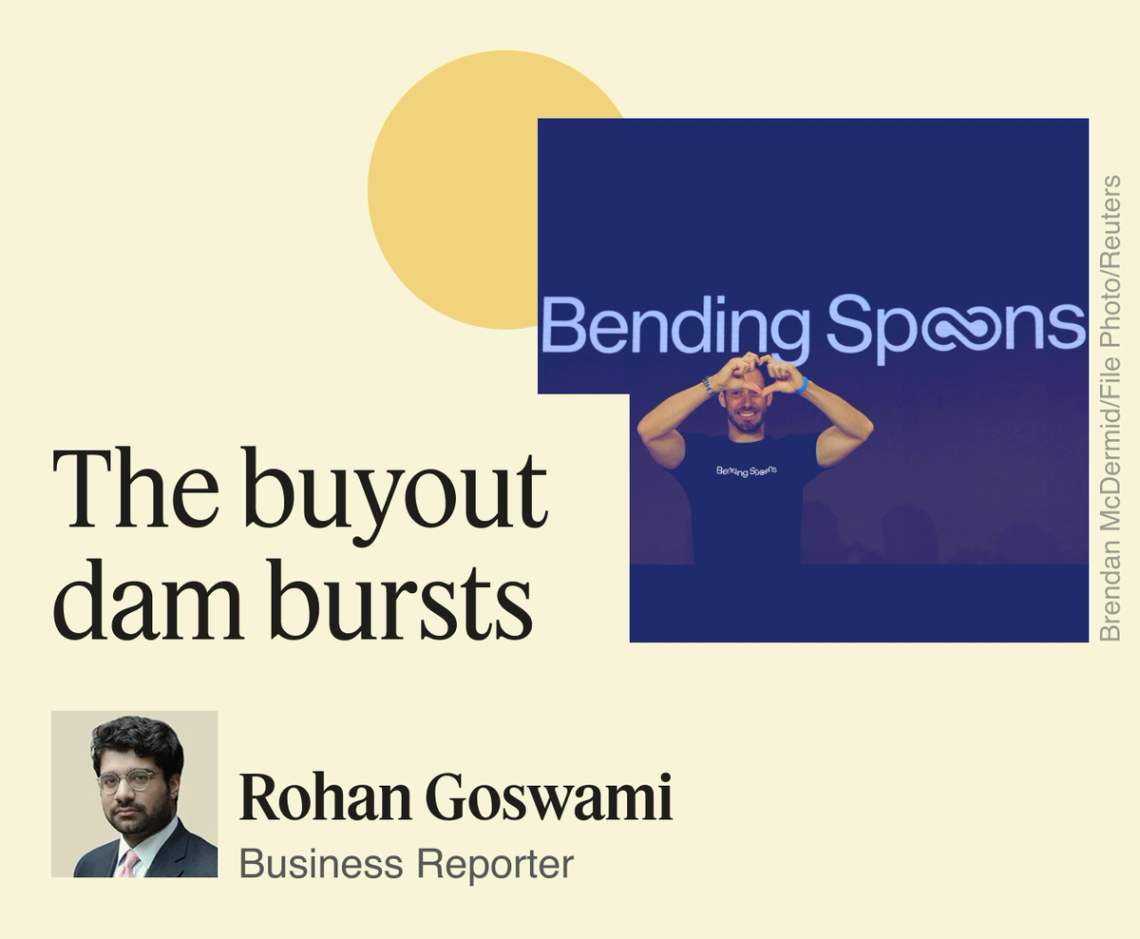 Battered-up and bruised software names are having their Regina George moment. Once beloved, then out of style, and now back again. What happens next is anyone’s guess — but private equity is salivating. CEOs, bankers, and investors have all known that the SaaSpocalypse wouldn’t last — there’s too much value and too much sticky cash flow in these businesses for them to be beaten down forever. But it’s taken a few months for board members to accept their companies’ new valuations. The first shot in the arm was when Italian software rollup machine Bending Spoons picked up Airtable, a company once worth $12 billion that sold for just north of $1 billion. It’s a similar story at PayPal, where Stripe and Advent are trying to buy the company in a deal that would value the payment processor at roughly $53 billion — a fraction of what it was worth just a year or two ago. But the two sides aren’t far apart on valuation, I’m told, and talks are proceeding at pace. (PayPal and Advent both declined to comment.) A bigger boost came with the news of Workday’s talks with private-equity firm Silver Lake for a gargantuan leveraged buyout that sent shares of every software name up sharply last week. Those talks are early but ongoing, an indication that buyout shops can finally get back to doing what they do best: fixing unlovable businesses. The SaaSpocalypse presents a perfect moment for PE and buyout shops like Thoma Bravo and Hellman & Friedman who excel at cutting costs and scaling businesses away from quarterly, public market scrutiny. And now it seems Wall Street has found the bottom of the software market. The bid-ask spread is finally narrowing and investors and companies are sitting at conference tables hashing out valuations. PE shops, worried about overpaying for dying assets or just looking plain old dumb in front of their investment committees, are now feeling like they’ve got air cover to start pitching software companies and jumping into sale processes. (Whether banks or lenders are willing to finance these deals is a different question: Sovereign wealth funds are looking increasingly tapped out, and private credit funds have their own issues to sort through.) Pitch away — but remember, the bus that hit Regina George could be just around the corner. Programming note: Liz and I are off next week and will be back in your inboxes Sept. 1. I won’t be calling you as much as I normally do, but if you have something massive, tips and scoops are always welcome. Enjoy the heat. |
|
 ©Gibson Kochanek ©Gibson KochanekCarlyle, once DC’s most important finance firm, is betting again on its roots after spending years chasing its Wall Street rivals in New York. Under CEO Harvey Schwartz, the firm is courting defense deals — a data-center project on federal lands in Fort Bliss, Texas, and a new defense fund — and nurturing its relationships with Washington policymakers and global officials. It’s a shift that predates the 2024 reelection of President Donald Trump and has come without cringey MAGA theatrics — but offers a glimpse at the US capital’s growing centrality to the private sector. The firm is returning to Washington as everyone else shows up, too: JPMorgan earlier this year launched a $1.5 trillion initiative to invest in critical infrastructure and defense. Bank of America followed with a $250 billion plan. But Carlyle thinks its edge is its history. “Washington is at the center of all of it, and we’re here by an accident of entrepreneurial birth,” Carlyle CEO Harvey Schwartz told Semafor. “Why wouldn’t we lean in?” — Liz Hoffman |
|
Walmart’s sales fall off a cliff |
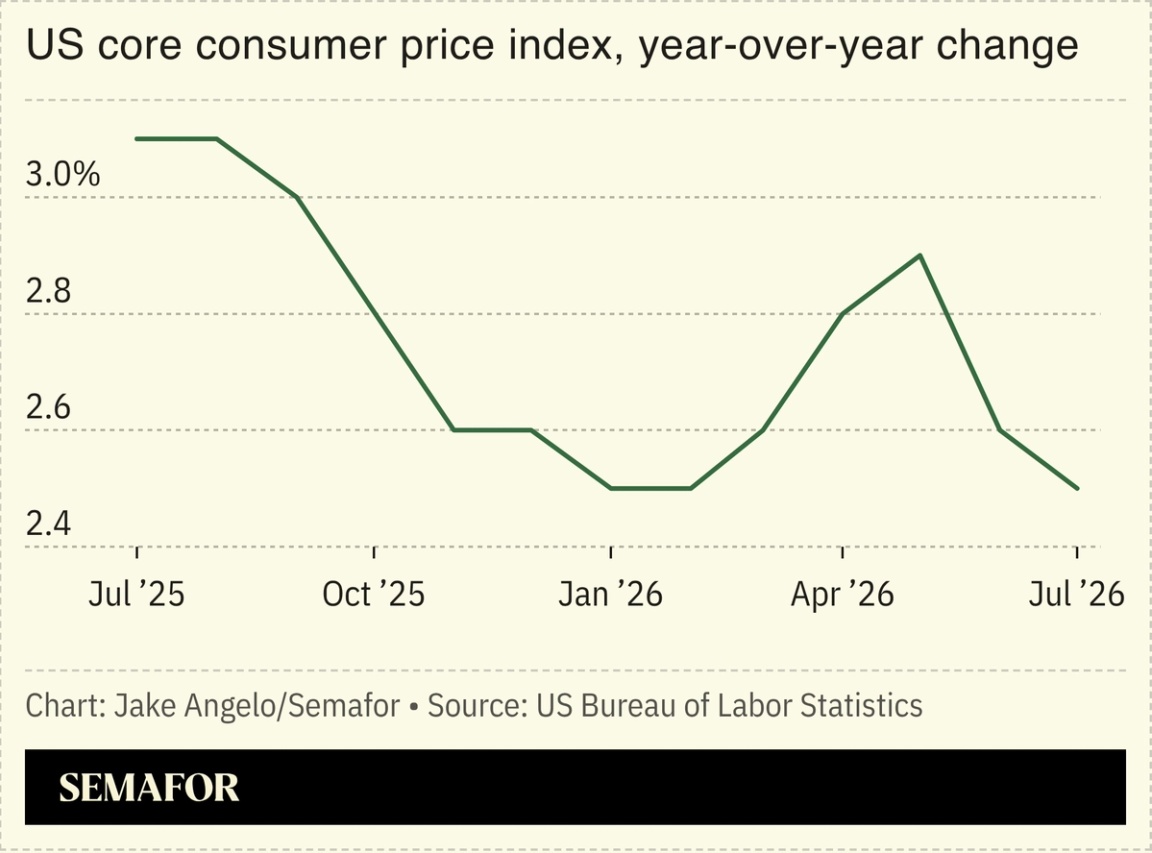 Walmart posted the slowest US sales growth in six years on Thursday, the latest sign that consumers are feeling strapped. Same-store sales missed analyst estimates, with CFO John David Rainey telling CNBC “consumers have been more pressured” than earlier this year. Walmart’s sheer scale makes it a bellwether for Americans’ economic health, and its results mirror what other big retailers have indicated in recent weeks. Higher fuel costs caused by the Iran war have driven up prices across the board, and retail sales were down 0.6% in July, the steepest monthly drop in more than a year. Lowe’s revised its full-year comparable sales guidance down to flat. TJX bucked the trend, but its biggest division, Marmaxx, managed just 1% comparable sales growth. As America’s biggest retailer, Walmart is keenly sensitive to the Trump administration’s affordability push, and plans to put a band-aid on the price pain: it’s steering some of its $2.9 billion worth of tariff refunds into cutting prices in its grocery and general merchandise categories. — Jake Angelo |
|
US and Canada near trade deal on metals |
 Carlos Osoria/Reuters Carlos Osoria/ReutersUS automakers and their suppliers, dependent on materials like aluminum and steel, may soon breathe a sigh of relief, as the US works out a trade deal that could see Washington lower tariffs on the Canadian metals before a Friday deadline. It isn’t clear how a new Canadian agreement would work given an already existing US-Mexico-Canada trade agreement, but Trump yesterday confirmed that the US is “looking at” lowering the tariffs, which would reportedly be halved to 25%. Canadian business owners are anxious, too, as the threat of 50% tariffs hangs over their heads. “We would no longer be competitive in the market,” the CEO of one furniture maker told Bloomberg. A White House official said that “any reporting about details of this possible deal should be regarded as speculation until and unless officially announced by the administration.” The two sides have until midnight Friday to finalize the deal — unless, of course, Trump delays the levies again. — Morgan Chalfant |
|
OpenAI and Anthropic race to IPO |
 Anna Rose Layden/Reuters Anna Rose Layden/ReutersOpenAI can’t seem to get out of the “me, too!” game. Hours after the Wall Street Journal reported that Anthropic was targeting a fall IPO, OpenAI CFO Sarah Friar gathered the troops in an all-hands meeting to tell them that the Sam Altman-led lab was also targeting an IPO in the coming months. Neither company really needs to tap the public markets for financing: They’ve been able to effectively borrow huge sums with backstopping from big, well-rated publicly traded companies, and their venture investors are willing to put up bigger and bigger checks with each fundraise. Their employees, too, have realized massive paydays through tender rounds or secondary sales. The race to IPO appears less about financing and more about competition to be the top frontier AI provider: Anthropic’s Dario Amodei and OpenAI’s Altman are always one-upping each other, about their latest models or about how their powerful AI agents have gone rogue in testing. The two companies also want to stay front of mind for investors to help stave off markets souring on the AI buildout — concerns about AI financing are currently stirring up bond markets. — Rohan Goswami |
|
How a tiny biotech deal took the spotlight |
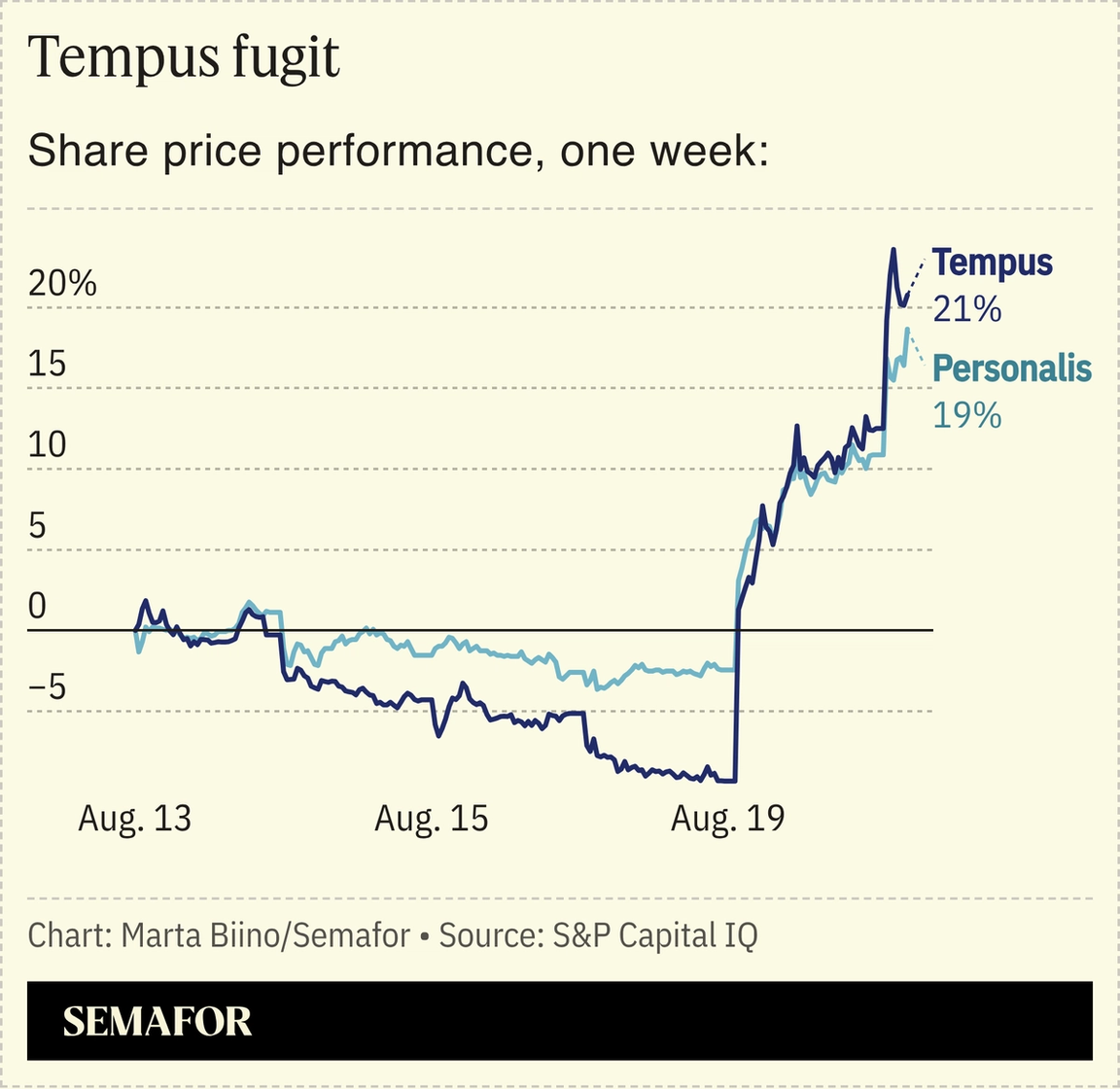 A tiny biotech deal announced in July is suddenly attracting a lot of attention. Tempus AI agreed to acquire Personalis, a Merck-backed company which provides advanced genomic sequencing and analytics for cancer treatments, for $1.5 billion. It would have passed by without much notice, but Personalis’ technology is crucial to building the revolutionary personalized cancer therapies announced earlier this week by Merck and Moderna. That makes Personalis’ tech a lot more valuable, and changes the calculus on the deal. Shares of both Tempus and Personalis were up sharply yesterday (Personalis is up 22% since Tuesday), as investors bet the deal will be renegotiated. But observers and investors tell me that there’s little that Personalis — or Merck, which owns 13% of the company — can do to change the terms. Merck declined to comment. Merck’s M&A team would be smart to try to pick up Personalis: News of the treatments added tens of billions of dollars to both Merck and Moderna’s market capitalizations, giving them a more potent currency with which to act. — Rohan Goswami |
|
➚ BUY: Logging on. The Trump administration’s move to end the US Forest Service’s “roadless rule” would open the door to logging and road construction on more than 44 million acres of untouched national forests. ➘ SELL: Touching grass. The USTA is facing heat over soaring resale prices for US Open grounds passes, with get-in prices on official partner Ticketmaster reaching above $300 for tickets initially listed at $65. Former tennis pro and Pershing Square CEO Bill Ackman called the price tag “absurd.” |
|
 Companies & Deals- No holds barred: American lawyers are getting increasingly comfortable with AI, including models that come from China. Now, even Microsoft is hunting for a “legal engineer” (for a salary north of $270,000) to get more out of its legal team’s AI use.
- Circular economy: In other Microsoft news, one of the software giant’s biggest AI clients is now Meta, Bloomberg reports, in a sign that demand for AI is still mostly coming from tech companies buying compute from each other.
Watchdogs- Pattern of behavior? The Journal on Wednesday reported L3Harris CEO Chris Kubasik was the subject of complaints and concerns from multiple women at the company. That news followed a Semafor report that Kubasik was ousted over an inappropriate relationship with an employee.
- Attention, deficit: The US national debt reached $40 trillion for the first time Wednesday, a grim marker for an economy that keeps spending far more than it takes in.
|
|
|