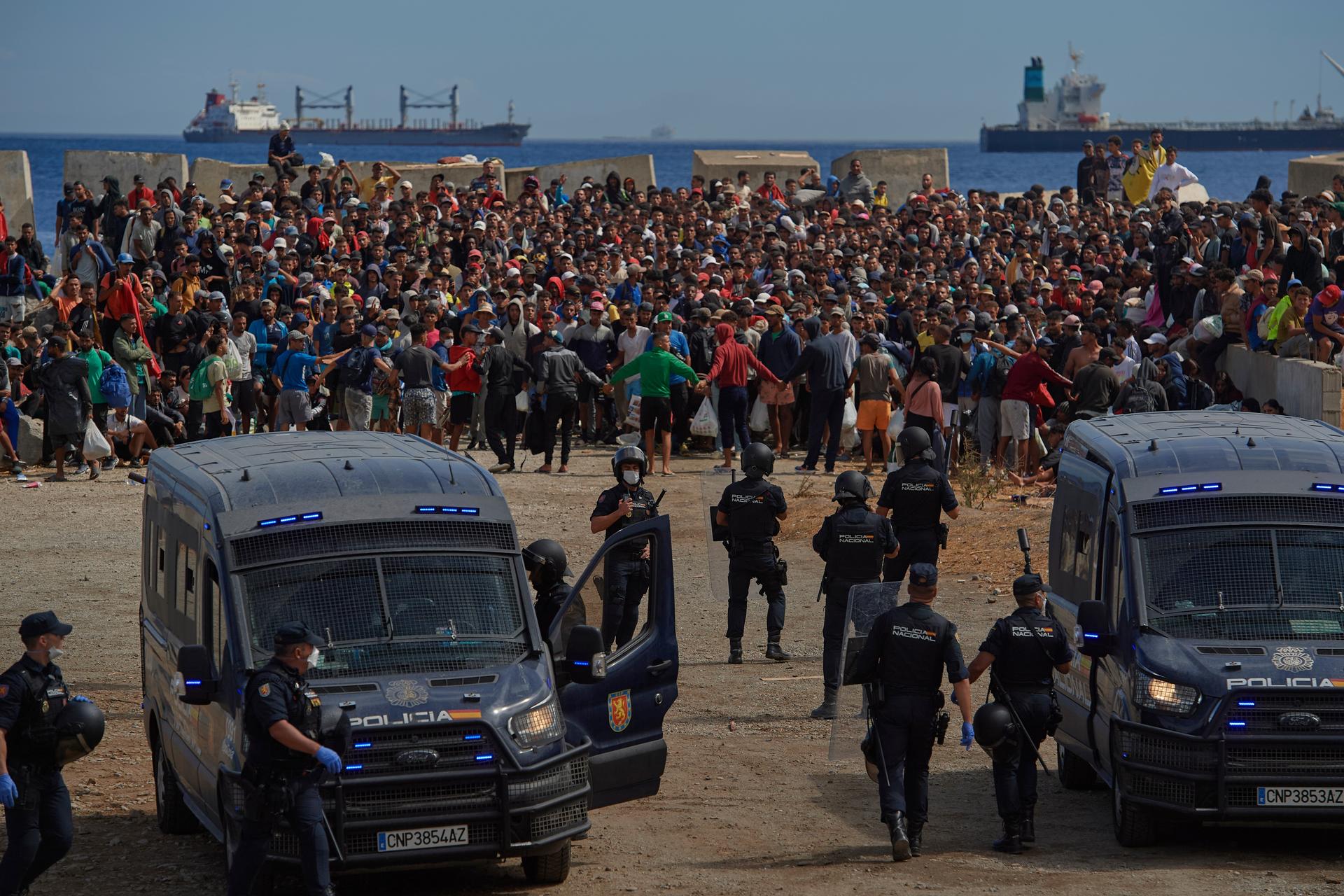
Migrants who crossed from Morocco into Spain return to a beach after being expelled from the area the previous day, as Spanish police escort them in the Spanish exclave of Ceuta on Friday. (AP Photo/Antonio Sempere) |
A physics graduate, a soccer player, a teen who couldn’t swim: They died in the Ceuta migrant surge
|
Ayoub Akbili needed money for his mother’s surgery. Hamza Haibouri wanted a shot at a professional soccer career. Abdelouahed Iken was chasing the glossy life a friend posted about on Facebook from Italy. So when they heard rumors that Morocco’s border with Spain was open, they decided to join the rush to try to reach Europe. All three died attempting to cross, becoming victims of the deadliest migration crisis between Morocco and Spain. Fueled by misinformation, poverty and lack of opportunities, more than 70,000 would-be migrants from Morocco and beyond swam or climbed over a breakwater last month to try to reach Ceuta, a Spanish territory on the North African coast. At least 90 people died attempting to cross the border, according to official figures. Read more.
|
As the Clancy case highlights postpartum psychosis, a mom stricken by it shares her story of hope |
About two weeks after giving birth, Bridget María Chesterton was curled up on the bathroom floor, saying things that made little sense. The family eventually learned that she had postpartum psychosis. The disorder has been thrust into the spotlight by the case of Lindsay Clancy, a Massachusetts woman on trial for strangling her three children. A key question is whether postpartum psychosis drove her to do it. Researchers estimate the condition afflicts 1 to 2 per 1,000 women after delivery. There are many misconceptions about the disease, and Chesterton wants to dispel those and give other families hope. Read more.
|