| | In this edition: MTN explores new banking licenses, DR Congo president warns on mismanagement, and r͏ ͏ ͏ ͏ ͏ ͏ |
| |  | Africa |  |
| |
|
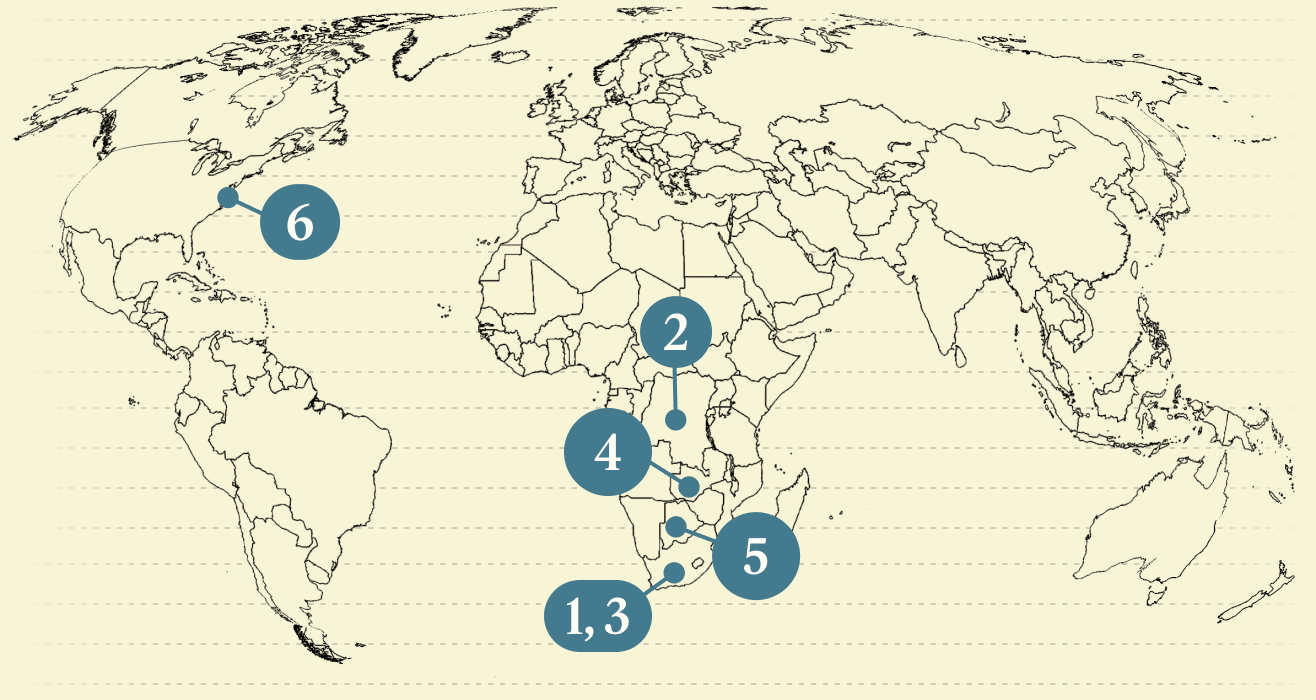 - MTN’s new ambitions
- DRC’s funding troubles
- Northam courts bidders
- Zambia’s poll concerns
- Botswana agrees genome deal
- Deportations ruling eyed
 Tributes pour in for Nigerian film legend. |
|
 The most significant impact of record-breaking IPOs by Anthropic and OpenAI may be felt thousands of miles from Silicon Valley, in towns and cities across Africa — cementing a link that has been years in the making. Anthropic’s IPO looks set to value the AI company at around $2 trillion, and OpenAI is targeting a similarly mammoth figure, with Silicon Valley philanthropists among their early investors and likely beneficiaries. That could generate a pool of philanthropic wealth potentially worth up to $100 billion a year, Nan Ransohoff, an executive at the payments processor Stripe, wrote in a widely read essay. Effective altruism, the school of thought guiding many tech philanthropists, focuses on data-driven interventions that produce the greatest benefit per dollar — making Africa an obvious target. Silicon Valley billionaires increasingly play an outsized role in African economic development. Just five years ago, Bill Gates was the only high-profile tech philanthropist backing development programs on the continent. But public health experts warn gains made by the Microsoft co-founder’s charitable foundation — widening childhood immunization and HIV treatment, for example — have been threatened by decisions taken by another tech billionaire: Elon Musk. The SpaceX chief’s shuttering of USAID slashed health programs across the continent. DR Congo’s Ebola outbreak has exposed the frailty of the country’s public health services and the weakening of surveillance systems, due in large part to Western aid cuts, that led the virus to spread undetected for months. A study in The Lancet Global Health medical journal forecasts that the defunding of aid, if continued at present rates, will cause 9.4 million excess deaths by 2030. An AI-driven development bonanza could help to fill the space. But it comes with risks: One, as Ransohoff points out, is that an overhaul of the philanthropic ecosystem would be needed to create the institutions and staff required to ensure funds are deployed well. For African policymakers, the danger is that they again become dependent on overseas aid. Governments across the continent have worked hard in the wake of the Western cuts to recalibrate domestic spending to bolster health spending. Though tempting in the face of fiscal pressure, it is risky to rely on people guided by the mantra, “Move fast and break things.” |
|
MTN seeks banking licenses |
 Siphiwe Sibeko/Reuters Siphiwe Sibeko/ReutersAfrica’s largest telecoms company, MTN, plans to secure banking licenses across the continent, its CEO said, ramping up competition with financial institutions for a growing customer base. MTN’s operations in more than a dozen African countries have grown from voice and data services to financial services, such as mobile money payments. Ralph Mupita said lending will define the company’s next phase of growth, and that MTN will explore the feasibility of securing “some sort of banking licence that enables us to take deposits.” MTN’s long-term plan is to grow its lending “off our own balance sheet,” Mupita added. African financial services regulators have been increasingly willing to allow fintechs and telecom companies to compete with traditional banks in the provision of direct lending services to consumers, thereby helping to pull more people into the formal economy. Nigeria, which contributes the most to MTN’s subscriber base and revenues, is a particularly competitive arena, with more than 400 licensed digital money lenders. — Alexander Onukwue |
|
DRC president warns of funding backlog |
| |  | Ruben Nyanguila |
| |
 A convoy carrying vaccines crosses a log bridge in DR Congo. Hereward Holland/Reuters. A convoy carrying vaccines crosses a log bridge in DR Congo. Hereward Holland/Reuters.DR Congo has failed to use $8.3 billion committed by global development partners for public projects because of administrative delays and poor management, which its president warned is “undermining the state’s credibility” as it seeks to attract more foreign capital. Only 24% of an active portfolio worth more than $10.7 billion had been paid out, cabinet meeting minutes released this month showed. President Félix Tshisekedi told ministers this reflected “a weak capacity to turn mobilized financing into actual investment.” The findings come at a sensitive moment for DR Congo. Its growing importance to global critical mineral supply chains is drawing ambitious infrastructure bets from foreign governments and lenders such as the World Bank. “Our country has so much potential that even when donors come and hit a wall, they still come back,” Gisèle Ngoya, a project-management expert, told Semafor. “And the people in power have understood that.” |
|
Platinum miner courts bidders |
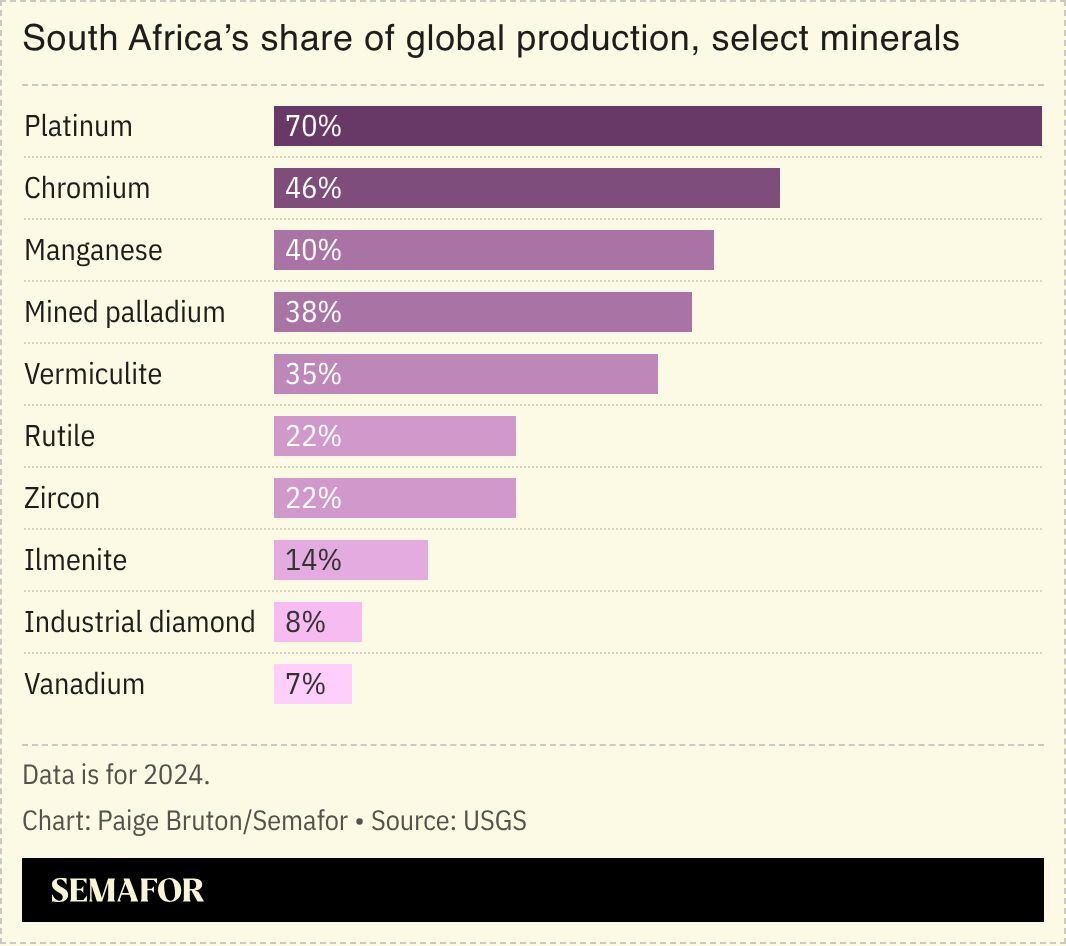 South Africa’s fourth-largest platinum group metals miner put itself up for auction after receiving an unsolicited approach from a local rival. If the deal for Northam Platinum proceeds, it would mark one of the biggest shake-ups in the South African platinum industry, handing surviving majors leverage in negotiating contract terms with European and Asian automakers. Platinum and palladium — two PGMs — are used in catalytic converters that carmakers rely on to meet emissions standards, as well as data-storage hardware that supports AI systems, and South Africa is home to more than 80% of known global PGM reserves. Northam did not name the bidder. Larger rivals Sibanye-Stillwater and Impala Platinum have ruled themselves out of the process, according to the mining publication Miningmx. That leaves Valterra Platinum, which was demerged from Anglo American last year, as the most likely bidder. Valterra on Wednesday declined to comment. — Tiisetso Motsoeneng |
|
Zambia poll concerns mount |
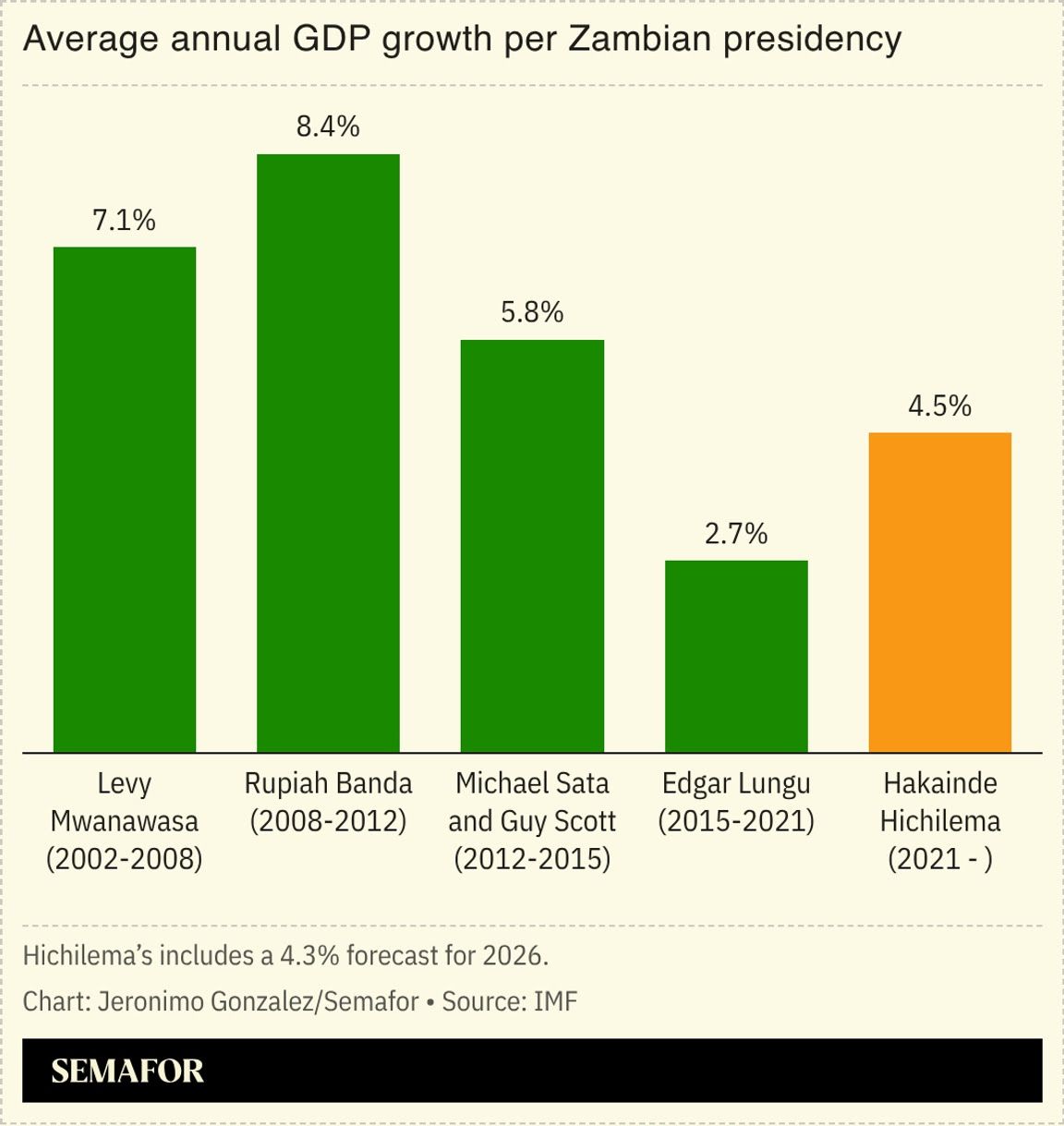 Zambia’s government closed the country’s top courts, preventing opposition parties from mounting legal challenges over this month’s disputed election. Candidates had until Tuesday to lodge their claims against the vote, won by incumbent Hakainde Hichilema. Experts have not questioned the ultimate result, but say the poll was marred by violence and government interference that likely affected the extent of Hichilema’s victory. While Hichilema has overseen a turnaround of Zambia’s copper-rich economy, critics say he has also overseen a rapid erosion of democratic norms. Since the vote, authorities have summoned the main opposition candidate over what they say was a planned insurrection. “The repression of critics and opposition poses a risk to the nation’s democratic progress,” the Carnegie Endowment for International Peace wrote last year. A version of this item first appeared in Semafor’s twice-daily Flagship briefing. Subscribe here. → |
|
|
Botswana agrees UAE genome deal |
 Esa Alexander/Reuters Esa Alexander/ReutersAbu Dhabi healthcare company M42 signed a 10-year contract with Botswana’s government to roll out a national genomics program, digitize health records, and bolster access to medicines. The G42 and Mubadala-backed firm has sought to expand in the Global South, where it sees “a distinct opportunity for nations to leapfrog legacy systems,” CEO Dimitris Moulavasilis said in a statement seen by Semafor. The partnership with Botswana’s health ministry will include a population-level genomic sequencing effort, which can provide a trove of data and help screen for treatable conditions, and aims to bolster pharmaceutical and medical supply chains with Mubadala’s life sciences unit. A timeline for the project was not provided. The deal is among the UAE’s more significant commercial bets on healthcare and its first in the sector in Africa, which carries an outsized disease burden relative to its healthcare resources. — Kelsey Warner |
|
Third-country deportation ruling eyed |
 Carielle Doe/Reuters Carielle Doe/ReutersThe Trump administration is pushing ahead with a new deal to send migrants to Liberia, as a US court weighs whether the practice of deporting people to countries other than their own is lawful. The First Circuit Court of Appeals heard arguments in May in a case challenging the policy, with a decision expected imminently. The plaintiffs say the government is violating the law, and that migrants must be given notice and a chance to contest deportations; the US government says the transfers are lawful as it pursues a sweeping crackdown on immigration. The Trump administration has deported thousands of people to two dozen countries that aren’t their own under “a series of often-secret agreements,” the Associated Press reported, of which 11 are thought to be with African countries. — Adrian Elimian |
|
 Business & Macro
|
|
|


