| | In this edition, Bill Gates sounds the alarm on AI, and the stigma against using AI for writing appe͏ ͏ ͏ ͏ ͏ ͏ |
| |  | Technology |  |
| |
|
 - OpenAI’s hot chip
- AI writing’s big moment
- Africa wins AI windfalls
- Are cameras the new data centers?
- AI has a payola problem
 Bill Gates has dark warnings about AI, and Australia pushes back on AI-generated music. |
|
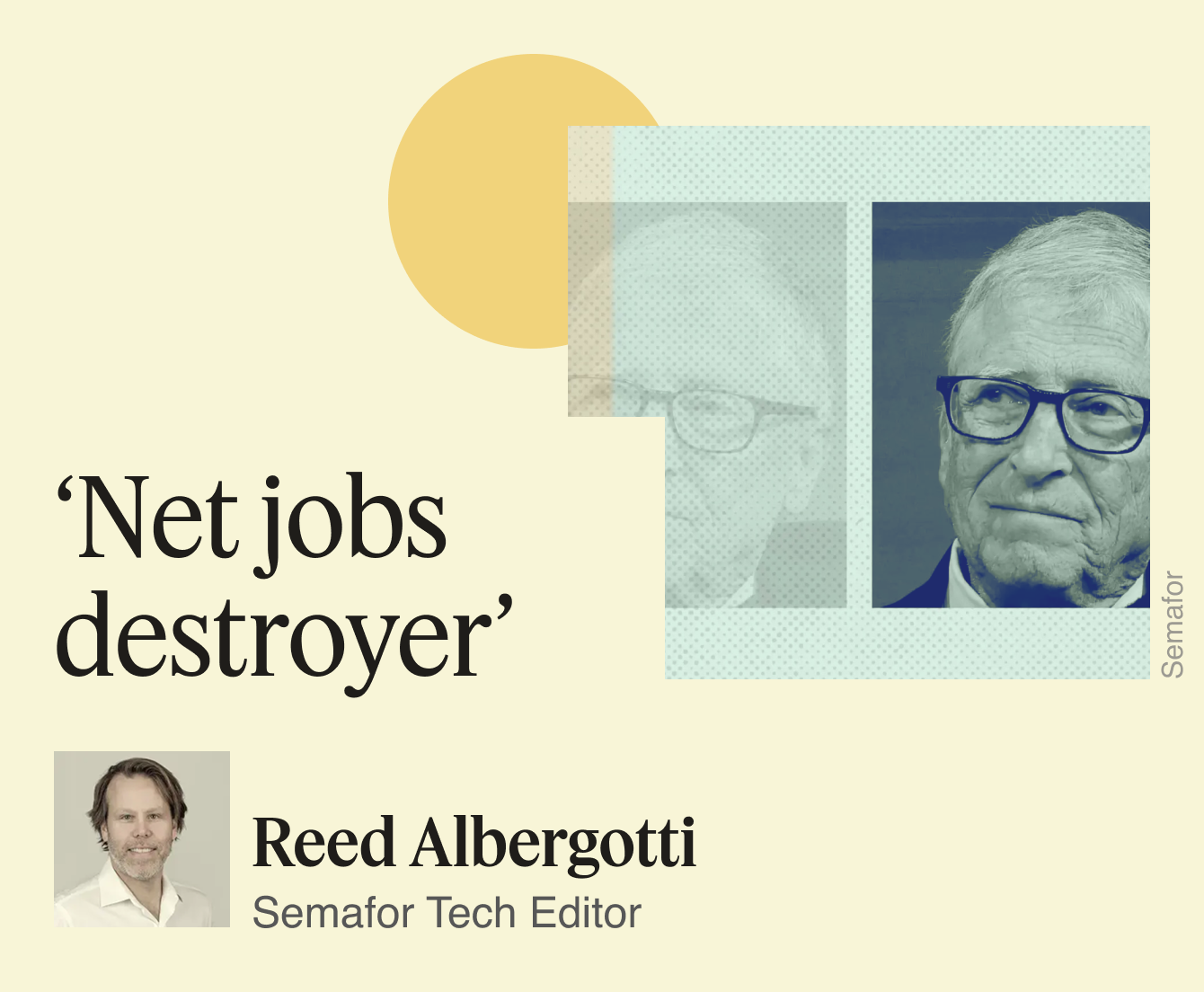 Bill Gates has been a fairly middle-of-the-road voice on AI — cognizant of the risks, but overall positive on the benefits. So I was taken aback by some of the stark language he used in an interview with me last week: “I’m sad to say, because I love innovation, this will be a net jobs destroyer,” he told me. “And anybody who doesn’t think that, I say, ‘what are you thinking?’” In the interview, and in Gates’ essay on the topic, he’s not just warning of an AI jobpocalypse. He’s worried about everything from cybersecurity to bioterrorism. And the reason he thinks world leaders should hit the panic button now is that AI is blowing through dangerous thresholds in biology, cybersecurity, and human relationships without a commensurate response from the people tasked with ensuring it doesn’t upend society. Gates is advocating for several policy measures to mitigate the negative effects of AI, from reserving some jobs for humans to taxing AI tokens as if they’re labor. He isn’t advocating for an end or even a pause to AI development. But there’s a message that goes deeper than policy ideas: Maybe we are the problem, not the AI. The most challenging thing about responding to the forces of AI is that humanity is going to have to agree on what it values. Answering that question in today’s fragmented world is more difficult than ever. In many ways, Gates would be considered an accelerationist. He believes strongly in the benefits of technology to advance science and cure disease, just not at any cost. “The goal of humanity is not economic optimization,” Gates told me. Technological development is just part of humanity’s trajectory, like the annual journey around the sun. But we get to decide how to live with it. |
|
OpenAI just changed the chip game |
 Courtesy of OpenAI Courtesy of OpenAIOpenAI unveiled benchmarks for its Jalapeño inference chip Tuesday and they are… fast. So fast that they compete with Nvidia’s best chips. OpenAI built the chips in record time by using its own AI models to speed up the design and verification phase of development. It still needed to work with Broadcom to build it, and it will still rely on fabs like TSMC to make it, but it’s a sign of things to come. If AI companies can use their own models to rapidly develop chips which they can then use to run more powerful AI models to develop the next chip, that’s a flywheel that leads to even faster capability acceleration. Sure, there are still bottlenecks galore (memory, power, a limited number of fabs). But the market will iron those out in time. It also shows how disruption is coming across industries. Smaller companies will soon learn that they can be more ambitious and more bold, challenging their larger competitors. And while that might be most visible in software, it is quickly spreading to the physical world. — Reed Albergotti |
|
The AI writing taboo is fading |
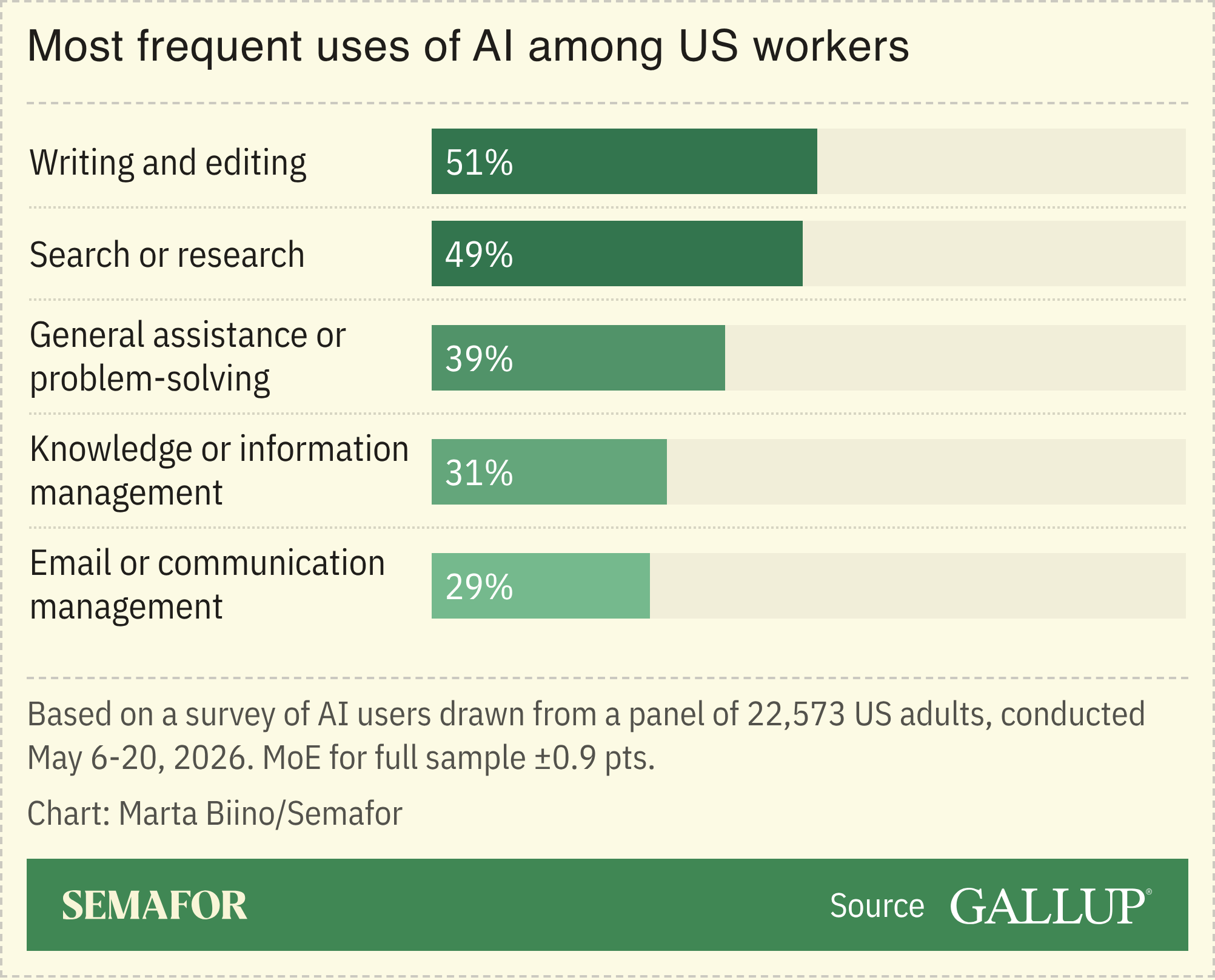 The stigma against using AI for writing appears to be wearing off. In what Semafor’s media editor called a “precedent-setting moment,” The Wall Street Journal not only acknowledged that billionaire investor Stanley Druckenmiller used AI for a newsmaking op-ed, but defended the practice: “AI is a fact of modern life,” the Journal’s opinion editor said in a statement, adding that the paper cares more about whether an essay reflects the author’s genuine opinion. Newspaper op-eds from big names have long been ghostwritten by junior staffers or outside PR firms — no disclosure necessary, and often watered down and hyper-optimized to be as palatable as possible. In that sense, outsourcing to AI is just replacing one form of slop with another. Just look at LinkedIn, where many cringe human-generated posts have been replaced by AI. (And people do appear to care: The site’s new “Seems like AI slop” button has been clicked more than a million times.) Still, none of this means the Claude-ian prose is any good, or that publications like the Journal shouldn’t disclose when AI is substantively used in an article. The second-most important opinion page in the US should be more than a meat proxy. — J.D. Capelouto |
|
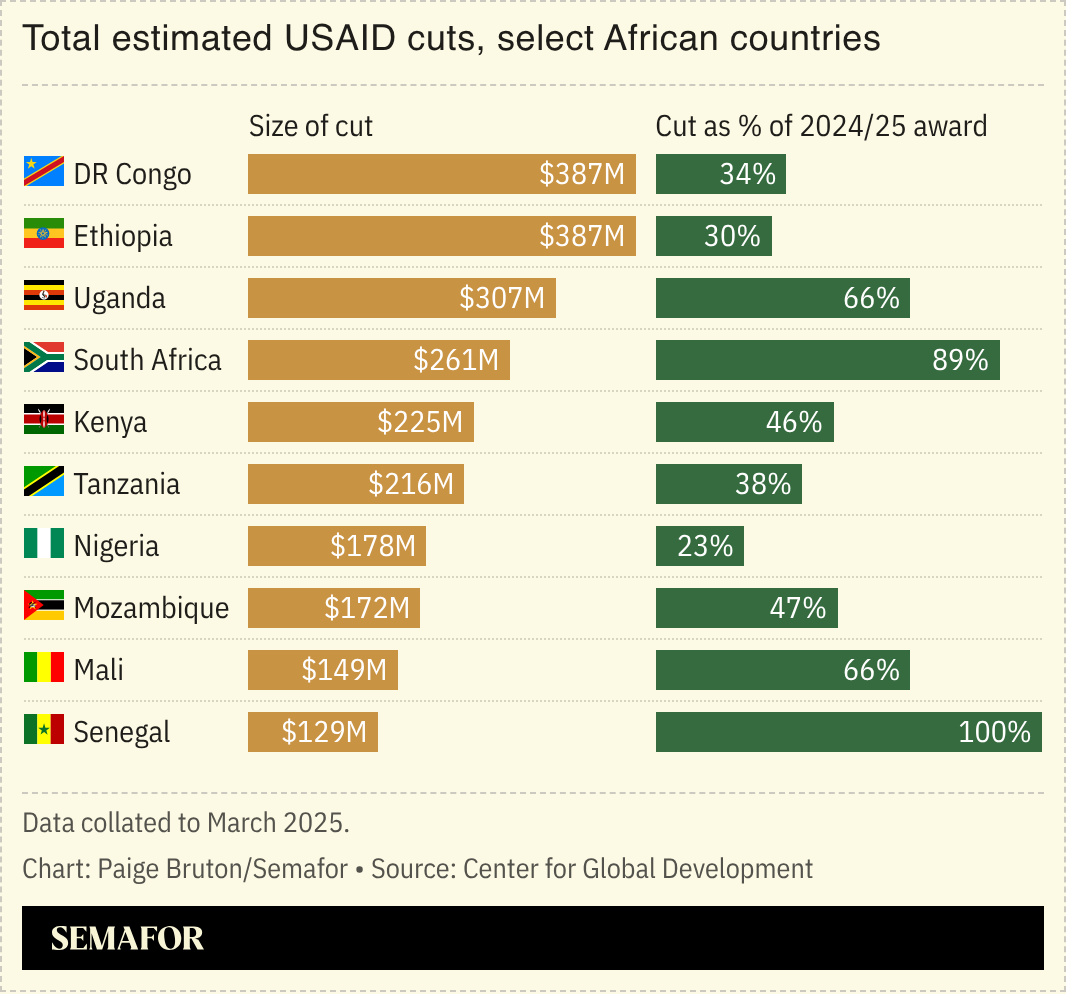 The most significant impact of record-breaking IPOs by Anthropic and OpenAI may be felt thousands of miles from Silicon Valley, in towns and cities across Africa — cementing a link that has been years in the making. AI companies’ mammoth IPOs could generate a pool of philanthropic wealth potentially worth up to $100 billion a year, Nan Ransohoff, an executive at the payments processor Stripe, wrote in a widely read essay. Effective altruism, the school of thought guiding many tech philanthropists, focuses on data-driven interventions that produce the greatest benefit per dollar — making Africa an obvious target. An AI-driven development bonanza could help to fill the funding space left after USAID was shuttered. But it comes with risks: One, as Ransohoff points out, is that an overhaul of the philanthropic ecosystem would be needed to ensure funds are deployed well. For African policymakers, the danger is that they again become dependent on overseas aid. Though tempting in the face of fiscal pressure, it is risky to rely on people guided by the mantra, “Move fast and break things.” — Alexis Akwagyiram |
|
Surveillance enters midterms discourse |
 Cheney Orr/Reuters Cheney Orr/ReutersLicense-plate reading cameras could join data centers as a tech bogeyman in the US midterm elections. A host of politicians — including Sen. Bernie Sanders and Abdul El-Sayed, the Democratic nominee for Senate in Michigan — have this month blasted Flock Safety: The Atlanta-based startup has come under fire following revelations that police officers allegedly abused their access to the devices’ data to track exes and romantic interests, sparking a wider flood of criticism over the company’s always-on cameras. Flock CEO Garrett Langley has responded to some critical politicians on X: “We believe in the constitution at Flock,” he said in response to an assertion from Sen. Rand Paul, R-Ky., that the company is imperiling Fourth Amendment rights. Earlier this month, it announced guardrails to prevent misuse from law enforcement, and has called for tighter state guidelines. But expect to see more pressure on candidates to take a stance on the cameras. President Donald Trump is also reportedly reviewing the issue, amid broader concerns about AI-powered snooping: Several workplaces and organizations have banned Meta’s smart glasses. “It’s just a sort of suffocating atmosphere to be a part of,” a law expert told The Verge. — J.D. Capelouto |
|
Is your AI agent for sale? |
 An ad on ChatGPT. Courtesy of OpenAI. An ad on ChatGPT. Courtesy of OpenAI.Does agentic AI have a payola problem? A new Stanford research paper lays out a problem that is being largely ignored as AI takes over internet search and e-commerce: It’s becoming less clear whether recommendations by AI chatbots are driven by advertising dollars or genuine information. In the not-too-distant future, when you want a new toaster, you might just talk to an AI agent about it on your drive home from work, and the next day, your toaster arrives. Behind the scenes, five toaster companies might have bid on what the agent sees. How do you know you really got the best toaster, or the best price? Now extrapolate this problem to weightier areas, like healthcare or financial services and the consequences are pretty serious. If everyone has their own personalized AI agent that’s smart enough to navigate the consumer landscape without falling for misleading marketing, perhaps this becomes a non-issue. But what might be more likely is that the vast majority of people use free chatbots funded by ads. Government regulation might help, with laws that prohibit chatbots from providing advice without disclosing financial incentives. But it might be too opaque to properly police. The time to sort this out is now, before an adtech-like industry springs up around agentic commerce and it becomes too difficult to unravel. — Reed Albergotti |
|
 Beneficial intelligence: Every week, the Medium Newsletter collects the most thought-provoking and timely writing from our community of experts and enthusiasts. You’ll get advice from academics, firsthand accounts of history unfolding, and wisdom to help you better understand a changing world. Subscribe now. |
|
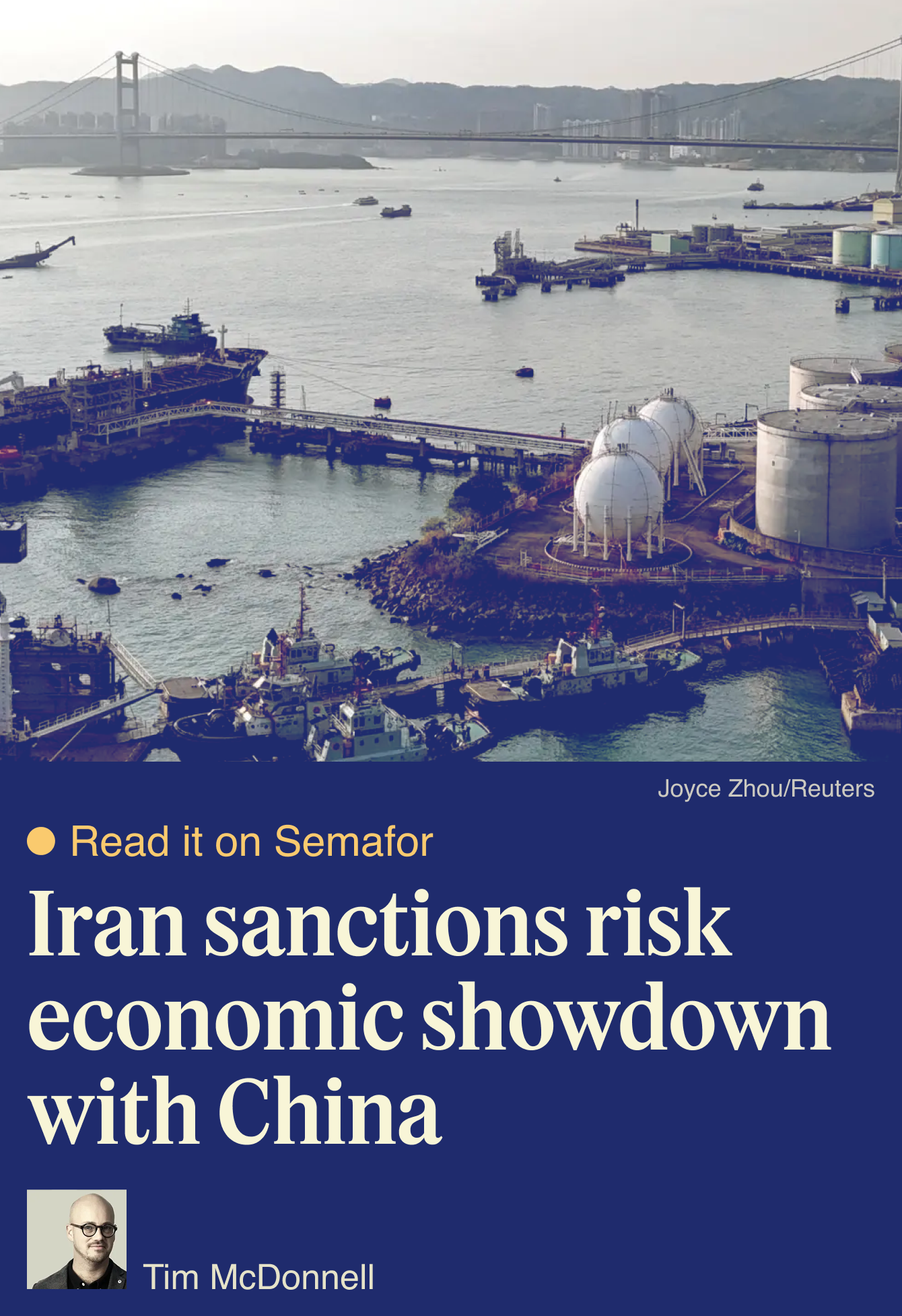 View: With Chinese leader Xi Jinping due to meet with Trump next month, the US administration wants to avoid a full-on economic war with Beijing. That puts its Iran strategy at risk. → |
|
|
|


