| | In this edition: The anti-tech wave sweeping elections, Trump pulls Graham across the finish, and th͏ ͏ ͏ ͏ ͏ ͏ |
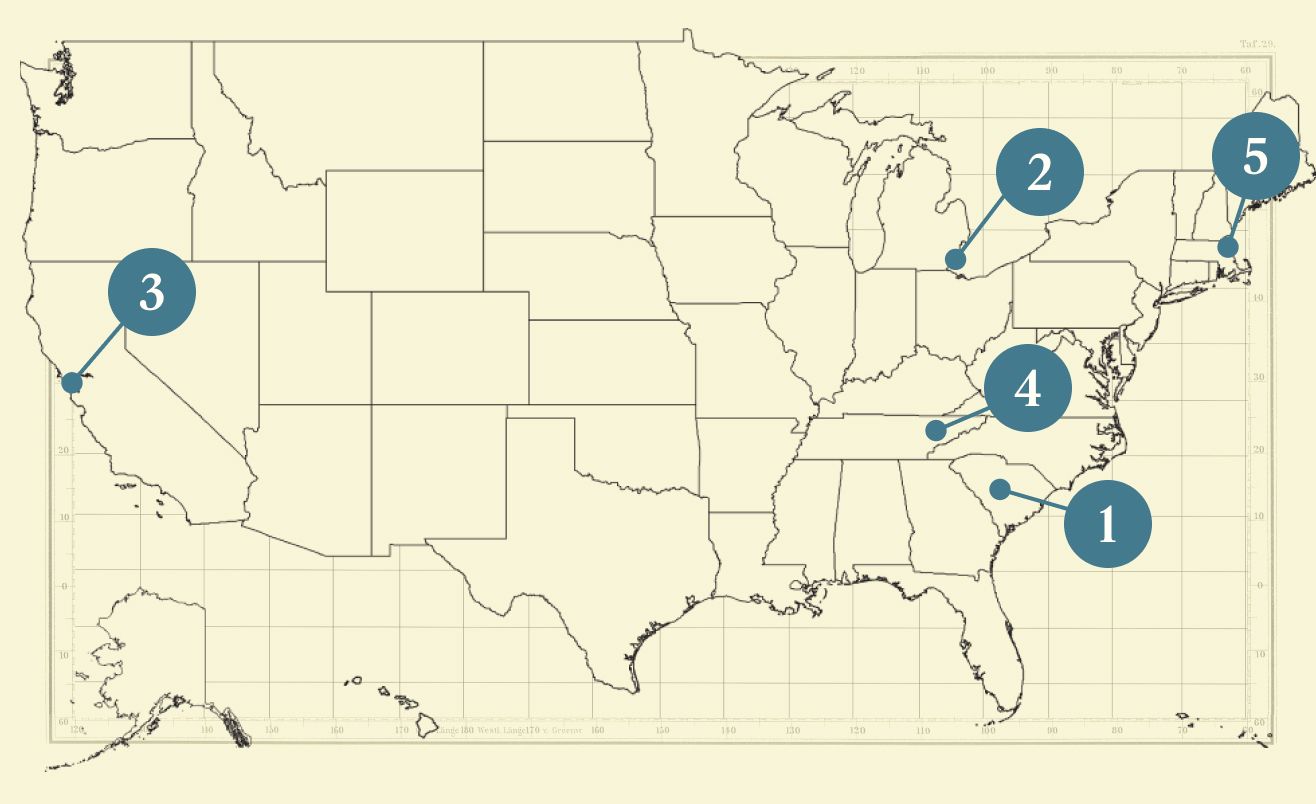
| |  HAMTRAMCK, MI HAMTRAMCK, MI |  COLUMBIA, SC COLUMBIA, SC | IPSWICH, MA |
 | Americana |  |
| |
|
 - Trump’s successful interventions
- El-Sayed’s Piker backlash
- Former Dem operative dishes
- Go Flock yourself
- Young men in a hurry
|
|
 If you’re running for office right now, the future is a dangerous place to be. The backlash against hyperscale data centers has converted both Democrats and Republicans into AI skeptics, warning that the industry’s rise risks robbing communities of autonomy. The populist rage against Flock and its AI-powered license plate cameras, while smaller in scale, is a growing offshoot of this bipartisan rebellion. “We should be very wary of” any tech that promises to support “an ongoing database of the location of every American citizen.” said William Lawrence, the progressive Democratic nominee for a battleground House seat in mid-Michigan, whose anti-data center campaigning set the tone for other candidates. “This whole premise is profoundly un-American.” In San Francisco, a bipartisan team of attorneys general sued Meta for alleged “known harmful features” that, they argued, addict children to social media; Meta settled the case, promising new safety tools for children, after insisting that they had plenty of tools already. In Tennessee, GOP Sen. Marsha Blackburn is running for governor on a promise to stop cell phone use in schools “from bell to bell” — one of the only ideas she shares with New York’s Democratic Gov. Kathy Hochul. It’s a marked shift from past campaigns where votes were counted with talk of the benefits of a high-tech future. Candidates once ran on rural broadband that they said could give every voter the same internet access that urbanites enjoyed, plus laptops on the desk of every public school student. That enthusiasm is missing in this year’s elections. The lack of a unified Democratic agenda, and the president’s usual reluctance to stay on message, has obscured the trend running under everything. Voters have grown more nervous about their futures and more nostalgic about what they’ve lost. “Even if you are living where your forefathers have lived for generations,” wrote the tech skeptic Paul Kingsnorth last year, “you can bet that the smartphone you gave your child will unmoor them more effectively than any bulldozer could.” |
|
Trump lifts Graham, Mazzei to victory |
 Sam Wolfe/Reuters Sam Wolfe/ReutersPresident Donald Trump’s primary interventions in South Carolina and Oklahoma paid off, lifting his two endorsed candidates to single-digit victories. Trump powered Sen. Darline Graham, R-S.C., who’d never run for office before being appointed to fill her late brother’s seat, to a five-point win over Rep. Ralph Norman, R-S.C., last night. Republicans went into Tuesday seeing a potential Norman victory, after Graham whiffed on a question about Taiwan in her one debate against the congressman. But Norman, who lost a bid for governor this summer, won only his current congressional district and the rest of upstate South Carolina, where Lindsey Graham always struggled to win conservatives. “His policies are good,” Norman told his supporters last night of Trump, bemoaning how the president and his allies spent millions of dollars attacking him to help Graham. “I never understood why he got in this race. It is what it is.” In Oklahoma, former state Sen. Mike Mazzei narrowly bested state Attorney General Gentner Drummond to become the GOP nominee for governor. Drummond had been willing to challenge Trump in a few areas, suing to stop an aluminum smelter that Trump wanted and criticizing the president’s decision to allow cheap beef imports over the protests of farmers. Mazzei, who ran on eliminating the state income tax, hugged the president closely. Read the full rundown here. → |
|
|
El-Sayed faces resistance over Piker support |
 Rebecca Cook/Reuters; Danny Moloshok/Reuters Rebecca Cook/Reuters; Danny Moloshok/ReutersSome influential Michigan Democrats refused to get behind their nominee for Senate this week, angry over Abdul El-Sayed’s support from left-wing influencer Hasan Piker and his commentary about Israel. State Sen. Jeremy Moss, who won the Democratic nomination for a safe House seat in the Detroit suburbs, cut off talks about endorsing El-Sayed after Piker told Twitch viewers that “somebody’s going to come around and take action” against American Jews if they “keep putting this idea out there that they’re singularly invested in Israel.” Rep. Hillary Scholten, D-Mich., who had cited the Piker endorsement as her reason for not endorsing El-Sayed, said that the new clip reinforced her thinking. Asked on Tuesday if he wanted Moss’ support, El-Sayed demurred. “I’m not going to sugarcoat that we have our disagreements, especially when it comes to foreign policy and the best use of our tax dollars,” he explained, flanked by mostly non-Jewish religious leaders and politicians. Catch up on everything here. → |
|
|
A former Dem operative on what the party needs to keep from MAGA |
 Not every book by a former “insider” is created equal. “Nothing Left” by Evan Barker is unusually rich and well-timed. Barker was a powerhouse fundraiser for the Democratic Party’s left, which meant she was in the room for crucial meetings between its biggest stars, before she got fed up with the movement and voted for Trump in 2024. Barker dished about her evolution on TikTok, in articles in The Free Press, and then in the book — which, she told me, she wished had come out even sooner. “The first three to four or five months after the election, I think there was a window of opportunity,” she said in an interview from her Bay Area home. “You had Gavin [Newsom] interviewing Steve Bannon and Charlie Kirk. They were willing to talk to the right. It just seemed like there was more openness about debating what needed to change.” |
|
Security cameras’ PR problem, polled |
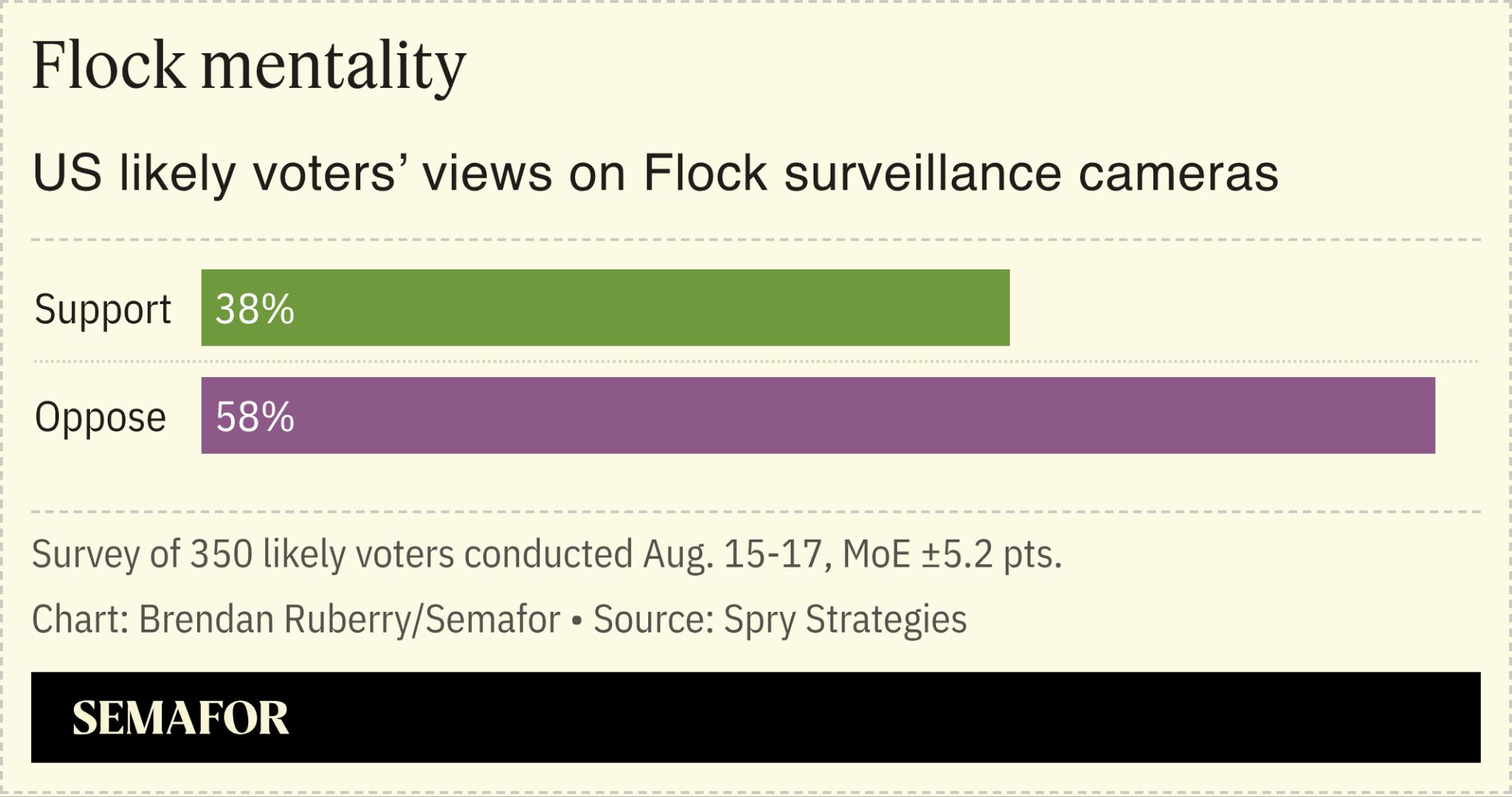 The backlash to security cameras in public places isn’t new, but the intensity has exploded since last year. In Knox County, Tennessee, where libertarian-leaning Republican Glenn Jacobs has been mayor for eight years, he made national news by rejecting the cameras and warning that they violated the Fourth Amendment’s protections against unreasonable search and seizure. Most voters in the county, which backed Trump over Kamala Harris by 20 points, agree with Jacobs. More than 40% of them say they “strongly” oppose Flock cameras, while most say that crime is on the “right track” in their county — i.e., that it’s going down. This may be part of the sales issue for Flock, that voter angst about local crime (as opposed to the real or AI-generated crime videos they see of places they don’t live in) has fallen since 2020. |
|
Age plays big in Massachusetts Democratic primaries |
 Seth Moulton/YouTube Seth Moulton/YouTubeNext week’s Massachusetts primaries include three contests between senior-citizen Democrats — Sen. Ed Markey, 80; Rep. Stephen Lynch, 71; Rep. Richie Neal, 77 — and challengers young enough to be their kids or grandkids. The incumbents are reintroducing themselves as fighters whose age doesn’t slow them down. In “I’m Fighting for You,” Lynch reminisces about “building the Boston skyline on the high iron” and says that he’s bringing the same energy to fighting Trump. In “Fighting for You,” Markey walks alongside three of his endorsers — Sens. Bernie Sanders and Elizabeth Warren, plus Rep. Ayanna Pressley — who vouch for him as a man who’s “standing up to the bosses.” Their challengers are responding by showcasing their youth and energy. In “Why I Fight,” Rep. Seth Moulton says that he and Markey “want the same things, but wanting isn’t winning.” His progressive promises (“abolish ICE,” “tax the oligarchs”) appear over footage of his young daughters making a family dinner. Advance Progress, the pro-Moulton super PAC, goes more directly after Markey’s age, capitalizing on a moment in their final debate where the senator meandered when asked how he uses AI. Moulton’s campaign grabbed the same moment for an ad that makes Markey look downright doddering. |
|
 Chris Bergin/Reuters Chris Bergin/ReutersMy favorite kind of story is “why isn’t this happening anymore?” So: Whatever happened to congressional town halls? Mychael Schnell poked around to find out, discovering that Republicans worry both about becoming the stars of viral rage clips and about real physical harm if, as they used to, they announce public events where voters can ask them questions. Republican incumbents held 39 town halls since the start of this year, less than one-tenth as many as were held by Democrats when their party controlled Congress. “The Republicans have been the ones shot at,” explained one anonymous member. Campaigns, too, have built some guardrails to control who can show up at candidate rallies and even retail stops. |
|
 Brendan McDermid/Reuters Brendan McDermid/ReutersSpeaking of the future: Over at The Wall Street Journal, a trio of reporters (Berber Jin, Ben Cohen, and Anissa Gardizy) profiled Leopold Aschenbrenner, a 24-year old savant and Ivy League valedictorian who turned a 165-page AI manifesto into a hedge fund — which launched with a five-hour podcast and sold off most of its public stocks after breakthroughs for Chinese AI models. It’s a rewarding guide to how fast this “gold rush” is moving and who is panning the actual gold. |
|
|


